Information
Landmark: Presidential TrailCity: Keystone
Country: USA South Dakota
Continent: North America
Presidential Trail, Keystone, USA South Dakota, North America
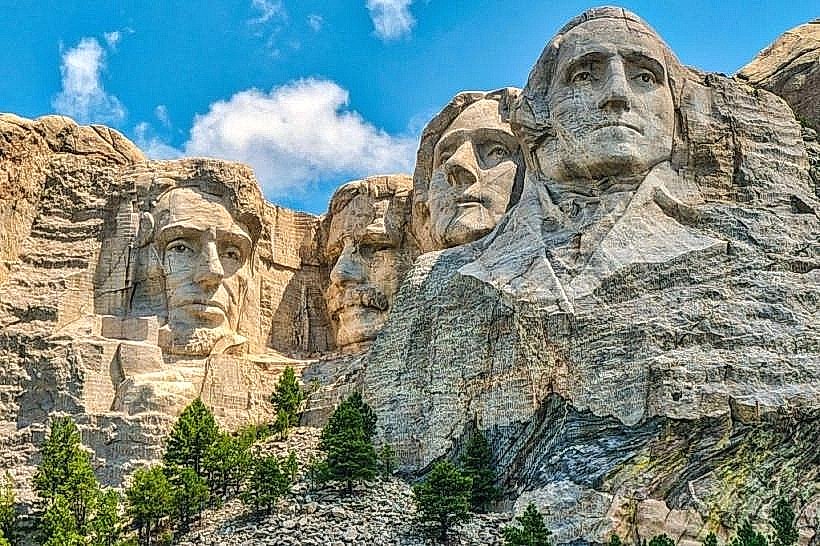
The Presidential Trail at Mount Rushmore National Memorial is the park’s signature walking path, providing visitors with the closest and most personal views of the monument’s four colossal presidential faces-George Washington, Thomas Jefferson, Theodore Roosevelt, and Abraham Lincoln. Set within the rugged beauty of South Dakota’s Black Hills, this short but scenic trail combines natural splendor, historical interpretation, and artistic wonder in a single immersive walk.
Trail Layout and Route
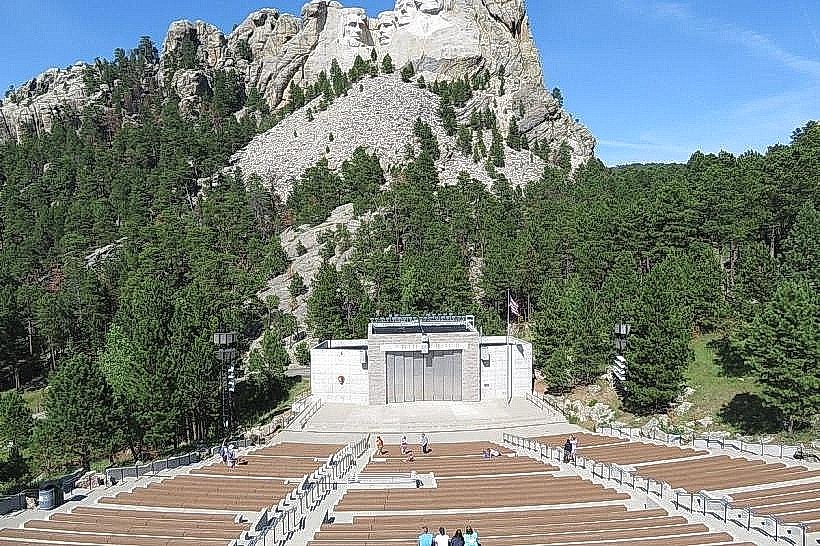
The loop covers approximately 0.6 miles (1 kilometer), beginning at the Grand View Terrace, the main plaza where visitors first glimpse the mountain’s iconic carvings. From there, the path descends through stairways and wooden walkways into the forested slopes beneath the monument.
The trail divides into two main sections:
Eastern Loop – Includes a challenging climb with about 422 steps leading closer to the granite faces.
Western Loop – A gentler, mostly level path designed for wheelchairs and strollers, offering wider walkways and easy viewpoints.
Both sections reconnect near the Sculptor’s Studio, forming a continuous circuit that can be completed in about 30 to 45 minutes.
Key Highlights and Views
As visitors move along the eastern side, they pass through a series of wooden platforms and observation decks offering progressively closer perspectives of each president. The proximity allows fine details to emerge-Washington’s sharp cheekbones, Jefferson’s serene expression, Roosevelt’s mustache, and Lincoln’s deeply carved eyes.
Interpretive panels along the way explain the mountain’s geology, the complex carving process between 1927 and 1941, and stories of the 400 workers who shaped the mountain using dynamite, drills, and sheer determination.
The forest setting adds a serene layer to the experience. The trail winds through stands of ponderosa pine, birch, and aspen, where sunlight flickers between leaves and the scent of resin lingers in the air.
The Sculptor’s Studio
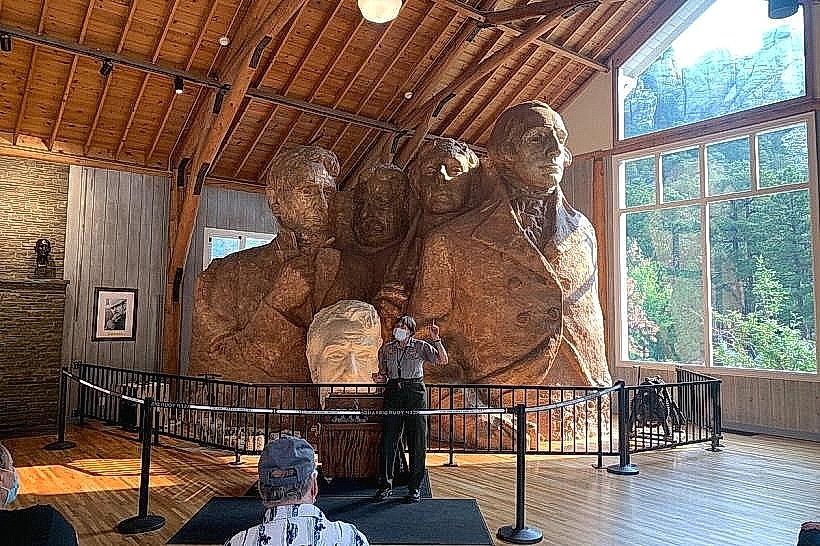
Midway through the trail, the Sculptor’s Studio offers a fascinating look into Gutzon Borglum’s creative process. Inside, visitors see his original plaster scale model of Mount Rushmore, showing the full concept with upper-body details that were never completed.
Park rangers frequently hold live interpretive talks, describing how Borglum translated artistic vision into monumental engineering. Tools, photographs, and historical exhibits help visitors visualize the challenges faced by the carving crews-steep cliffs, extreme weather, and the precision needed to sculpt faces 60 feet high.
Atmosphere and Experience
Each section of the trail carries a distinct mood. In the morning, mist and pine fragrance create a cool stillness, while afternoon sunlight warms the granite faces in golden hues. By evening, as the crowd gathers for the Night Lighting Ceremony, the faces glow in white illumination, framed by the dark silhouettes of the surrounding hills.
Small benches along the path invite rest and reflection. The mix of human craftsmanship and untouched nature gives the walk an introspective rhythm, reminding visitors that this mountain is both a work of art and a living landscape.
Visitor Information
Length: 0.6 miles (1 km)
Difficulty: Moderate (many stairs on the eastern loop)
Accessibility: Western section accessible for wheelchairs and strollers
Time to Complete: 30–45 minutes at a relaxed pace
Highlights: Sculptor’s Studio, close-up views, interpretive exhibits, forested scenery
Closing Impression
Walking the Presidential Trail transforms Mount Rushmore from a distant symbol into a deeply personal experience. Beneath the towering stone faces, surrounded by the scent of pine and the echo of chisels long silenced, the monument reveals itself not just as a feat of engineering-but as a living testament to vision, perseverance, and the enduring story of the American spirit carved into the heart of the Black Hills.