Information
City: KeystoneCountry: USA South Dakota
Continent: North America
Keystone, USA South Dakota, North America
Keystone is an incorporated town in Pennington County, situated in the central Black Hills. Known as the "Home of Mount Rushmore," it is defined by its seasonal tourism economy, its heritage as a 19th-century gold mining camp, and its extreme topographical verticality.
Historical Timeline
Inhabited by the Lakota Sioux. Founded in 1891 following the discovery of gold at the Keystone Mine. A critical historical event occurred in 1927 when sculptor Gutzon Borglum began work on Mount Rushmore, transitioning the town from a declining mining camp into a global tourism destination. In the 20th century, the town survived the 1972 Black Hills Flood, which significantly altered the lower town layout. In the 21st century, Keystone has evolved into a high-density seasonal resort town, hosting millions of visitors annually despite its small permanent population.
Demographics & Population
The permanent population is approximately 430, which swells to tens of thousands during the peak summer season (May–September). The demographics are predominantly White (92%). The economy is 90%+ dependent on Tourism and Hospitality, with a small sector dedicated to regional forest management.
Urban Layout & Key Districts
Keystone is divided by a significant elevation change between its two main sections.
Old Town (Lower Keystone): The historic core along the creek, featuring original 19th-century architecture and residential pockets.
The Strip (Upper Keystone): A high-density commercial corridor on US-16A designed for tourism, featuring hotels, wax museums, and retail.
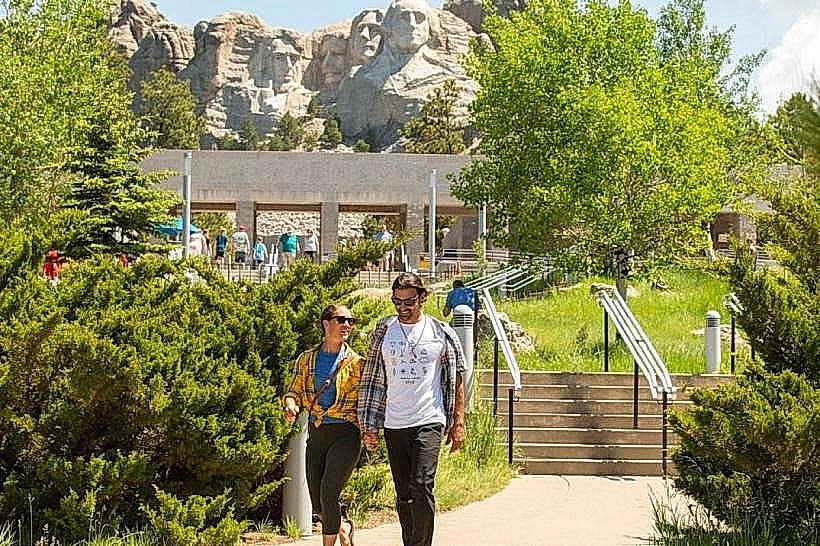
Mount Rushmore Face: Technically located 3 km southwest of the town core, but functionally the town's primary landmark.
Top City Landmarks
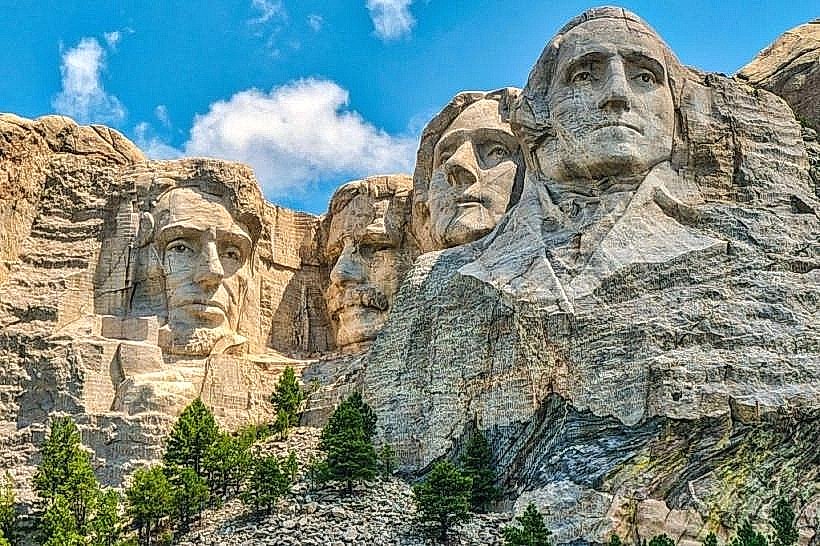
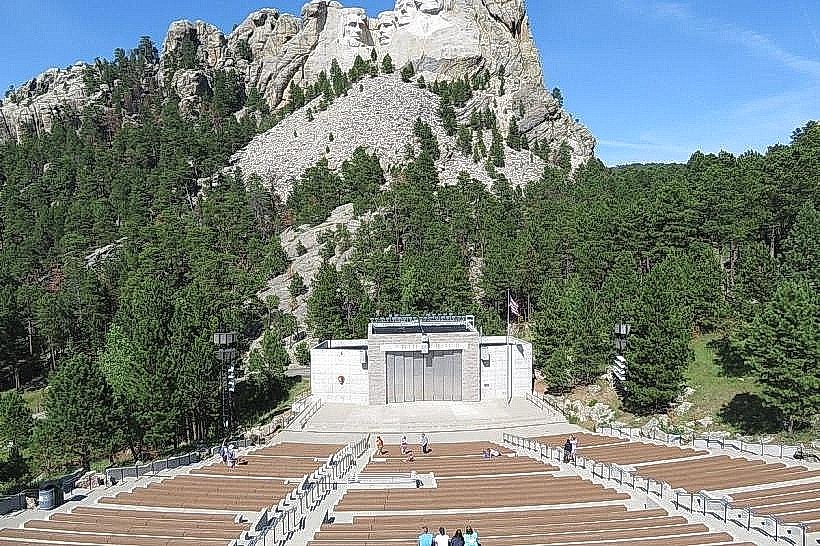
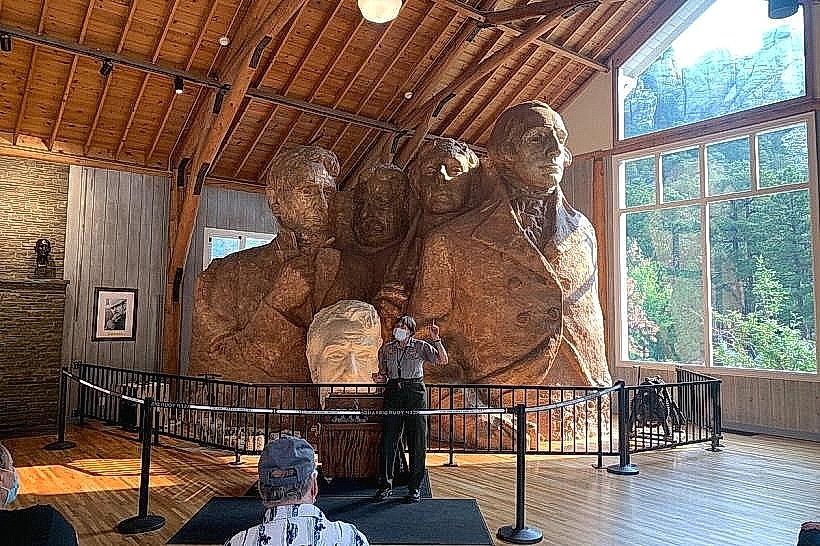
Mount Rushmore National Memorial: Located 5 minutes from town; featuring the 18-meter faces of Washington, Jefferson, Roosevelt, and Lincoln.
1880 Train (Black Hills Central Railroad): A historic steam train that carries passengers between Keystone and Hill City.
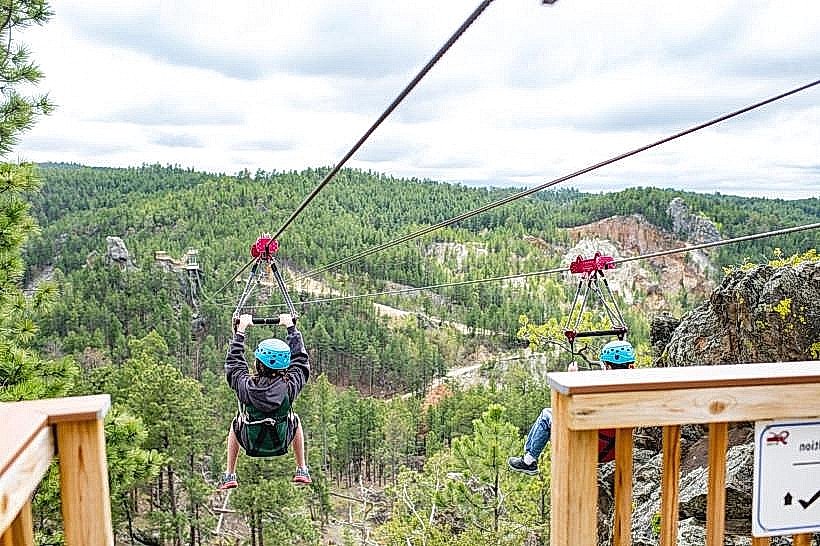
Rushmore Tramway Adventures: Featuring a scenic chairlift to a mountain park with alpine slides and views of the memorial.
Big Thunder Gold Mine: A replica and authentic mine tour depicting the 1890s mining experience.
National Presidential Wax Museum: Featuring life-size wax figures depicting dramatic scenes from U.S. history.
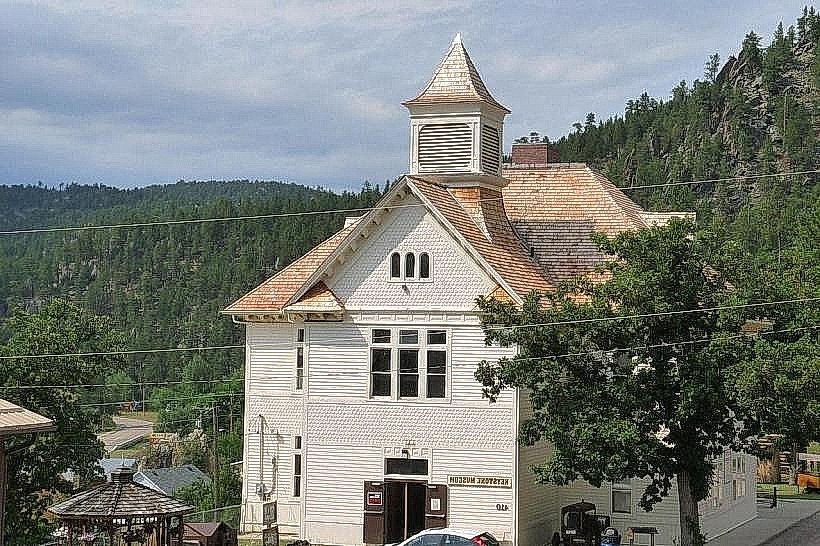
Keystone Historical Museum: Housed in the original 1899 schoolhouse, focused on local mining history and Carrie Ingalls (sister of Laura Ingalls Wilder).
Transportation Network
Movement is automotive-centric. The town is the junction of US-16A and SD-40. It is famously located on the Iron Mountain Road, known for its "pigtail" bridges and tunnels that frame Mount Rushmore. There is no public transit. Commercial air service is via Rapid City Regional (RAP), 50 km northeast.
Safety & "Red Zones"
The general safety level is very high. Crime is negligible and primarily limited to seasonal traffic violations. There are no "red zones." Environmental hazards include significant wildfire risk, extreme winter blizzards, and steep, winding mountain roads that become hazardous during ice events.
Digital & Financial Infrastructure
Internet speeds are moderate (100–300 Mbps) with fiber expansion underway via Golden West Telecommunications. Main mobile carriers are Verizon and AT&T (coverage is spotty in deep canyons). Card acceptance is universal. South Dakota has no state income tax.
Climate & Air Quality
Temperatures range from -12°C to 1°C in winter and 12°C to 27°C in summer. Keystone is cooler than nearby Rapid City due to its 1,320-meter elevation. Air quality is pristine.
Culture & Social Norms
The standard tipping percentage is 20%. A "Frontier-Friendly" greeting is standard. Dress codes are "Outdoor-Active." The town is culturally defined by Americana, Black Hills Gold jewelry, and its status as a "Company Town" for the National Park Service.
Local Cost Index
1 Espresso: $5.25 (USD)
1 Standard Lunch: $18.00 (USD)
1 1880 Train Ticket: $34.00.
Nearby Day Trips
Custer State Park: (25 km south; famous for its buffalo herds and Needles Highway).
Crazy Horse Memorial: (30 km southwest; the world's largest mountain carving in progress).
Rapid City, SD: (35 km northeast; the regional urban hub).
Facts & Legends
Keystone was the home of Carrie Ingalls for 35 years; she is buried in the nearby De Smet cemetery but lived much of her adult life here. Historically, the town was the site of the Etta Mine, which produced the largest spodumene crystals ever found. A local legend involves the "Ghost of the Keystone Hotel," a Victorian-era figure said to haunt the older residential structures. Another legend concerns "Hidden Gold Caches" left behind by miners who fled the 1972 flood.