Information
Landmark: Rosedale ArchCity: Kansas City KS
Country: USA Kansas
Continent: North America
Rosedale Arch, Kansas City KS, USA Kansas, North America
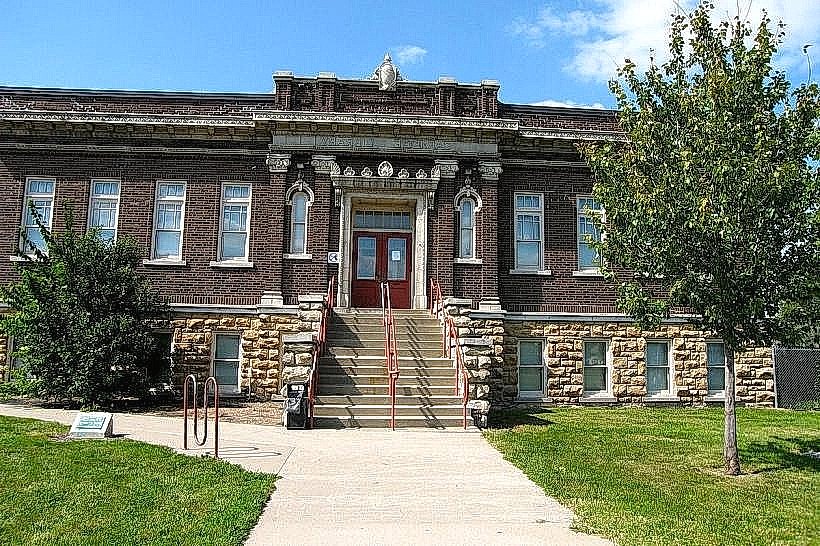
The Rogers Historical Museum is a local history museum located in Rogers, Arkansas, USA.
Visual Characteristics
The museum is housed in a former Carnegie Library building constructed from red brick. The building features classical architectural elements, including a prominent portico with columns. Its dimensions are approximately 100 feet in length and 60 feet in width, with two main stories and a basement.
Location & Access Logistics
The museum is situated at 322 West Second Street in downtown Rogers, Arkansas. It is approximately 0.5 miles west of the main US Highway 71 bypass. On-street parking is available on Second Street and surrounding avenues. The nearest public transport stop is located on Walnut Street, approximately 0.2 miles to the north, served by Route 1 of the Ozark Regional Transit system.
Historical & Ecological Origin
The building was constructed in 1914 as a public library, funded by a grant from the Carnegie Corporation. It served as the city's primary library until 1975. The structure is an example of Neoclassical architecture. The museum itself was established in 1975 to preserve and interpret the history of Rogers and Northwest Arkansas.
Key Highlights & Activities
Exhibits focus on the history of Rogers, including its development as a railroad town, the impact of the poultry industry, and local pioneer life. Permanent displays include artifacts from early settlers, agricultural tools, and items related to the Missouri and Arkansas Railroad. Temporary exhibits change quarterly, often focusing on specific local historical periods or themes.
Infrastructure & Amenities
Restrooms are available on the first floor. Limited seating is provided within exhibit areas. Cell phone signal (4G/5G) is generally reliable within the building. No food vendors are located on-site; however, several restaurants are within a 0.5-mile radius in the downtown area.
Best Time to Visit
The museum is open Tuesday through Saturday from 10:00 AM to 4:00 PM. Weekday mornings are typically less crowded. Lighting conditions are consistent due to indoor exhibits. The best months for visiting are generally April through October, coinciding with favorable weather for travel to the region.
Facts & Legends
A notable artifact within the museum's collection is a preserved piece of the original wooden sidewalk that once lined First Street in early Rogers. Local lore suggests that the building's basement was used for clandestine meetings during Prohibition, though this remains unverified.
Nearby Landmarks
- Daisy Airgun Museum (0.3km East)
- The Victory Theater (0.4km East)
- Rogers City Hall (0.5km East)
- Frisco Park (0.6km Northeast)