Information
Landmark: Santa Justa LiftCity: Lisbon
Country: Portugal
Continent: Europe
Santa Justa Lift, Lisbon, Portugal, Europe
Santa Justa Lift (Elevador de Santa Justa) is a vertical transport structure and industrial monument in Lisbon, Portugal. It connects the lower streets of Baixa to the higher Largo do Carmo.
Visual Characteristics
The lift is a 45-meter high tower constructed of cast iron in the Neo-Gothic style. It features high-density filigree detailing, pointed arches, and geometric patterns. The structure houses two wood-paneled cabins with brass fittings. At the summit, a spiral staircase leads to a wide observation deck surfaced with traditional Portuguese tiles. The metallic grey exterior contrasts with the surrounding Pombaline yellow and white masonry.
Location & Access Logistics
The base is located at Rua do Ouro (1150-060 Lisbon).
Public Transport: The Baixa-Chiado Metro station (Blue/Green lines) is 0.2km south. Rossio station is 0.2km north.
Vertical Connection: It bridges a 30-meter height differential between Rua de Santa Justa and the Carmo Convent.
Parking: No on-site parking. Use underground lots at Praça da Figueira (0.3km).
Access: The lift cabins are accessible to wheelchairs. However, the final spiral staircase to the topmost viewing platform is restricted to foot traffic.
Historical & Ecological Origin
Inaugurated in 1902, the lift was designed by Raoul Mesnier du Ponsard, a student of Gustave Eiffel. Originally steam-powered, it was converted to electricity in 1907. It is the only remaining vertical street lift in Lisbon. The surrounding urban environment is a high-density transit corridor with minimal vegetation, though the upper exit at Largo do Carmo features mature Jacaranda trees that support local bird populations.
Key Highlights & Activities
The Cabins: Original early 20th-century interiors featuring polished wood and mirrors.
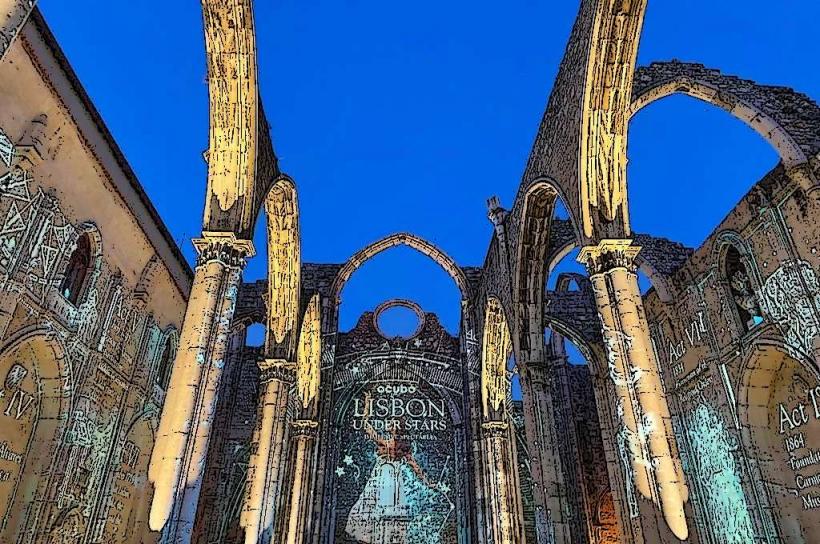
The Walkway: A metallic bridge connecting the tower to the ruins of the Carmo Convent.
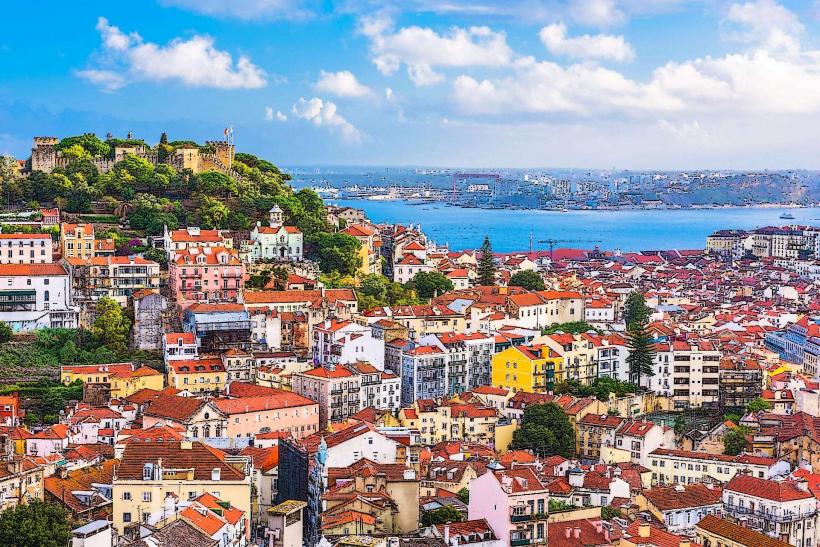
Observation Deck: Offers a high-fidelity 360-degree view of São Jorge Castle, Rossio Square, and the Tagus River.
Night Illumination: The ironwork is floodlit, highlighting its architectural complexity after dusk.
Infrastructure & Amenities
Ticketing is managed via the Carris transit system (standard 24-hour passes are accepted). Queue density is consistently high at the base; the upper entrance via Largo do Carmo often has lower wait times for the viewing deck. 5G cellular coverage is exceptional.
Best Time to Visit
Open daily: 07:30–23:00 (winter) and 07:30–23:30 (summer). Observation deck opens at 09:00. Peak human density occurs between 10:00 and 19:00. Visit at 07:30 for functional transit or after 21:00 for the shortest tourist queues and optimal city lighting.
Facts & Legends
A verified engineering fact is that the two cabins operate on a counterweight system, allowing for high energy efficiency. A persistent legend falsely attributes the design directly to Gustave Eiffel due to the structural similarities to the Eiffel Tower, though Ponsard was the sole architect of record.
Nearby Landmarks
Carmo Convent Ruins: 0.1km West (at the upper exit).
Rossio Square: 0.2km North.
Rua Augusta: 0.1km East.
Bertrand Bookstore: 0.4km West (world's oldest operating bookstore).