Information
Landmark: Skopje Fortress (Kale)City: Skopje
Country: North Macedonia
Continent: Europe
Skopje Fortress (Kale), Skopje, North Macedonia, Europe
Skopje Fortress, commonly referred to as Kale, is a historic fortification situated on the highest point in the city of Skopje, overlooking the Vardar River. It is located in the Centar municipality, adjacent to the Old Bazaar.
Visual Characteristics
The fortress is defined by its massive limestone and travertine walls, which extend approximately 121 meters in length. The structure features several distinct towers, including square, rectangular, and circular designs, reflecting different periods of construction. The masonry consists of large, roughly hewn stone blocks bonded with thick layers of lime mortar. The interior plateau is largely open, containing excavated foundations and paved walkways that lead to various vantage points.
Location & Access Logistics
Kale is situated on Samoilova Street, accessible by a steep paved incline from the Old Bazaar or the Museum of Contemporary Art. It is within a 15-minute walk from Macedonia Square. Public parking is available at the base of the hill near the Mustafa Pasha Mosque. Several city bus lines (e.g., lines 2, 8, 12, 19) stop at the nearby "Skenderbeg Square" station.
Historical & Ecological Origin
The first fortifications were constructed in the 6th century AD during the reign of Emperor Justinian I, using materials from the nearby ruined city of Scupi. Significant expansions occurred during the 10th and 11th centuries under the Bulgarian and Byzantine Empires, and later during the Ottoman period. Geologically, the fortress occupies a strategic neogene terrace composed of sedimentary rock, providing a natural defensive elevation above the Vardar valley.
Key Highlights & Activities
Visitors can walk along the restored sections of the ramparts for 360-degree views of Skopje, the Vodno Mountain, and the Vardar River. The site is a primary location for observing archaeological excavations of medieval and Roman foundations. The inner courtyard is frequently used for cultural events and open-air photography.
Infrastructure & Amenities
The fortress is a managed heritage site with paved paths and directional signage. There are no restrooms or food vendors within the walls; these are located in the Old Bazaar, 200 meters downhill. 5G mobile signal is exceptionally strong across the plateau. Natural shade is minimal, restricted to the interior of the towers and a few small trees near the entrance.
Best Time to Visit
Optimal lighting for photography occurs during the late afternoon (Golden Hour), as the sun illuminates the western walls and provides clear views of the city skyline. May through September offer the best weather conditions. The site is generally open daily from 08:00 to 19:00, though hours may vary by season.
Facts & Legends
Local tradition suggests that the fortress was partially built using the same stones that once formed the Roman city of Scupi, which was destroyed by an earthquake in 518 AD. A historical oddity is the "cyclopean" style of the lower wall layers, leading some early researchers to hypothesize that the site had been fortified as early as the Neolithic or Bronze Age before the Roman era.
Nearby Landmarks
Mustafa Pasha Mosque: 0.2km East
Old Bazaar (Stara Čaršija): 0.3km Southeast
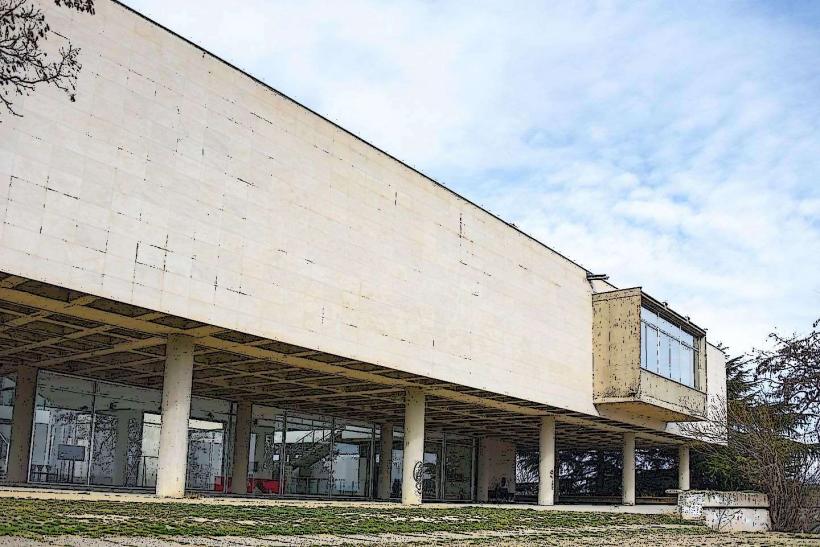
Museum of Contemporary Art: 0.1km Northwest
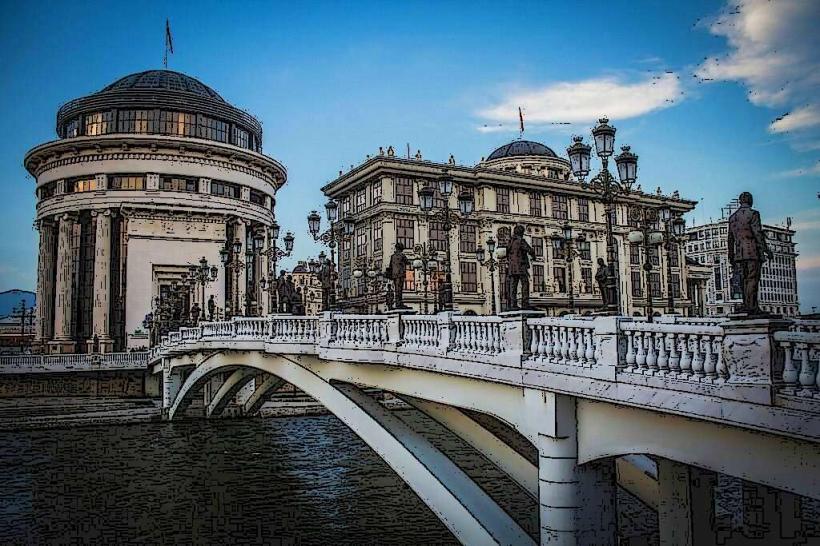
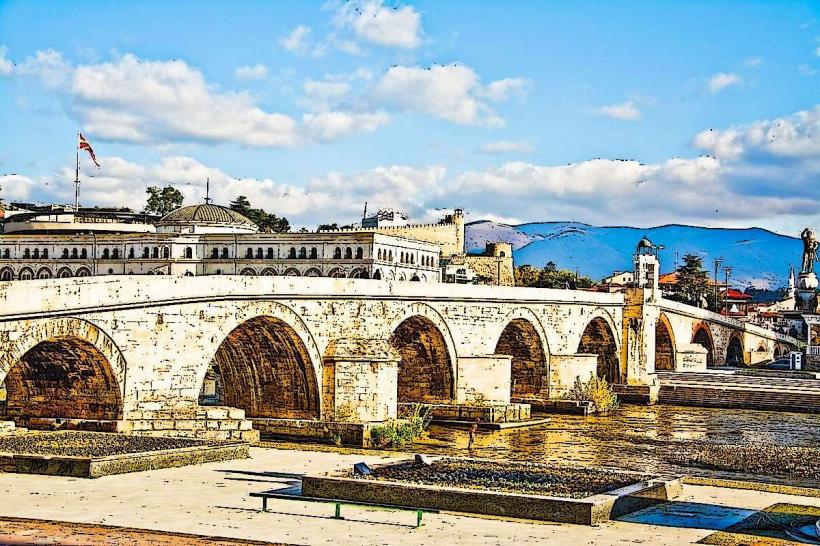
Stone Bridge: 0.6km South
Church of the Ascension of Jesus: 0.25km East