Information
Landmark: St. Euphemia ChurchCity: Rovinj
Country: Croatia
Continent: Europe
St. Euphemia Church, Rovinj, Croatia, Europe
The Church of St. Euphemia (locally known as Sveta Fuma) is a Baroque Catholic basilica located at the highest point of the Rovinj peninsula. It serves as the most prominent landmark of the city and the primary religious site in the Istrian region.
Visual Characteristics
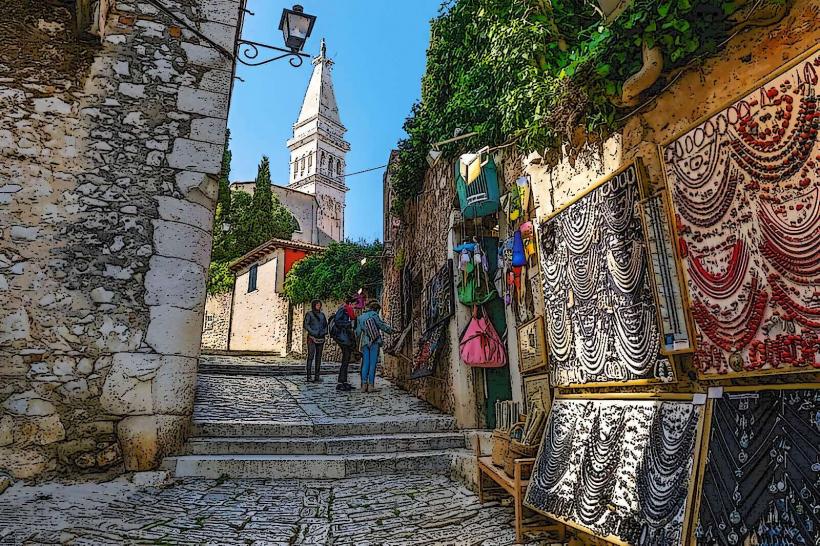
The church is a three-nave Baroque structure built in the Venetian style. The facade is made of pale Istrian stone, featuring a simple pediment and a central rose window. Its most significant feature is the 60-meter-high bell tower, modeled after the Campanile of St. Mark’s in Venice. The tower is topped with a copper statue of St. Euphemia that rotates on a spindle to indicate wind direction. The interior is expansive, housing white marble altars and a collection of 15th-century Gothic statues.
Location & Access Logistics
The church is situated at the terminus of the uphill streets in the Old Town.
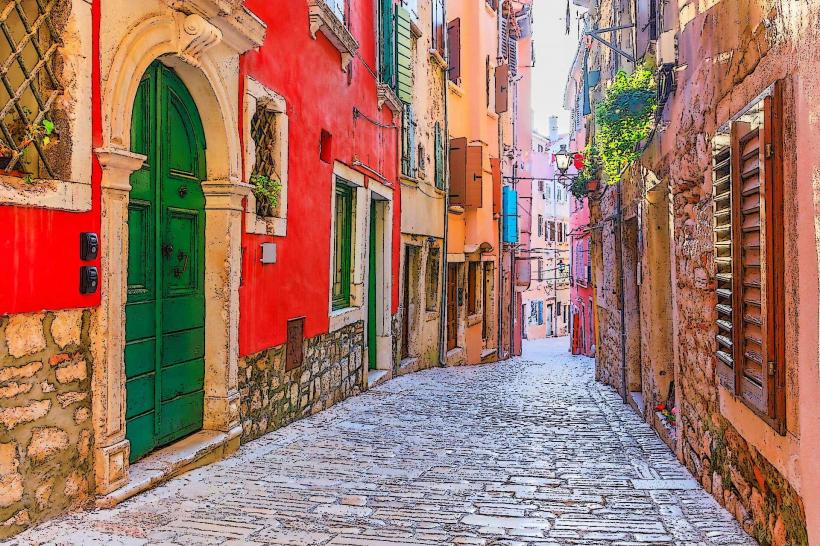
Access: Only reachable on foot via the Grisia, Garzotto, or Svetoga Križa streets. The ascent is steep and involves polished, potentially slippery limestone cobblestones.
Bell Tower Access: Visitors can climb the internal wooden stairs of the bell tower for a fee to reach the observation deck.
Distance: Approximately 0.4km from the main town square (Trg Maršala Tita).
Historical & Ecological Origin
The current building was constructed between 1725 and 1736 on the foundations of an earlier Christian chapel. It was designed by the Venetian architect Giovanni Dozzi. The church was built to house the relics of St. Euphemia, a 3rd-century martyr. The bell tower preceded the current church building, with construction starting in 1654 and concluding in 1680.
Key Highlights & Activities
The Sarcophagus: Located in the chapel to the right of the main altar, the large stone sarcophagus contains the remains of St. Euphemia.
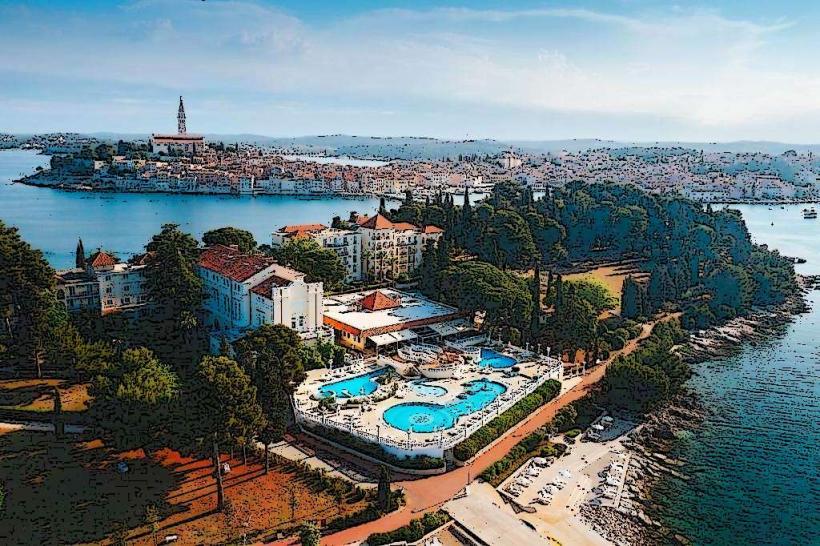
Bell Tower View: Offers 360-degree panoramic views of the Rovinj archipelago, the Lim Fjord, and, on exceptionally clear days, the Alps and Venice.
Artworks: Features 16th-century paintings by Girolamo da Santacroce and a 15th-century wooden crucifix.
Infrastructure & Amenities
The square surrounding the church (Plateau of St. Euphemia) provides benches and viewing areas overlooking the Adriatic. Public restrooms are not available inside the church but are located at the base of the hill near the Valdibora parking lot. 5G signal is strong outside on the plateau but intermittent within the thick-walled nave. The church is generally unheated; dress accordingly during winter months.
Best Time to Visit
Photography: Early morning for the eastern facade or sunset for the plateau, which faces West toward the open sea.
Crowds: Visit before 10:00 to avoid the peak heat and the largest tourist groups.
Religious Service: Check local schedules for Holy Mass, typically held on Sunday mornings, during which sightseeing is restricted.
Facts & Legends
The central legend claims that in the year 800 AD, a heavy stone sarcophagus floated across the sea from Constantinople and reached Rovinj. Local residents and strong horses failed to move it, but a young boy with two small calves successfully pulled it up the steep hill to the site where the church now stands. A verified oddity is that the copper statue atop the tower is 4.7 meters tall and acts as a giant weather vane.
Nearby Landmarks
Grisia Street – 0.05km East
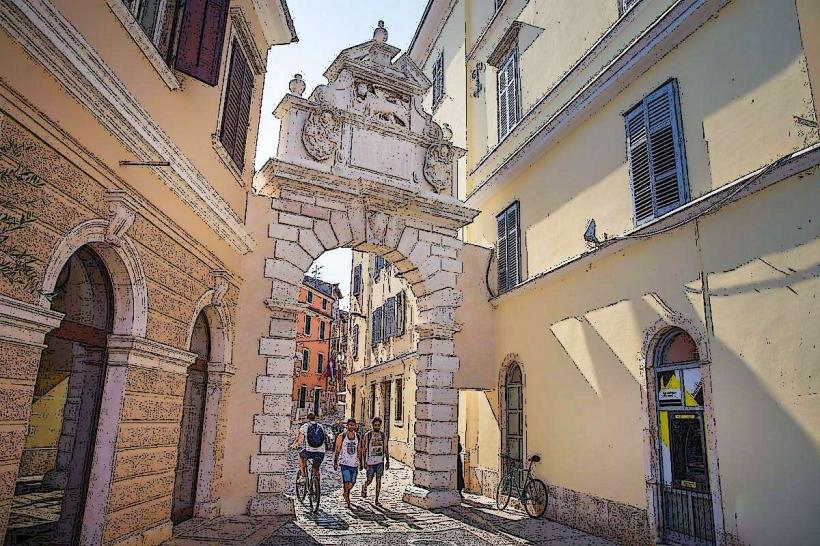
Balbi's Arch – 0.35km East
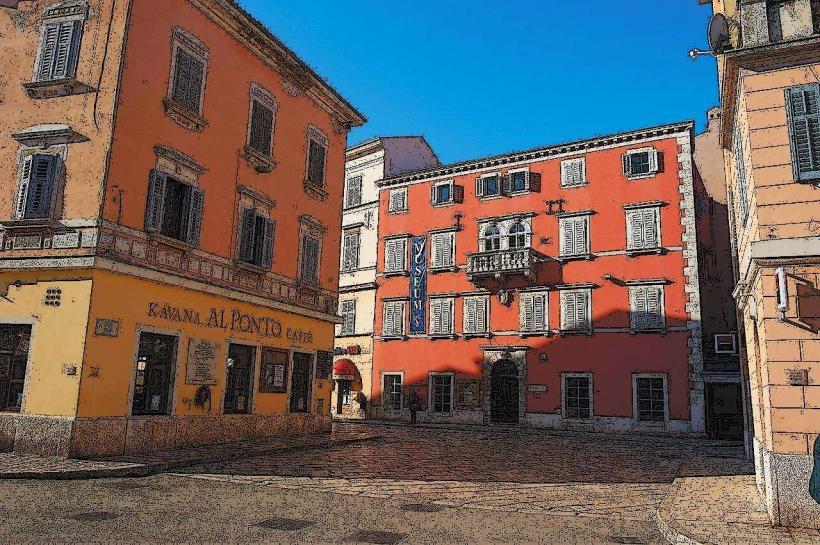
Rovinj Heritage Museum – 0.4km East
Monte Beach – 0.1km West (at the foot of the church walls)
Baptistery of the Holy Trinity – 0.5km Southeast