Information
Landmark: Tumski BridgeCity: Wroclaw
Country: Poland
Continent: Europe
Tumski Bridge, Wroclaw, Poland, Europe
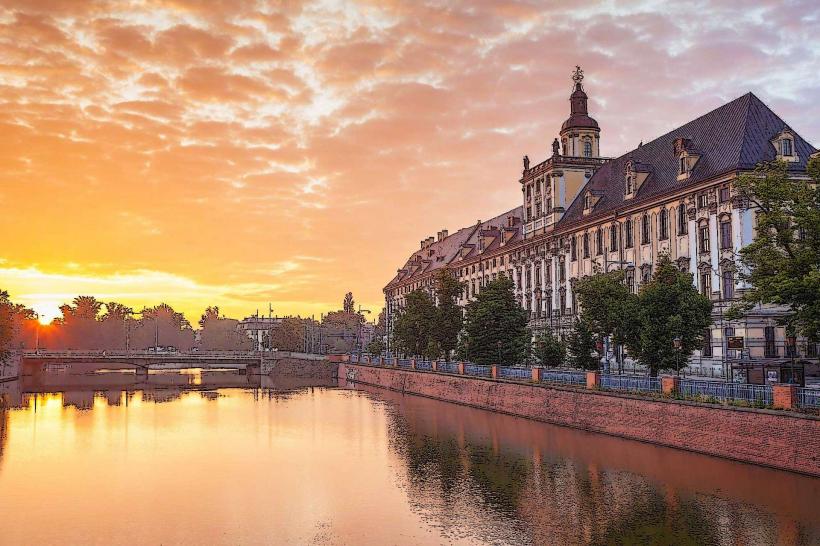
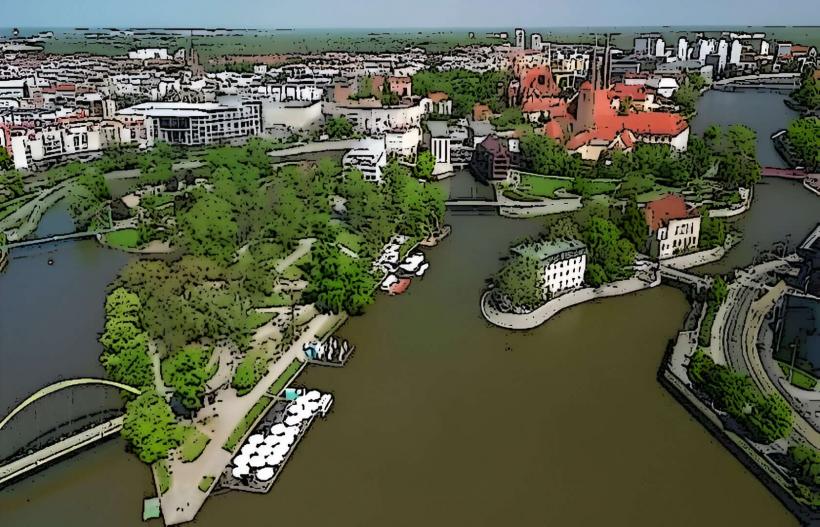
Tumski Bridge is a 19th-century steel truss bridge spanning the northern branch of the Oder River in Wrocław, Poland. It connects the Piasek and Ostrów Tumski islands, functioning as a primary gateway to the city’s oldest ecclesiastical district.
Visual Characteristics
The bridge is a rivet-joined steel construction painted in a dark turquoise hue. It features two characteristic neo-Gothic portals and is supported by stone abutments. The walkway is paved with granite cobblestones and is lined with historic 19th-century gas lamps that are manually lit by a city lamplighter each evening.
Location & Access Logistics
The bridge is located at the intersection of ul. Najświętszej Marii Panny and ul. Katedralna. It is a strictly pedestrian and cyclist crossing; no motorized vehicles are permitted. Access is via tram lines 2, 8, 9, 10, and 17 (Plac Bema stop, 400m North). The nearest public parking is located at Plac Nowy Targ, approximately 600 meters to the south.
Historical & Ecological Origin
The current steel structure was completed in 1889, replacing a medieval wooden bridge that had existed on the site since at least the 12th century. It was manufactured by the Pieronńczyk plant in Gliwice. The bridge spans a controlled branch of the Oder River, which is characterized by slow-moving water and stone-reinforced embankments.
Key Highlights & Activities
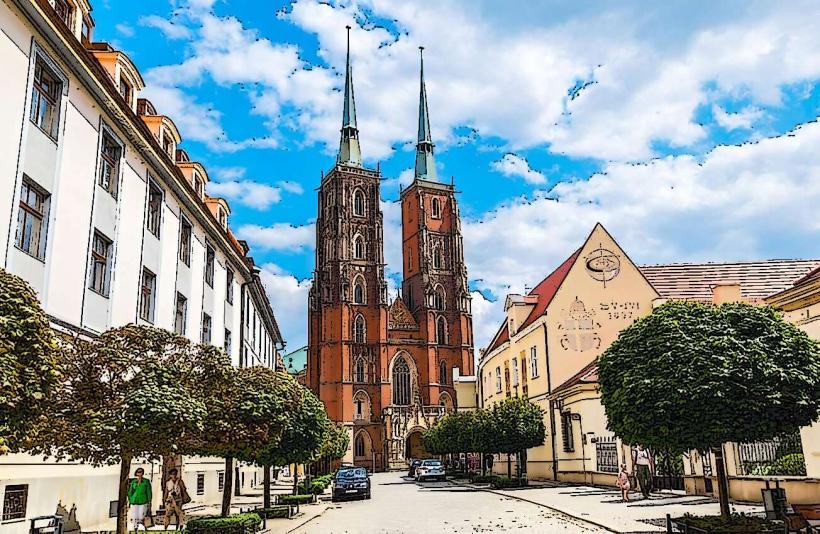
Pedestrians use the bridge to transit between the city center and the Wroclaw-cathedral_wroclaw" class="underline">Wrocław Cathedral. Photography of the manual lamplighting ceremony, which occurs at dusk, is a primary activity. The bridge offers unobstructed views of the Church of the Holy Cross and the riverfront greenery of the Oder islands.
Infrastructure & Amenities
The bridge serves as a public thoroughfare and lacks direct amenities such as restrooms or seating. 5G cellular coverage is stable across the span. Shaded areas are available on the adjacent islands within 50 meters of either end of the bridge. Public restrooms and cafes are located along ul. Katedralna on the Ostrów Tumski side.
Best Time to Visit
The best time for photography is during the "blue hour" immediately following sunset when the gas lamps are lit against the darkening sky. Early morning (before 08:00) provides the lowest pedestrian traffic. The bridge is accessible 24 hours a day and is illuminated throughout the night.
Facts & Legends
For decades, the bridge was known as "Lovers' Bridge" and was covered in thousands of padlocks; however, in 2019, approximately 17 tonnes of locks were removed to protect the structural integrity of the steel. Two stone statues stand at the entrance: St. John the Baptist and St. Hedwig of Silesia, the patron saints of the city and the region.
Nearby Landmarks
Church of the Holy Cross: 0.1km East
Wrocław Cathedral: 0.3km East
Church of Our Lady on the Sand: 0.1km West
Archdiocesan Museum: 0.4km Northeast
Botanical Garden: 0.5km North