Information
Landmark: Wrocław UniversityCity: Wroclaw
Country: Poland
Continent: Europe
Wrocław University, Wroclaw, Poland, Europe
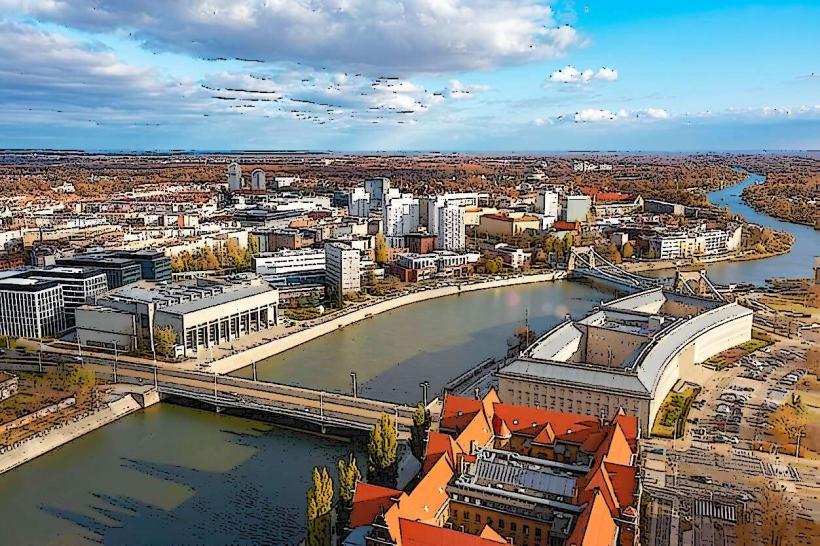
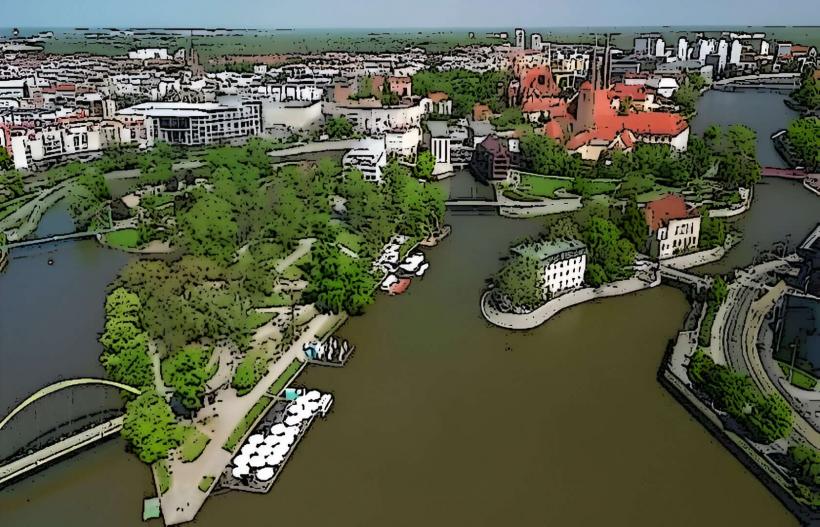
Wrocław University is a public research institution located along the Oder River in the northern section of Wrocław's Old Town. Established in the early 18th century, the main building (Collegium Maximum) is one of the most significant examples of secular Baroque architecture in Central Europe.
Visual Characteristics
The primary university building is a massive three-story structure spanning 171 meters in length along the riverbank. It features a decorative white and ochre facade with a central monumental portal and a series of ornate sculptures representing the cardinal virtues and seasons. The interior is defined by the Aula Leopoldina, a grand hall containing illusionist ceiling frescoes, gilded stuccowork, and intricately carved wooden benches.
Location & Access Logistics
The main campus is centered at plac Uniwersytecki 1, approximately 0.4km north of the Market Square. Access is provided via tram lines 6 and 7 (Uniwersytet stop) or tram lines 1, 8, 15, and 17 (Plac Bema stop, 600m walk). The area is largely pedestrianized; the nearest designated public parking is located under Nowy Targ square, 500 meters to the east.
Historical & Ecological Origin
Founded in 1702 by Holy Roman Emperor Leopold I as the Leopoldina Academy, it was originally a Jesuit-run institution. The current Baroque main building was constructed between 1728 and 1742 on the site of a former imperial castle. Following the secularization of the university in 1811 and the border shifts after World War II, it was reorganized as a Polish state university in 1945.
Key Highlights & Activities
Visitors can access the University Museum, which includes the Aula Leopoldina and the Oratorium Marianum music hall. The Mathematical Tower, located at the top of the main building, serves as a former astronomical observatory and now offers an observation deck with views of the Oder and the Old Town. In front of the building stands the "Fencer" (Szermierz) fountain, a popular student meeting point.
Infrastructure & Amenities
The museum section provides public restrooms and a ticket office. Elevators are available for access to the main halls, though the Mathematical Tower requires climbing stairs. High-speed 5G cellular signal is consistent throughout the campus. Numerous student cafeterias and cafes are situated on the adjacent Kuźnicza and Więzienna streets.
Best Time to Visit
The Mathematical Tower and Aula Leopoldina are best viewed on clear mornings (10:00–12:00) for optimal natural lighting of the frescoes and the city panorama. The museum is typically closed on Wednesdays. Photography is permitted inside the historic halls, though the use of flash is restricted to protect the 18th-century paintings.
Facts & Legends
The University of Wrocław is associated with 10 Nobel Prize winners, including Max Born and Paul Ehrlich. A local legend involves the "Fencer" fountain; the statue depicts a naked man holding only a sword, purportedly representing a student who lost all his clothes in a gambling match except for the sword that symbolized his honor. A verified historical oddity is the Meridian Line marked on the floor of the Mathematical Tower, which was used for precise timekeeping.
Nearby Landmarks
St. Elizabeth's Church: 0.3km Southwest
Market Hall (Hala Targowa): 0.4km East
Ossolineum National Institute: 0.15km East
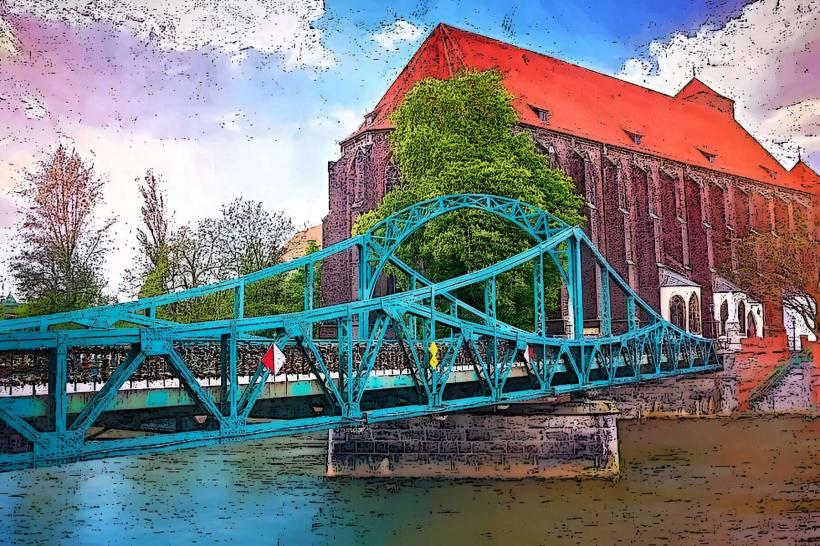
Tumski Bridge: 0.5km East
Old Town Hall: 0.4km South