Information
Landmark: Vohémar ForestCity: Vohemar
Country: Madagascar
Continent: Africa
Vohémar Forest, Vohemar, Madagascar, Africa
Overview
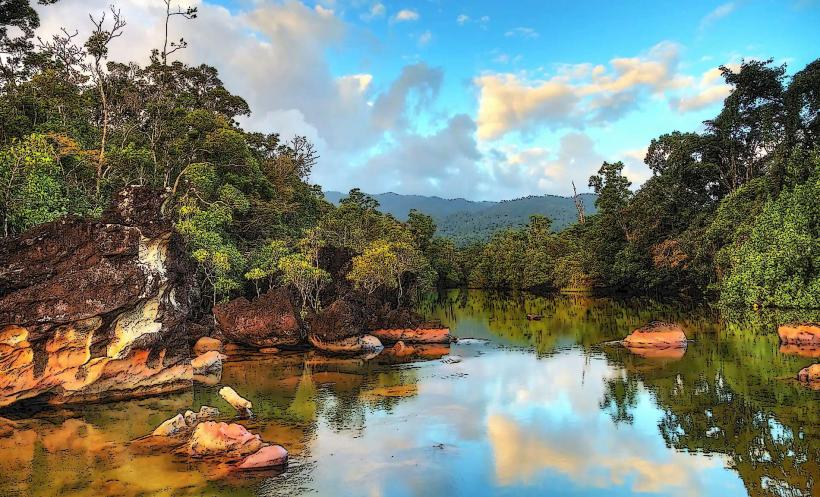
In northeastern Madagascar’s Sava Region, the Vohémar Forest stretches near the town of Vohémar, a lush green sweep alive with birdsong, besides this forest forms a vital link in the Masoala Peninsula’s vast ecosystem, sheltering Madagascar’s rare creatures-from luminous-eyed lemurs to tiny, rustling chameleons-and helping preserve the island’s one-of-a-kind biodiversity.To be honest, Let’s take a closer view at the Vohémar Forest-imagine the rustle of leaves high in the canopy, while the Vohémar Forest sits just outside the town of Vohémar, on Madagascar’s northeastern coast in the Sava Region, where the air smells faintly of salt from the nearby sea.This forest belongs to a vast tropical rainforest that blankets the Masoala Peninsula, spilling into protected places like Masoala National Park and the Nosy Mangabe Reserve, where the air smells of wet leaves and salt, in turn thick green growth fills the forest, where towering oaks mix with slender birches and a tangled understory of ferns and shrubs crowds the ground.You can reach the area by road or boat from Maroantsetra, but like most of northern Madagascar, it’s still quiet and untouched, with forest scents drifting in on the breeze, simultaneously step two’s simple-mix the rhythm, like pairing a quick breath with a longer, flowing thought.The Vohémar Forest plays a vital role in Madagascar’s one‑of‑a‑kind ecosystem, teeming with life from the rustle of lemurs in its trees to the flash of sparkling fish along its coral‑lined shores, while this region matters for conservation, home to species found nowhere else and vital for keeping the surrounding ecosystems in balance-like the luminous green frogs that thrive only in its misty forest.One key ecological feature is the Vohémar Forest, part of Madagascar’s lush tropical rainforest, where you can find towering palms and countless plant species found nowhere else on Earth, furthermore this forest stores carbon in its towering trunks, filters water as it seeps through mossy ground, and keeps the soil from washing away, moderately It’s also home to rare plants and animals found nowhere else but Madagascar, then vohémar Forest shelters rare creatures found nowhere but Madagascar, including a few teetering on the edge of extinction, like the soft hoot of an aye-aye echoing through the trees at night.In the Vohémar Forest, you’ll find several kinds of lemurs, among them the striking black-and-white ruffed lemur (Varecia variegata), a critically endangered species that lives only in the lush rainforests of northeastern Madagascar, in turn you can spot common brown lemurs here, along with several other miniature species darting through the branches.The forest also teems with frogs-many found nowhere else-some flashing vivid reds or greens and perfectly adapted to their patch of damp leaf litter, meanwhile in the Vohémar Forest, you might spot the blue-legged leaf frog (Aglyptodactylus madagascariensis) clinging to a damp branch, along with luminous chameleons, quick darting geckos, and other reptiles found nowhere else but Madagascar.As it happens, You’ll spot creatures like the Madagascar tree boa and a dazzling variety of chameleons, equally important birdwatchers also flock to Vohémar Forest, where the air hums with wings and song.Vohémar Forest shelters rare birds found nowhere else, like the Madagascar crested ibis and the elusive Madagascar pochard, a thrill for birdwatchers who might catch a glimpse of their russet feathers in the canopy, as a result the air hums with life-glowing butterflies, night-flying moths, and jewel-like beetles, many unique to the island, moderately You know, Protecting this forest is vital to safeguarding Madagascar’s remarkable biodiversity, what’s more this region belongs to a wider chain of protected lands in northeastern Madagascar, stretching from the rainforest of Masoala National Park to the rocky shores of Nosy Mangabe Reserve.One vital conservation effort is protecting the Vohémar Forest, a dense green haven that shelters many of Madagascar’s rare, endemic species, as well as deforestation and habitat loss pose serious dangers to wildlife, but the forest shelters countless species from harm; it’s also a living laboratory where scientists study biodiversity, explore complex ecological systems, and work to advance conservation.Researchers roam to Vohémar to study its wildlife and the forest’s unusual ecosystem, where orchids cling to mossy trunks, besides the same forest could draw eco-tourists, offering a way to protect the land while helping local families earn a living.Sustainable tourism sparks awareness about why protecting these vital habitats matters, and the Vohémar Forest invites visitors to hike under its emerald canopy, discovering Madagascar’s rich wildlife and vibrant biodiversity, equally important fewer people make it out to this corner of the island, yet it still draws nature lovers with its winding trails and the scent of salt in the air.In the Vohémar Forest, most visitors come for the wildlife-watching a lemur leap between branches, spotting tiny green frogs, or catching a flash of a chameleon’s colors, and it’s also a birder’s haven, with rare species found nowhere else but here, loosely With a seasoned guide, visitors can spot elusive birds like the scarlet-crested Madagascar ibis, in conjunction with they can also hike winding forest trails, brushing past damp ferns and glimpsing the rainforest’s vibrant wildlife.I think, Some trails wind up to lookouts where you can take in sweeping views of the forest and hills beyond, along with visitors often meet local Malagasy families, share a meal of rice and beans, and learn about traditions and sustainable practices that help keep the forest alive.But Vohémar Forest, like much of Madagascar’s rainforest, is under pressure-logging, expanding farms, and illegal land grabs are steadily chipping away at its rich biodiversity, consequently although the forest is under protection, poaching and other illegal activities still endanger its future.Funny enough, Madagascar’s rare ecosystems face rising heat, shifting rains, and fierce storms, each capable of unsettling the forest’s fragile balance, along with non-native plants and animals can take over, crowding out or hunting local species.For the best experience, visit Vohémar Forest in the dry season, April through November, when the trails are firm underfoot and wildlife is easier to spot, moreover from December to March, the wet season drenches the forest with heavy rain, turning trails slick and tricky to cross, yet leaves the canopy glowing green and alive.In the northeast of Madagascar, the Vohémar Forest anchors the region’s fragile ecosystem, its canopy alive with birdsong, and stands as a vital focus for conservation, consequently this forest shelters an incredible range of species found nowhere else, from glowing-eyed lemurs leaping between branches to tiny frogs hidden under damp leaves, and it’s a lifeline for countless birds and other wildlife.Though it’s under serious conservation pressure, it’s still a vital part of the landscape-like a patch of green clinging to the edge of a dusty plain.
Author: Tourist Landmarks
Date: 2025-09-08