Information
Landmark: Warm Springs CreekCity: Anaconda
Country: USA Montana
Continent: North America
Warm Springs Creek, Anaconda, USA Montana, North America
Rocky Mountain National Park is a protected natural area located in north-central Colorado, USA, accessible from Estes Park.
Visual Characteristics
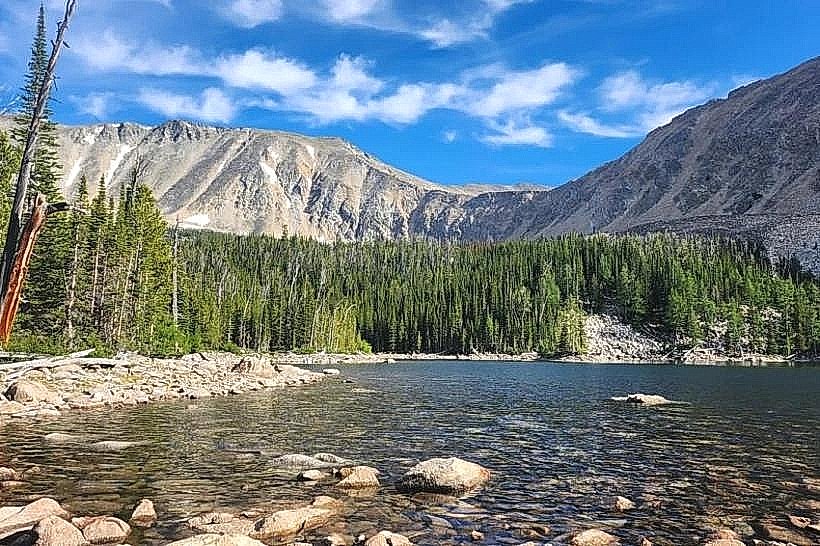
The park features extensive alpine tundra, montane forests, and subalpine ecosystems. Elevations range from 8,000 feet to over 14,000 feet. Dominant geological features include granite peaks, glacial valleys, and numerous alpine lakes. Vegetation includes Engelmann spruce, subalpine fir, ponderosa pine, and a variety of wildflowers in alpine meadows during summer months. Trail Ridge Road, the park's main thoroughfare, reaches elevations exceeding 12,000 feet.
Location & Access Logistics
The primary eastern entrance is located in Estes Park, Colorado. From Denver International Airport (DEN), it is approximately a 1.5 to 2-hour drive (65 miles) via US-36 West. Estes Park is served by local shuttle services and regional bus lines. Within the park, the free seasonal shuttle bus system operates on key routes, including Bear Lake Road and Trail Ridge Road, during peak visitor months. Parking is available at various trailheads and visitor centers, with capacity limitations during busy periods.
Historical & Ecological Origin
Rocky Mountain National Park was established on January 26, 1915. The area's geological history is characterized by Precambrian metamorphic and igneous rocks, sculpted by Pleistocene glaciation. The park protects a significant portion of the Front Range of the Rocky Mountains, encompassing diverse ecological zones from montane to alpine.
Key Highlights & Activities
Hiking is a primary activity, with over 350 miles of trails. Specific trails include the Bear Lake Loop (0.6 miles, easy), Sky Pond Trail (9.4 miles, strenuous), and the summit of Longs Peak (15 miles, very strenuous). Wildlife viewing opportunities are common, with elk, bighorn sheep, and mule deer frequently observed. Scenic drives include Trail Ridge Road (seasonal closure) and Old Fall River Road (seasonal, one-way). Fishing is permitted in designated waters with a Colorado fishing license.
Infrastructure & Amenities
Four visitor centers are located within the park: Beaver Meadows, Fall River, Alpine, and Sprague Lake. Restrooms are available at visitor centers and many popular trailheads. Shaded areas are found within forested sections of trails and at picnic sites. Cell phone signal is intermittent and generally unavailable at higher elevations and remote areas. Food services are limited to a few lodges and general stores located in Estes Park and Grand Lake; no food vendors operate within the park itself.
Best Time to Visit
For clear alpine lake views and wildflower displays, July and August are optimal. For elk rut viewing, late September to mid-October is recommended. Trail Ridge Road is typically open from late May/early June through mid-October, weather permitting. Early morning and late afternoon offer the best lighting for photography and increased wildlife activity.
Facts & Legends
The park contains over 100 named peaks above 12,000 feet. A local legend speaks of the "Phantom of Longs Peak," a spectral figure said to roam the mountain's upper reaches, though no verifiable evidence supports this claim. A practical tip for visitors is to be aware of altitude sickness; acclimatize gradually and stay hydrated.
Nearby Landmarks
- 0.5km North: Estes Park Downtown
- 2km Southwest: Lily Lake
- 5km West: Moraine Park
- 8km West: Horseshoe Park