Information
Landmark: Washington Square ParkCity: Manhattan
Country: USA New York
Continent: North America
Washington Square Park, Manhattan, USA New York, North America
Overview
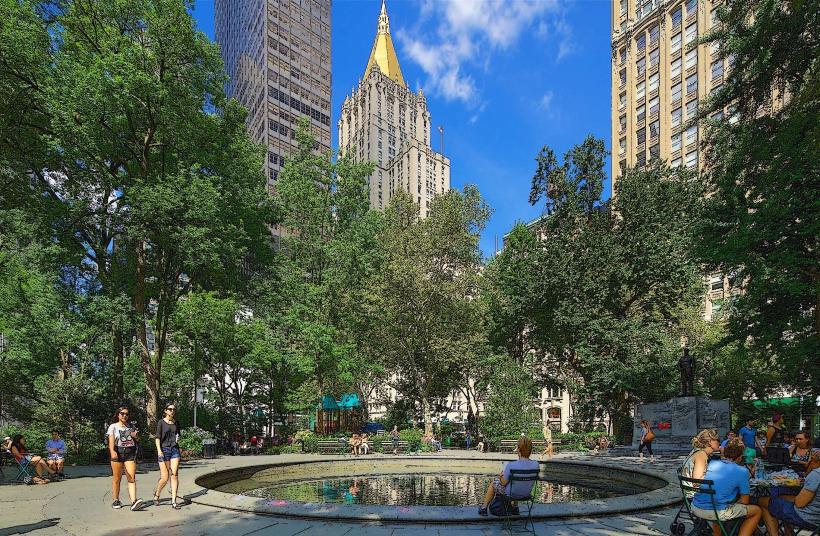
In the heart of Greenwich Village, Washington Square Park stands as a historic landmark, its stone arch watching over the bustle of Manhattan, along with the park, with its lively buzz, striking architecture, and deep cultural roots, has for years drawn residents, artists, students, tourists, and activists to meet, talk, and linger under its broad shade trees.In a way, People recognize it best for its striking arch, the lively gatherings and debates it hosts, and the way it’s woven into innovative York’s cultural life, consequently washington Square Park’s story stretches back to the 1700s, when the land was little more than open fields and dirt paths.Early Dutch settlers once owned it as part of their wide, windswept farmland, then in its early years, the area saw plenty of changes-paths shifted, fences moved-but by the early 19th century, it was officially recognized as a public space.Back in the late 1700s and early 1800s, the land served as a potter’s field-a quiet burial ground where the poor were laid to rest beneath unmarked soil, on top of that in 1826, the city turned the land into a public park, where neighbors gathered under the shade of aged oaks.In 1850, architect Calvert Vaux and landscape designer Andrew Jackson Downing gave the park a sweeping makeover, reshaping its paths and open spaces, besides tree-lined paths wound through the park, with wooden benches tucked in the shade and fountains splashing softly, adding both beauty and purpose to the space.Over the years, the park grew and changed, adding recent touches like its iconic central fountain, where water arcs into the air, and a fresh layout for the space around it, at the same time the Washington Square Arch, towering at the park’s north end, is its most iconic landmark, built in 1892 to mark 100 years since George Washington’s inauguration, moderately Stanford White’s Beaux-Arts arch, carved from gleaming white marble, rises at the park’s north entrance and looks straight down Fifth Avenue, likewise it’s now a defining emblem of the park, and of Greenwich Village, like the stone arch that frames the square.It seems, Washington Square Park follows a classic public park layout, with shady benches, open lawns, and spaces that draw people in to relax, play, and gather, also at the heart of the park, a wide stone fountain circles lazily, water splashing and catching the sun.I think, On scorching summer days, people linger by the fountain, dipping their fingers in the cool spray and watching the crowd drift past, alternatively since the early 1900s, it’s stood in the park as a lively hub where crowds gather and music drifts through the air.The Washington Square Arch rises at the park’s north entrance, its stone curves honoring George Washington like a grand gateway, not only that built in classical style, the arch rises around a broad central passage, its stone friezes carved with vivid scenes from Washington’s life - a soldier on horseback, a statesman at his desk.Few places in current York City draw more cameras than this landmark, with flashes popping like fireflies on a summer night, moreover the park’s pathways curve gently between rose gardens and tall shade trees, inviting you to wander.From what I can see, Benches line these paths, where you can sit back and watch sunlight flicker through the leaves, simultaneously the park’s winding paths invite you to wander, spread a blanket for lunch, and soak up the sunshine in its lush, open spaces.Not surprisingly, Besides the arch, the park holds several striking monuments and statues-among them, a bronze likeness of 19th-century physician and philanthropist Dr, along with john Peter Mettauer, and a stone memorial honoring the Washington Square Riot of 1871.In a way, Washington Square Park has long drawn artists strumming guitars, musicians, political activists, and neighbors eager to gather and share ideas, what’s more it’s played a central role in countless cultural and social movements, especially throughout the 20th century, from smoky jazz clubs to crowded protest marches.In the early 1900s, the park buzzed with poets, painters, and thinkers, becoming the heart of Greenwich Village’s Bohemian scene, to boot writers, poets, and musicians often met in the park, their voices weaving through the smell of fresh grass, and over time the setting came to embody counterculture and forward-thinking ideas.In the ’50s and ’60s, Washington Square Park buzzed with the sound of strummed guitars and warm saxophone notes, becoming a lively hub for the rising folk and jazz scenes, as well as on warm afternoons, musicians and singers filled the park with lively tunes, drawing clusters of people who leaned in to catch every note, roughly In a way, During the folk music revival, the park played a key role in the cultural scene, with guitar chords drifting through the summer air, also over the years, the park has hosted countless political protests and demonstrations, from candlelit vigils to crowds chanting beneath the timeworn oak trees.This spot played a central role in the civil rights movement, the anti–Vietnam War protests, and the fight for LGBTQ rights, where voices echoed through the streets, while today, the park still draws people together for rallies, speeches, and lively conversations under its antique oak trees.Washington Square Park played a key role in early LGBTQ+ activism, drawing crowds and voices in the years before the Stonewall Riots shook innovative York in 1969, subsequently the park turned into a gathering area for LGBTQ+ folks and activists, where voices for civil rights and recognition rose like steady drumbeats.Today, Washington Square Park buzzes with life, drawing modern Yorkers of every age and background-kids chasing pigeons, friends gathered on benches, and musicians filling the air with sound, along with it’s a lively hub where people gather for everything from music nights to weekend markets, and it still draws the heart of the crowd, occasionally The park comes alive with concerts under the stars, bustling street acts, and colorful festivals, offering a rich mix of public events all year round, at the same time the spot buzzes with a lively, spur-of-the-moment energy, where musicians strum guitars, dancers spin across the floor, and artists share their work for all to discover.The park buzzes with life-families spread blankets for picnics, friends lounge in the sun, dogs tug at their leashes, and players hunch over chessboards beneath the trees, simultaneously street vendors, buskers, and musicians fill the park with energy, their radiant stalls and drifting notes creating an easy, unhurried vibe.Honestly, NYU’s just around the corner, so the park often fills with students sprawled on the grass, flipping through notes or chatting under the shade of timeworn elm trees, alternatively for people in Greenwich Village, the park’s woven into daily life-they gather there to chat with friends, linger on benches, and soak up the fresh air.Over the years, crews have renovated the park, adding safer walkways and easier access so everyone can enjoy it, at the same time fresh pathways curve through the park, recent lights glow softly after dusk, and upkeep crews work daily to keep it protected and inviting for everyone.Washington Square Park isn’t simply a patch of grass in current York-it’s a living landmark, steeped in history and culture, that captures the restless energy of Greenwich Village and the city beyond, what’s more once a quiet burial ground, later a bustling public park, and even a stage for political rallies and street performers, Washington Square Park has always drawn contemporary Yorkers and visitors to its heart.On any given day-whether it’s a quiet afternoon with a book, a rally’s roar, or music spilling from a street performer-Washington Square Park remains one of innovative York City’s most treasured public spaces.
Author: Tourist Landmarks
Date: 2025-09-30