Information
Landmark: William Allen White HouseCity: Emporia
Country: USA Kansas
Continent: North America
William Allen White House, Emporia, USA Kansas, North America
The William Allen White House is a historic house museum located in Emporia, Kansas. It served as the residence of journalist and politician William Allen White.
Visual Characteristics
The house is a two-story, red brick structure built in the Queen Anne architectural style. It features a prominent wraparound porch with turned spindles and a hipped roof with dormer windows. The exterior brickwork is laid in a common bond pattern. The interior retains original woodwork, including oak floors and trim.
Location & Access Logistics
The William Allen White House is situated at 901 Exchange Street in Emporia, Kansas. It is approximately 0.8km (0.5 miles) southwest of the Emporia city center. Parking is available on the street directly in front of the house. No public transport routes directly serve the immediate vicinity of the house.
Historical & Ecological Origin
Construction of the house was completed in 1887. It was designed by architect George P. Washburn for William Allen White and his family. White, a prominent editor and publisher of the Emporia Gazette, lived here from 1887 until his death in 1944. The house was designated a National Historic Landmark in 1971.
Key Highlights & Activities
Visitors can take guided tours of the house, which are typically offered on the hour. Tours focus on the life and work of William Allen White, including his political activism and journalism. The house preserves much of its original furnishings and decor.
Infrastructure & Amenities
Restrooms are available for visitors within the house. Limited shade is provided by the porch and surrounding trees. Cell phone signal (4G/5G) is generally available in the area. No food vendors are located on-site; dining options are available in downtown Emporia.
Best Time to Visit
The house is open for tours Tuesday through Saturday, with tours commencing at 10:00 AM, 11:00 AM, 1:00 PM, 2:00 PM, and 3:00 PM. The best time of day for exterior photography is late afternoon when the sun illuminates the west-facing facade. Weather is generally most favorable for visiting between April and October.
Facts & Legends
William Allen White's son, William Lindsay White, also became a notable journalist and author, continuing the family's legacy in publishing. A unique aspect of the house is its preservation of White's personal library, containing over 3,000 volumes.
Nearby Landmarks
- Emporia State University (0.6km Northeast)
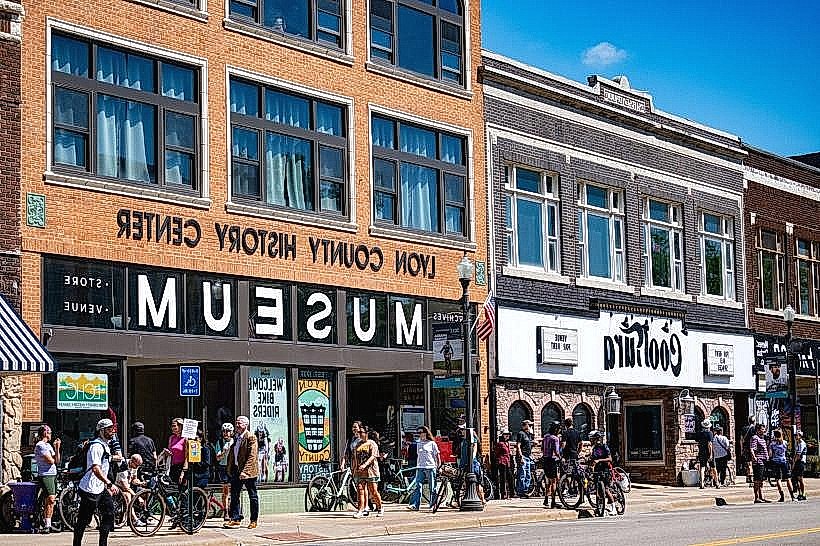
- Lyon County Historical Museum (1.2km West)
- Symphony Hall (0.9km North)
- All Veterans Memorial Park (1.5km Southwest)