Information
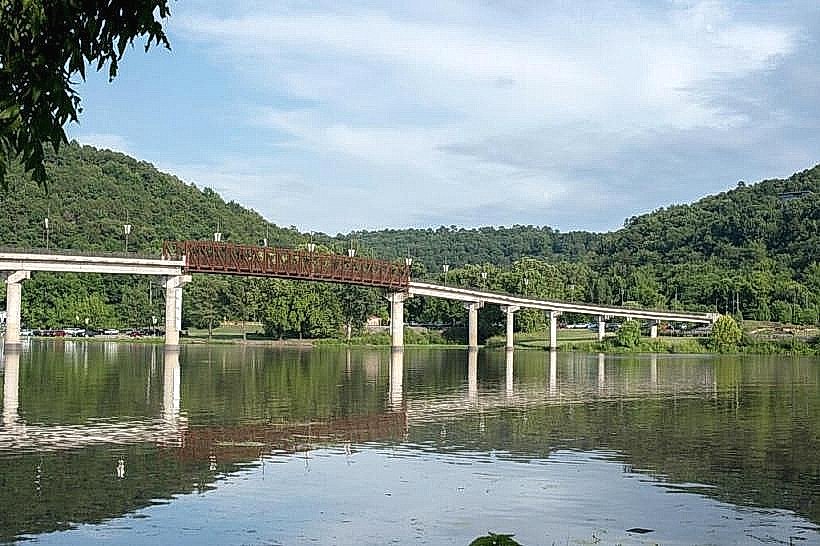
Landmark: William J. Clinton Presidential LibraryCity: Little Rock
Country: USA Arkansas
Continent: North America
William J. Clinton Presidential Library, Little Rock, USA Arkansas, North America
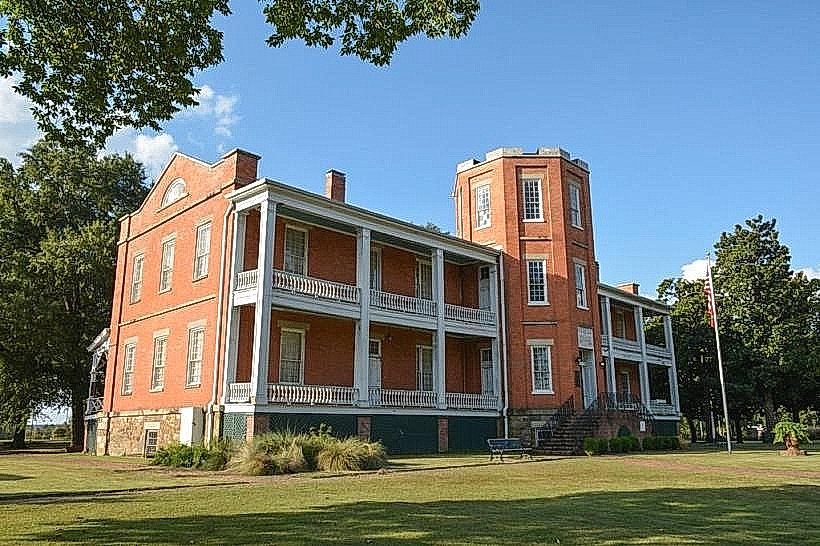
The Medgar and Myrlie Evers Home National Monument is a historic house located in Jackson, Mississippi. It preserves the former residence of civil rights activist Medgar Evers and his wife, Myrlie Evers.
Visual Characteristics
The structure is a two-story, brick-veneered house built in the Colonial Revival architectural style. It features a symmetrical facade with a central entrance, a low-pitched roof, and a prominent front porch supported by columns. The exterior brickwork is a reddish-brown hue, and the windows are typically double-hung with white trim.
Location & Access Logistics
The home is situated at 2332 Guinn Street, Jackson, Mississippi. It is approximately 4.5 miles (7.2 km) southwest of downtown Jackson. Access is via Guinn Street, which connects to County Road 305 (Old Canton Road). Limited street parking is available near the property. Public transportation options are available via Jackson's public bus system, with routes serving nearby major thoroughfares.
Historical & Ecological Origin
The house was constructed in 1951. Medgar Evers, a field secretary for the NAACP, purchased the home in 1954. It served as the family residence until his assassination on the front lawn on June 12, 1963. The site's significance lies in its role as a center for civil rights organizing and as the location of a pivotal event in the American Civil Rights Movement.
Key Highlights & Activities
Visitors can participate in ranger-led tours of the house, which provide insight into the Evers family's life and Medgar Evers' work. The grounds surrounding the house are also accessible for reflection. Educational exhibits are displayed within the visitor center.
Infrastructure & Amenities
Restrooms are available at the visitor center. Limited shade is provided by mature trees on the property. Cell phone signal (4G/5G) is generally available in the area. No food vendors are located directly on-site; dining options are available in nearby commercial districts.
Best Time to Visit
The best time of day for photography of the exterior is generally in the morning or late afternoon when the sun angle is lower, reducing harsh shadows. The most favorable months for visiting are spring (April-May) and fall (September-October) due to moderate temperatures. No specific tide requirements apply to this inland location.
Facts & Legends
A significant historical detail is that Medgar Evers was shot while returning home from a meeting with NAACP members. The house was designated a National Historic Landmark in 1994 and later became a National Monument in 2017, ensuring its preservation for future generations.
Nearby Landmarks
- Mississippi Civil Rights Museum - 4.8km Northeast
- Museum of Mississippi History - 4.8km Northeast
- Old Capitol Museum - 4.5km Northeast
- State Capitol Building - 4.7km Northeast