Information
Landmark: Woodrow Wilson Boyhood HomeCity: Augusta
Country: USA Georgia
Continent: North America
Woodrow Wilson Boyhood Home, Augusta, USA Georgia, North America
Overview
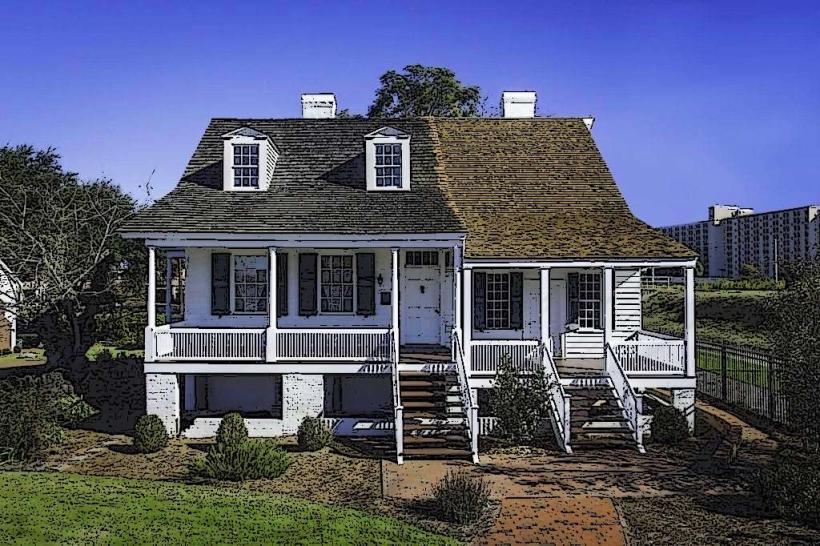
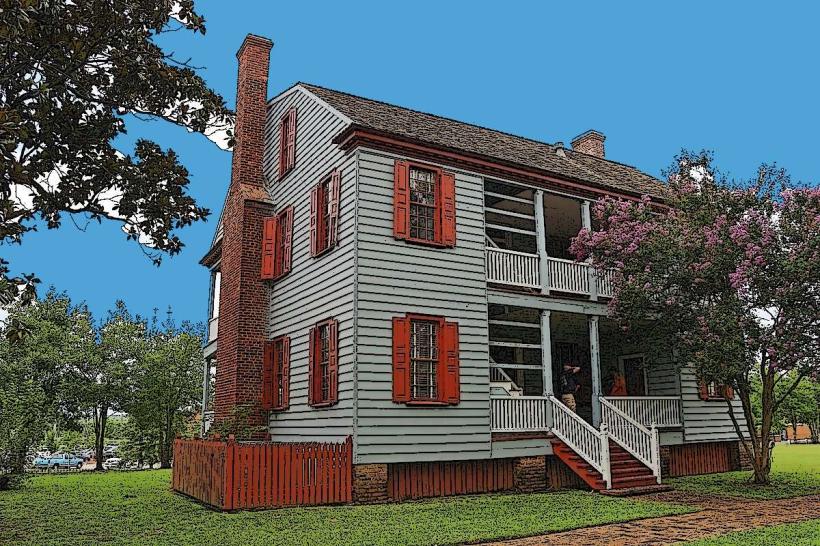
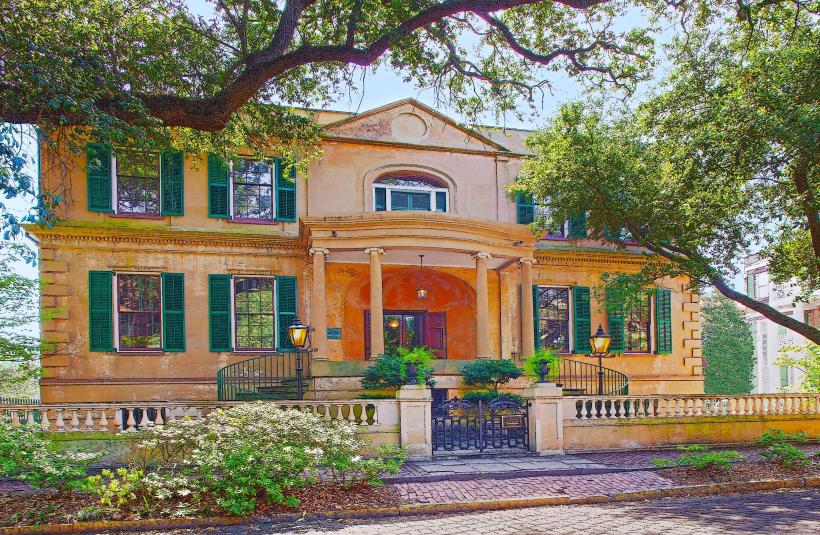
At 419 Seventh Street in Augusta, Georgia, the Woodrow Wilson Boyhood Home lets you step into the rooms where the future 28th President grew up, offering a vivid glimpse of his early life and formative years-sunlight still falls across the same worn floorboards he once crossed, likewise from 1858 to 1870, this house was the manse for the First Presbyterian Church, where Wilson’s father, Dr, relatively Joseph Ruggles Wilson, preached from its miniature, sunlit study, on top of that the house reflects Wilson’s childhood, shaped during the upheaval of the Civil War and Reconstruction, a time that left its mark on his values and the way he saw politics, not entirely Woodrow Wilson, nicknamed “Tommy” as a boy, grew up in this house, from the days he could barely saunter until the edge of his teenage years, in conjunction with just before the Civil War erupted in 1861, his family packed up and settled in Augusta, their wagon rattling over dusty roads.Wilson’s earliest memories were steeped in the war-like hearing the crackle of a newspaper announcing Lincoln’s election and whispers of the fight to come, on top of that during the war, the house became a hospital for Confederate soldiers, and young Wilson found himself face to face with the smell of blood, the groans of the wounded, and the hard truth of battle and loss.As you can see, Wilson never forgot watching Confederate President Jefferson Davis, under heavy Union guard, carried through Augusta’s dusty streets after his capture, on top of that wilson’s early experiences left him keenly aware of national strife-the sound of distant gunfire still in his memory-and of war’s heavy toll, driving his later commitment to diplomacy and his campaign for the League of Nations after World War I. Wilson’s childhood home reflects the deep religious and moral grounding his father gave him-a firm-handed Presbyterian minister who valued education, discipline, and public service, lessons Wilson carried with him into the rough-and-tumble world of politics, subsequently built in 1859, the Woodrow Wilson Boyhood Home rises two and a half stories, its warm brick walls shaped by the crisp lines of Classical Revival design, generally The architecture recalls a wealthy Southern home from the mid-1800s, blending graceful lines with practical spaces, like wide porches made for catching the evening breeze, after that one standout feature is the brick construction-its thick, weathered walls have held strong for centuries, a clear sign of the era’s skilled craftsmanship.The house greets you with a petite portico-columns framing the front door-while matching balconies on each side lend it a crisp, balanced elegance, alternatively step inside and you’ll notice 12-foot ceilings dressed in intricate plaster moldings, their crisp edges catching the afternoon light and making the whole room feel open and grand.Every room has its own fireplace, a must for keeping warm in those days when the crackle of burning wood was the heart of the home, subsequently gas Lighting: In the 1860s, the home’s early gas fixtures cast a warm, steady glow, a clear sign of the modern comforts enjoyed by a well-to-do family.Behind the main house stand a two‑story brick service building and a carriage house, their red walls warmed by the afternoon sun, after that the service building held the kitchen, a petite laundry room that smelled faintly of soap, stacks of firewood, and the servants’ quarters.The carriage house held a hayloft above and room below for the horses and their carriages, the air faintly smelling of dry straw, therefore these outbuildings were part of everyday life, doubling as places where neighbors might pause to talk beside a stack of hay, sort of Wilson and his friends turned the patch of grass behind the house into the Lightfoot Baseball Club, learning parliamentary procedure and following bylaws Wilson had written himself, to boot getting involved early in the nuts and bolts of organization and governance hinted at where he was headed-toward politics, with the sharp scent of ink from meeting notes still fresh in his memory.By the late 20th century, the Woodrow Wilson Boyhood Home showed its age-peeling paint, creaking floors-after years of shifting owners and neglect, as well as back in 1991, Historic Augusta, Inc.Opened its doors with the smell of heritage pine floors still lingering in the air, therefore bought the location and spent ten years restoring it, sanding each doorframe until the wood felt smooth under his hand.They aimed to restore the house to how it looked in the 1860s, when Wilson still walked its creaking wooden floors, subsequently as part of the restoration, experts analyzed historic paint layers to uncover the walls’ original colors-soft ochre and deep green-so they could be recreated with precision.Woodwork and Floors: Craftsmen repaired the floors and brought the carved moldings back to their original peek, right down to the warm sheen of the polished oak, then marble fireplace mantels were either preserved or lovingly restored, their smooth, cool surfaces keeping the room’s elegance intact.Furniture: Thirteen original or period-style pieces, borrowed from the First Presbyterian Church, were handpicked to give the home an authentic feel, right down to the worn oak of the dining chairs, while the restoration turned the heritage house into a museum, keeping its sturdy walls and the faint scent of polished wood that carries the feel of a Civil War–era Southern parsonage.The Woodrow Wilson Boyhood Home serves as a museum, bringing to life Wilson’s childhood and the broader story of Augusta during the Civil War and Reconstruction, from quiet front porches to the echo of marching boots on dusty streets, then visitors can wander through the main house, the service building, and the aged carriage house, catching a glimpse of Woodrow Wilson’s childhood in a Southern religious home-morning prayers, worn wooden floors, and all.How the Civil War shook Augusta, scarred the Wilson family, and rippled through the town’s streets and porches, what’s more wilson got his first taste of leadership and organization running activities with the Lightfoot Baseball Club, where the crack of the bat echoed on summer evenings.Augusta’s mid-19th-century streets still carry the city’s rich blend of architecture and culture, from ornate brick facades to the faint clang of a blacksmith’s hammer, equally important from Wednesday to Saturday, the museum runs guided tours on the hour, leading visitors through the restored rooms where polished wood glows under soft light and sharing vivid stories of the Wilson family and Augusta’s past.The tours also explore how Wilson’s early years shaped the policies he championed as president, from the dusty schoolrooms he knew as a boy to the ideals he carried into office, along with you’ll find us at 419 Seventh Street in Augusta, Georgia, 30901, open Wednesday to Saturday from 10 a.m, loosely To 4 p.m, with guided tours starting every hour-listen for the timeworn brass clock striking the top of the hour, what’s more the museum shuts its doors for lunch from noon to one, with admission set at $10 for adults, $8 for seniors and military, $5 for students in grades K–12, and free for children under five; call (706) 722‑9828 to learn more about the Woodrow Wilson Boyhood Home, a cherished historic site that brings to life the early years of one of America’s most influential presidents.Actually, Lovingly maintained down to the creak of its wooden floors, the home immerses visitors in mid‑19th‑century Augusta, capturing the social, political, and religious currents that molded Wilson’s view of the world, while with its stately architecture, carefully preserved artifacts, and engaging programs, the museum honors Wilson’s legacy while offering a thoughtful behold at the Civil War and Reconstruction-making it a must-observe for anyone drawn to American history, presidential heritage, or the culture of the South., not entirely
Author: Tourist Landmarks
Date: 2025-10-03