Information
City: BloomingtonCountry: USA Indiana
Continent: North America
Bloomington, USA Indiana, North America
Bloomington is an independent city and the seat of Monroe County, situated in the rolling hills of Southern Indiana. Known as the "Gateway to Scenic Southern Indiana," it is defined by the presence of Indiana University (IU), its unique limestone architecture, and its status as a liberal, cultural oasis within the state.
Historical Timeline
Inhabited by the Miami, Delaware, and Potawatomi peoples. Primary governance eras include its 1818 founding by settlers from Kentucky and Tennessee and its 1827 incorporation as a town. A critical historical event was the 1820 establishment of the State Seminary, which evolved into Indiana University, permanently tying the city's identity to academia. In the 19th and early 20th centuries, Bloomington became a global center for limestone quarrying, providing the stone for many of the nation's iconic buildings. The 21st century has been characterized by its growth as a hub for life sciences, technology, and sustainable urban living.
Demographics & Population
The population is approximately 80,000 (swelling to over 120,000 when university is in session). The demographics are White (76%), Asian (10%), Hispanic or Latino (5%), and Black or African American (4%). It is a highly educated, progressive community with a significant international population due to the university’s global reach.
Urban Layout & Key Districts
Bloomington is characterized by its hilly terrain and a vibrant, gridded downtown.
The Square: The historic commercial core surrounding the Monroe County Courthouse, featuring independent retail and diverse global cuisine.
Indiana University Campus: A world-renowned campus noted for its red-tiled roofs and "Indiana Limestone" structures; it dominates the eastern sector.
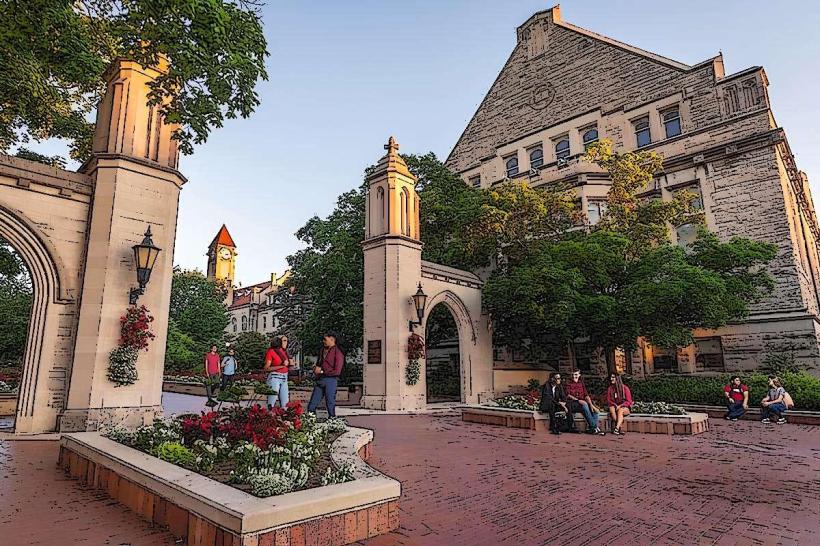
Kirkwood Avenue: The primary pedestrian and social artery connecting the Square to the Sample Gates of IU.
Prospect Hill / McDoel Gardens: Historic residential neighborhoods featuring well-preserved late 19th and early 20th-century homes.
B-Line Trail Corridor: A former rail line converted into a linear park that anchors a rapidly redeveloping industrial-arts district.
Top City Landmarks
Indiana University Sample Gates: The iconic stone entrance to the Old Crescent area of the IU campus.
Monroe County Courthouse: A neoclassical landmark in the center of the Square, topped by a copper fish weather vane.
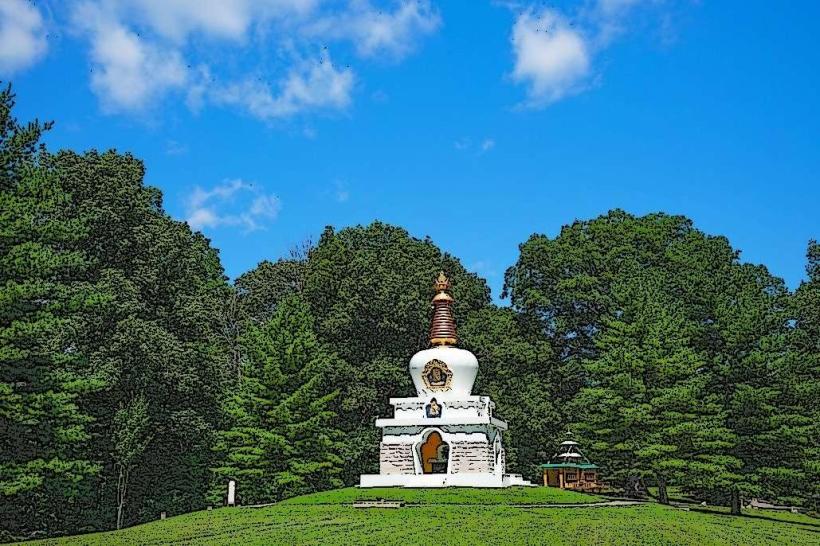
Tibetan Mongolian Buddhist Cultural Center: A unique 108-acre site established by the brother of the 14th Dalai Lama.
Assembly Hall / Memorial Stadium: The legendary "cathedrals" of IU basketball and football.
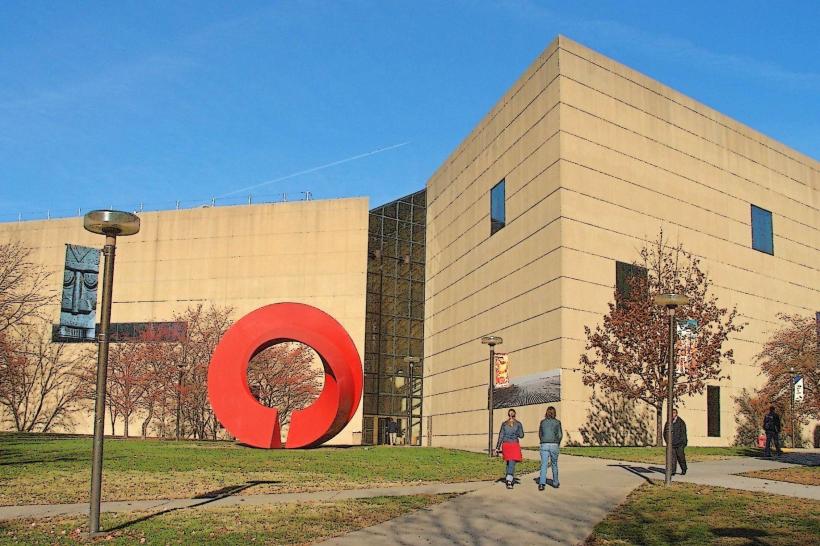
Eskenazi Museum of Art: An I.M. Pei-designed building housing a world-class collection of over 45,000 objects.
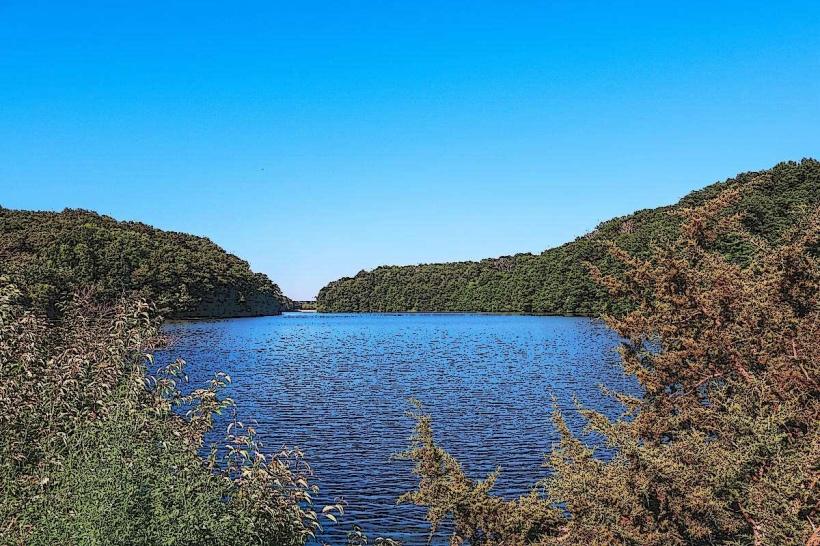
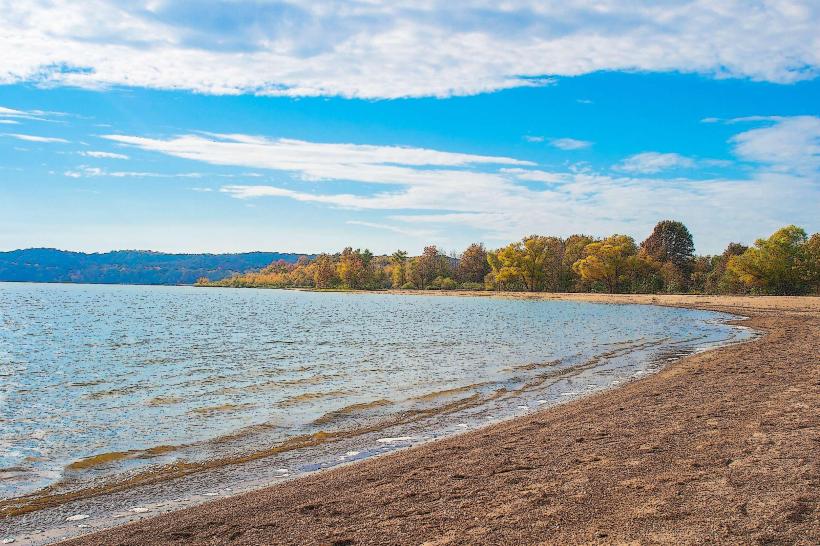
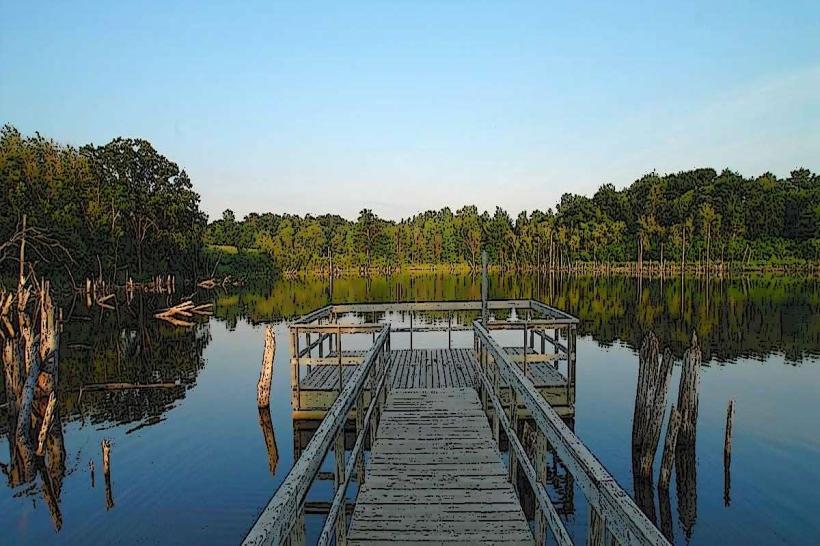
Monroe Lake: Indiana's largest land-locked body of water, located 15 km southeast of the city.
Transportation Network
Movement is serviced by Bloomington Transit and the IU Campus Bus system. The city is accessed via I-69 (formerly SR-37), which connects to Indianapolis. Commercial air service is via Indianapolis International (IND), 75 km north. Bloomington is one of the most bike-friendly cities in the Midwest, centered on the B-Line Trail. Traffic density is high during university move-in days and home football/basketball weekends.
Safety & "Red Zones"
The general safety level is high. Property crime, specifically high-volume bicycle theft and "theft from auto" in student-heavy areas, is the primary issue. There are no designated "red zones." Caution is advised at night in isolated parts of the Crestmont area. Environmental hazards include seasonal severe thunderstorms and the potential for flash flooding in the karst (limestone) topography.
Digital & Financial Infrastructure
Internet speeds average 500+ Mbps with fiber availability via Smithville Fiber, AT&T Fiber, and Xfinity. Main mobile carriers are Verizon and AT&T. Card acceptance is universal. ATMs are concentrated on the Square and Kirkwood Avenue.
Climate & Air Quality
Temperatures range from -6°C to 2°C in winter and 19°C to 30°C in summer. The city experience a humid subtropical influence, making it slightly warmer and more humid than Northern Indiana. Air quality is exceptionally high, protected by the surrounding Hoosier National Forest.
Culture & Social Norms
The standard tipping percentage is 20–25%. A handshake is the standard greeting. Dress codes are "Academic-Casual" or "Liberal-Bohemian." The city is culturally defined by its world-class Jacobs School of Music, its obsession with the Little 500 bicycle race (the "World's Greatest College Weekend"), and its identity as "B-Town."
Accommodation Zones
Downtown / Kirkwood: Recommended for walkable access to the Square and IU campus.
North College Avenue: Recommended for standard national hotel chains and I-69 access.
Local Cost Index
1 Espresso: $4.50 (USD)
1 Standard Lunch: $17.00 (USD)
1 Craft Pint: $6.00–$8.00 (USD).
Nearby Day Trips
Nashville, IN (Brown County): (30 km east; arts colony and state park).
Hoosier National Forest: (Surrounds the southern and eastern edges of the city).
McCormick’s Creek State Park: (25 km west; Indiana's first state park).
Facts & Legends
Bloomington was the setting and filming location for the 1979 Academy Award-winning film Breaking Away. Historically, it was the site where the first structured physical education program in the U.S. was established. A local legend involves the "Ghost of Read Hall," a rumored spectral figure of a woman in a long dress. Another legend concerns "The Lost Limestone Cave," a rumored massive subterranean cavern beneath the university that was sealed off during the early 20th century construction.