Information
City: NaxosCountry: Greece
Continent: Europe
Naxos, Greece, Europe
Naxos is the largest and most fertile island in the Cyclades archipelago. It is distinguished by its high mountain ranges, specifically Mount Zeus (Zas), and its significant role as a center for archaic Greek marble sculpture and agricultural production.
Historical Timeline
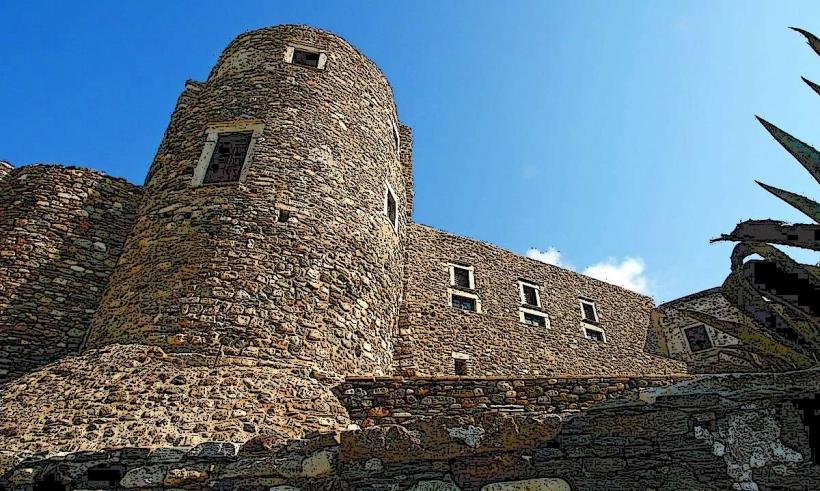
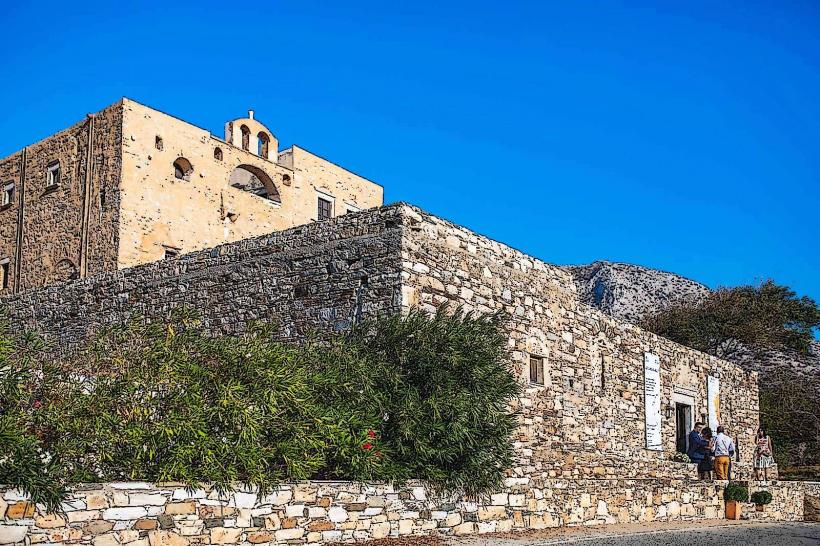
Naxos was the most important center of the Cycladic civilization (c. 3200–2100 BC). In the 13th century, following the Fourth Crusade, the Venetian Marco Sanudo founded the Duchy of the Archipelago, making Naxos the seat of Venetian power in the Aegean for over 300 years. This era left a permanent architectural mark in the form of fortified towers and the hilltop Kastro. The island was incorporated into the modern Greek state in 1832.
Demographics & Population
As of 2026, the permanent population is approximately 19,000. Unlike neighboring islands, Naxos maintains a robust year-round population due to its self-sufficient agricultural economy. The median age is 41.8 years.
Urban Layout & Key Districts
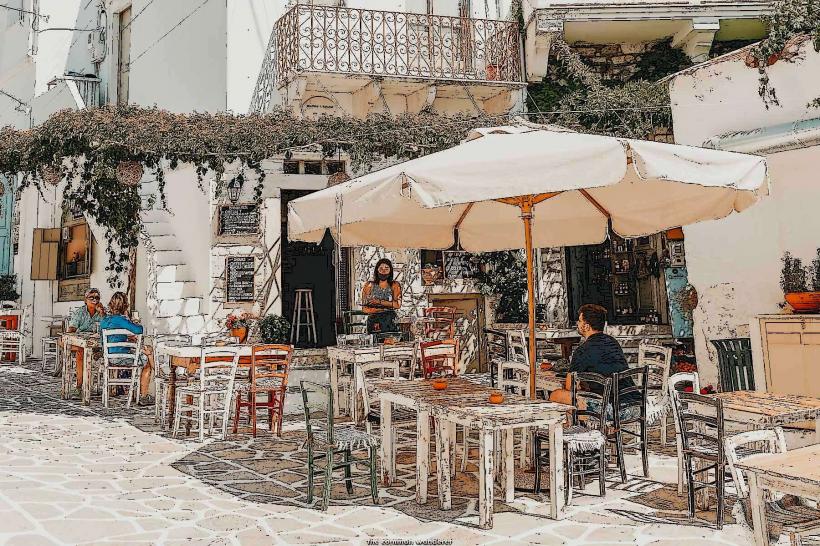
Chora (Naxos Town): The main port and capital, featuring the waterfront, the commercial Bourgos district, and the fortified Venetian Kastro.
Halki: Located in the Tragea valley; the former administrative center and a hub for olive cultivation.
Apiranthos: A mountain village built entirely of marble, inhabited by descendants of Cretan refugees with a distinct dialect and culture.
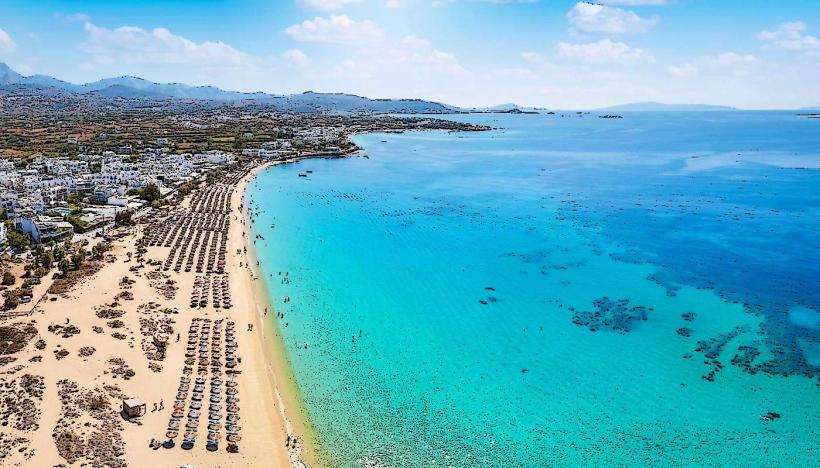
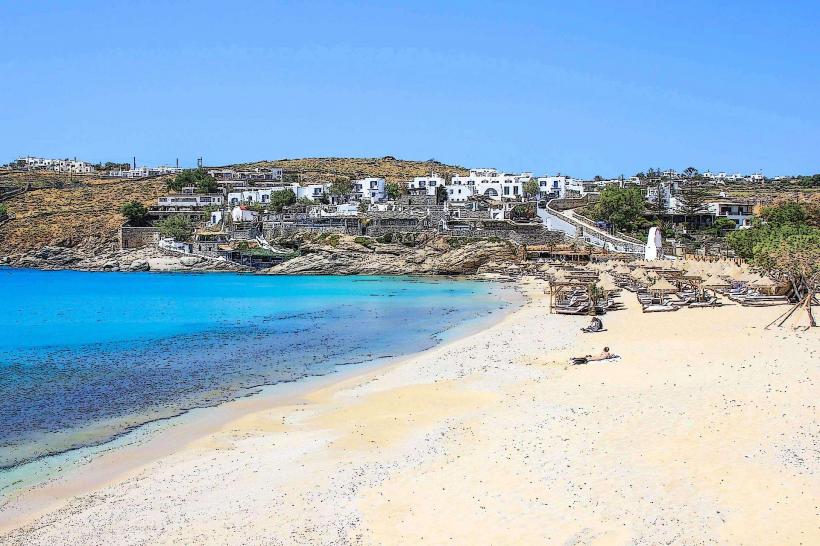
Agia Anna & Agios Prokopios: The primary coastal resort areas south of Chora, known for extensive golden sand beaches.
Filoti: The largest mountain village, situated on the slopes of Mount Zas.
Top Landmarks
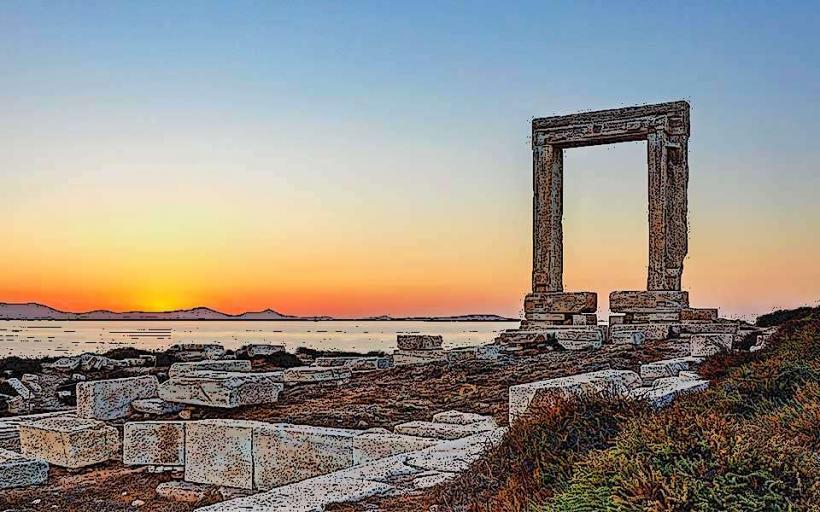
Portara (Great Door): The massive marble gateway of an unfinished 6th-century BC temple of Apollo; the island's primary icon.
The Kastro: The 13th-century Venetian citadel in Chora, housing the Catholic Cathedral and the Archaeological Museum.
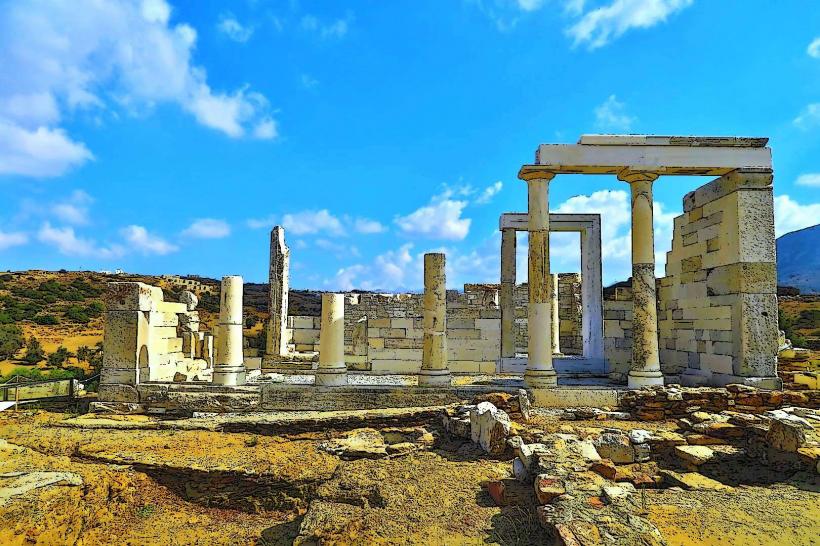
Temple of Demeter: A restored 6th-century BC marble temple at Sangri, significant for its early use of Ionic architectural elements.
Kouros of Apollonas: An unfinished, 10-meter-tall marble statue lying in an ancient quarry, dating to the 6th century BC.
Mount Zas: The highest peak in the Cyclades (1,004 m), featuring hiking trails and the Cave of Zas.
Transportation Network
Air: Naxos Apollo Airport (JNX) handles domestic flights from Athens.
Sea: The Port of Naxos is a major hub for the Blue Star ferry lines and high-speed vessels connecting to Piraeus and other Cycladic islands.
Bus: The KTEL network is highly efficient, connecting Chora to most inland villages and beaches.
Road: The island features a complex network of paved mountain roads. Car or scooter rental is necessary for exploring the interior.
Safety & Infrastructure
Naxos is exceptionally safe. Crime is negligible.
Water: Tap water is generally brackish and not recommended for drinking; bottled or filtered water is standard.
Digital: 5G coverage is stable in Chora and coastal resorts via Cosmote.
Finance: Card acceptance is universal. The currency is the Euro (€).
Climate & Economy
The climate is Mediterranean. The island is less affected by the extreme dryness of the Southern Cyclades due to its mountains.
Agriculture: Naxos is the only Cycladic island that could survive without tourism. It is famous for its potatoes (PDO status), citrus fruits, and cattle farming.
Cheese: Home to unique cheeses, including Graviera Naxou, Arseniko, and Xynomyzithra.
Kitron: A local liqueur distilled from the leaves of the citron tree, produced exclusively on the island.
Local Cost Index
1 Espresso (Freddo): €2.50–€4.00
1 Bottle of Kitron (Small): €7.00–€12.00
1 Standard Lunch: €14.00–€20.00
1 Bus Ticket: €1.80–€2.50
Facts & Legends
Legend states that Theseus abandoned Ariadne on Naxos after she helped him kill the Minotaur; she was subsequently found and married by the god Dionysus. A verified historical fact: Naxian marble was so highly prized in antiquity that it was used for the first colossal statues of Greece and the Terrace of the Lions on Delos.