Information
Landmark: Halki VillageCity: Naxos
Country: Greece
Continent: Europe
Halki Village, Naxos, Greece, Europe
Halki (Chalki) is a historic village situated in the Tragea Valley of central Naxos, approximately 16 km from Naxos Town. It served as the island's former administrative and commercial capital.
Visual Characteristics
The village is defined by neoclassical architecture and well-preserved Venetian towers. Unlike the typical white-and-blue Cycladic style, Halki features pastel-colored mansions with tiled roofs, marble facades, and stone-paved alleys. It is surrounded by the largest olive grove in the Cyclades.
Location & Access Logistics
Position: Central Naxos, at the crossroads of the main island road.
Transit: Regularly served by the KTEL bus line from Naxos Chora (approx. 30-minute trip).
Vehicle Access: Accessible via the main paved road.
Parking: Limited public parking is available at the village entrance and near the primary school.
Pedestrian: The village center is a pedestrian-only zone.
Historical Origin
Halki was the primary center of wealth and power on Naxos during the 19th century, serving as the residence for powerful merchant families. Its location in the fertile Tragea Valley provided strategic protection from pirate raids while maintaining control over the island's agricultural output.
Key Highlights & Activities
Vallindras Distillery: Established in 1896, this functional distillery produces Kitron (a local citron liqueur). Visitors can observe the traditional copper stills and sample the three varieties of the spirit.
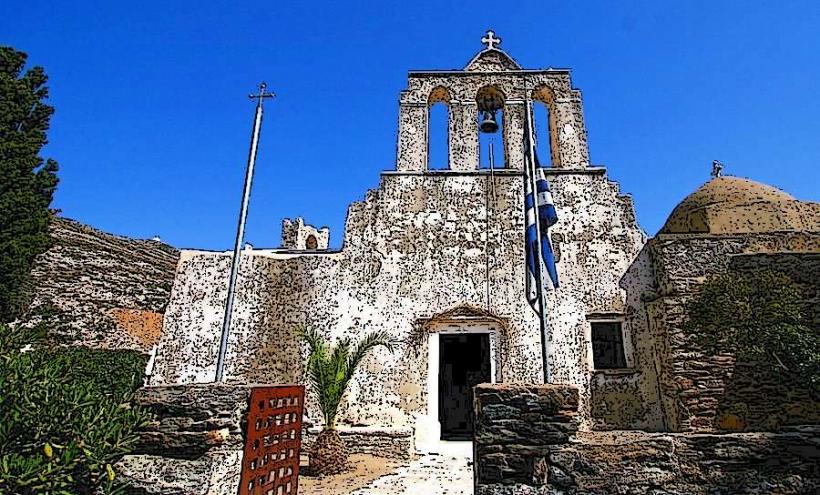
Panagia Protothroni: A 6th-century Byzantine church with significant layers of frescoes ranging from the 9th to the 13th centuries.
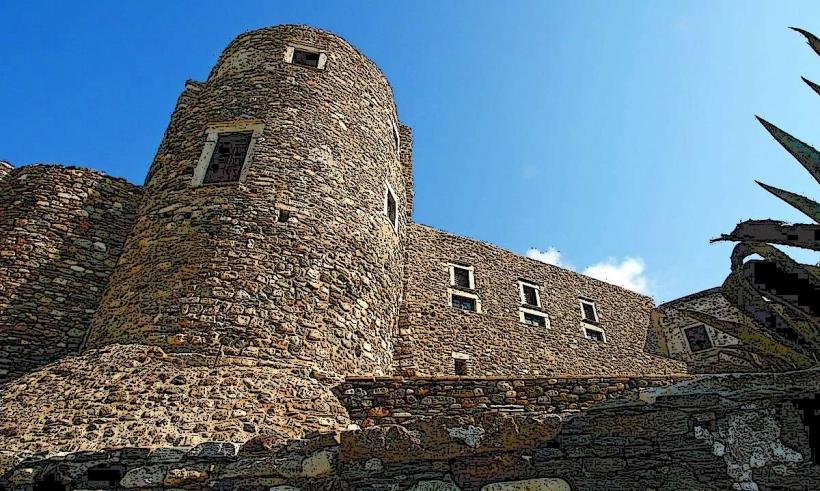
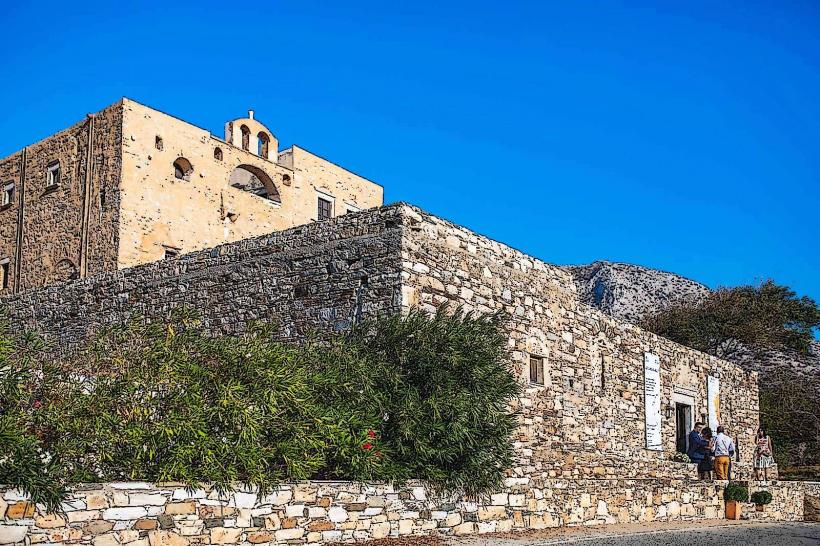
Barozzi-Gratsia Tower: A massive 17th-century Venetian fortified residence located at the edge of the village.
Artisan Shops: The village is a hub for high-quality textiles, specifically the "Loom" weaving gallery, and local pottery.
Hiking: Halki is the starting point for several signposted trails leading to the Byzantine churches of the Tragea Valley.
Infrastructure & Amenities
Catering: High-quality traditional tavernas and cafes are concentrated in the central square under large plane trees.
Facilities: Public restrooms are located near the village entrance; several small boutiques and a pharmacy are available.
Connectivity: 5G signal is stable.
Climate: Due to its inland elevation and dense vegetation, Halki is significantly cooler and less windy than the coastal resorts.
Best Time to Visit
10:00–14:00: For full access to the distillery and the Byzantine churches.
Late Afternoon: For dining in the square when the village is at its quietest after tour groups depart.
Facts & Legends
A verified historical fact is that the Tragea Valley, with Halki at its center, contains the highest concentration of Byzantine churches in the Balkans, often called the "Mistras of the Cyclades." Local lore suggests the name "Chalki" derives from a bronze-smithing community that once inhabited the area in antiquity.
Nearby Landmarks
Filoti Village: 3 km East.
Apeiranthos Village: 8 km East.
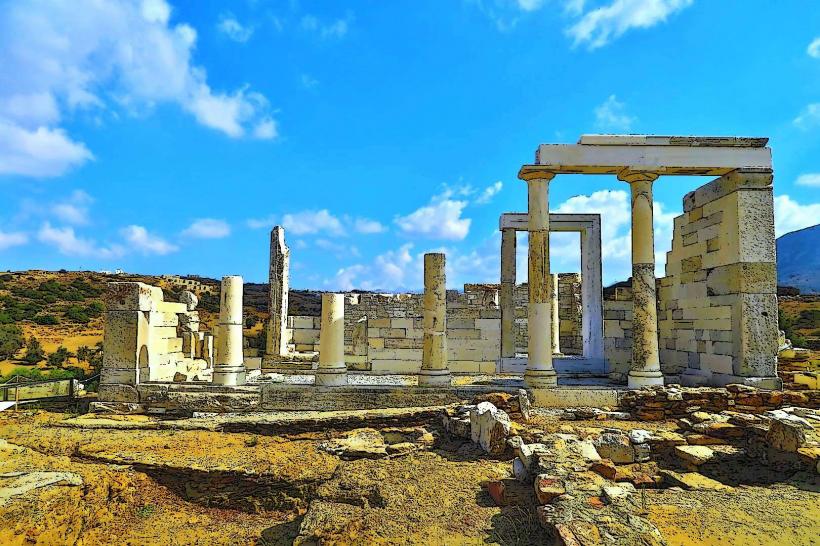
Temple of Demeter: 8 km Southwest.
Church of Saint George Diasoritis: 0.5 km North (walkable via olive grove path).