Information
Landmark: Naxos Castle KastroCity: Naxos
Country: Greece
Continent: Europe
Naxos Castle Kastro, Naxos, Greece, Europe
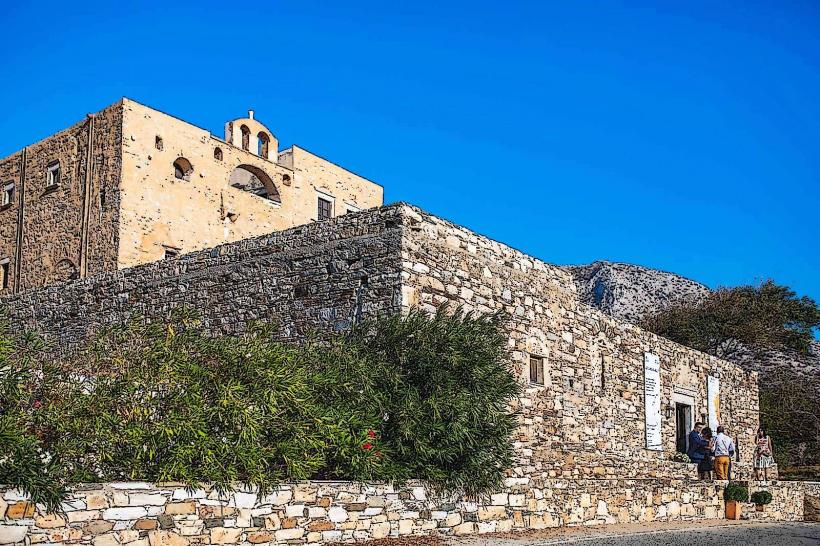
Naxos Kastro (Castle) is a medieval citadel and residential neighborhood located on the highest hill of Naxos Chora. It was built by the Venetian explorer Marco Sanudo in the 13th century and remains an active, inhabited district.
Visual Characteristics
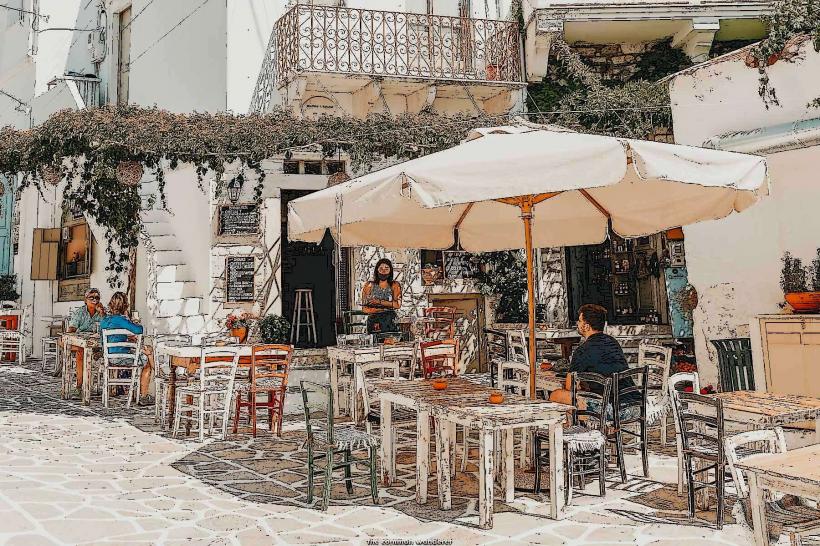
The Kastro is defined by a circular defensive perimeter formed by the outer walls of the houses themselves. Its architecture is a blend of Cycladic (whitened walls, flat roofs) and Venetian Gothic (heraldic coats of arms, pointed arches, and stone towers). The layout is a complex labyrinth of narrow, shaded alleys (stena) designed to confuse invaders and provide wind protection.
Location & Access Logistics
Position: Dominates the skyline of Chora, situated directly above the Old Market.
Access: Pedestrian only. Primary entry points are the Trani Porta (Great Gate) to the north and the Paraporta (Side Gate) to the west.
Transit: A 10-minute uphill walk from the Naxos ferry port.
Hours: The neighborhood is a public space open 24/7; individual museums and churches within have specific operating hours (typically 08:30–15:30).
Terrain: Steep, winding paths with many stairs and smooth marble sections.
Historical Origin
The fortress was established in 1207 after the Fourth Crusade, when Naxos became the seat of the Duchy of the Archipelago. It was designed as a classic feudal settlement. The Venetian Catholic elite lived inside the Kastro walls, while the local Orthodox population lived in the surrounding districts (Bourgos). It served as the administrative center of Naxos for over three centuries.
Key Highlights & Activities
Glezos Tower (Crispi): The only one of the original seven towers that is fully preserved, now housing the Byzantine Museum.
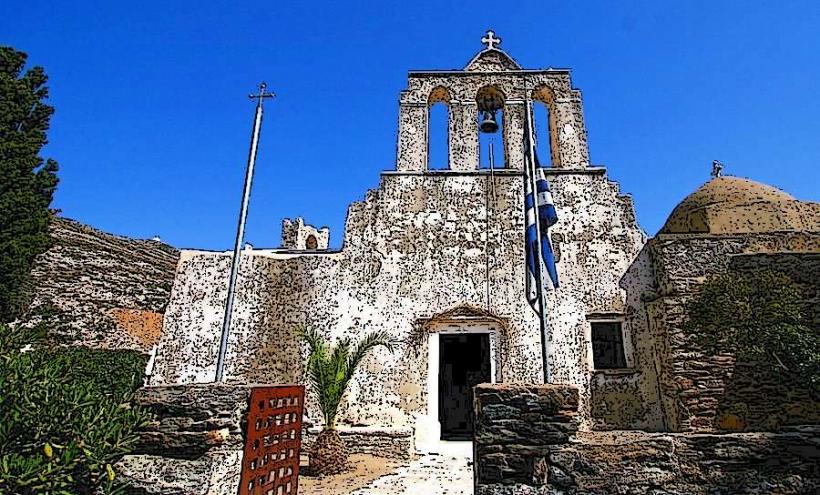
Catholic Cathedral: A 13th-century church with a unique marble floor featuring the coats of arms of the Venetian dukes.
Della Rocca-Barozzi Museum: A private mansion offering guided tours that showcase daily life for the Venetian nobility.
The Ursuline Convent: Formerly a high-prestige school, now a cultural center.
Kapela Kazantzakis: The site where the Greek author Nikos Kazantzakis studied as a youth.
Infrastructure & Amenities
Facilities: Contains several small art galleries, antique shops, and boutique guesthouses.
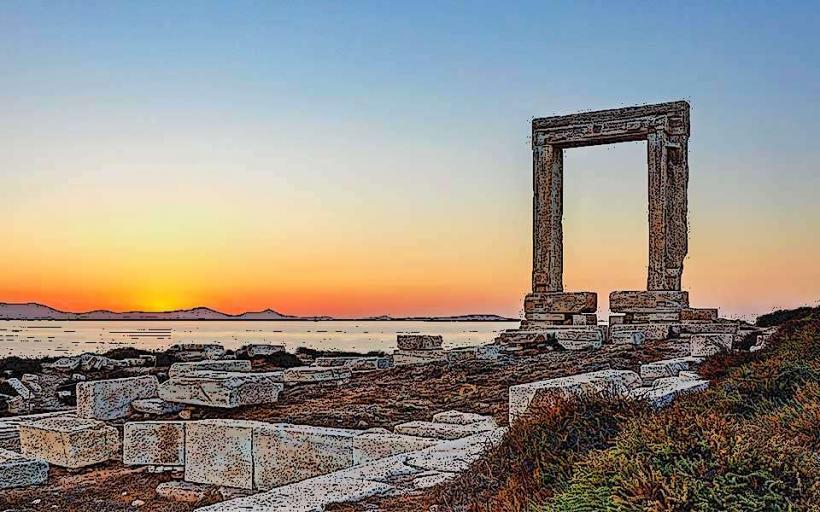
Catering: A few rooftop cafes offer panoramic views of the Portara and the harbor.
Connectivity: 5G signal is stable, though thick stone walls can block indoor reception.
Climate: Naturally cooler than the harbor level due to the elevated position and "wind-tunnel" alley design.
Best Time to Visit
10:00–12:00: Ideal for visiting the museums and the Cathedral.
Golden Hour: For photography of the Venetian masonry and the sunset over the Aegean from the western ramparts.
Facts & Legends
A verified historical fact is that many of the Catholic families living in the Kastro today are direct descendants of the original Venetian settlers from the 13th century. Local lore suggests secret subterranean passages connect the Kastro to the harbor, though most identified tunnels were actually part of the sophisticated medieval sewage and water storage systems.
Nearby Landmarks
Old Market (Bourgos): Directly below the Kastro walls.
Portara (Temple of Apollo): 0.8 km Northwest.
Archaeological Museum of Naxos: Located within the Kastro in the old Jesuit School.