Information
Landmark: PortaraCity: Naxos
Country: Greece
Continent: Europe
Portara, Naxos, Greece, Europe
Portara (the Great Door) is the massive marble doorway of an unfinished 6th-century BC temple dedicated to Apollo. It stands on the islet of Palatia at the northern edge of Naxos Harbor and serves as the island's most recognizable landmark.
Visual Characteristics
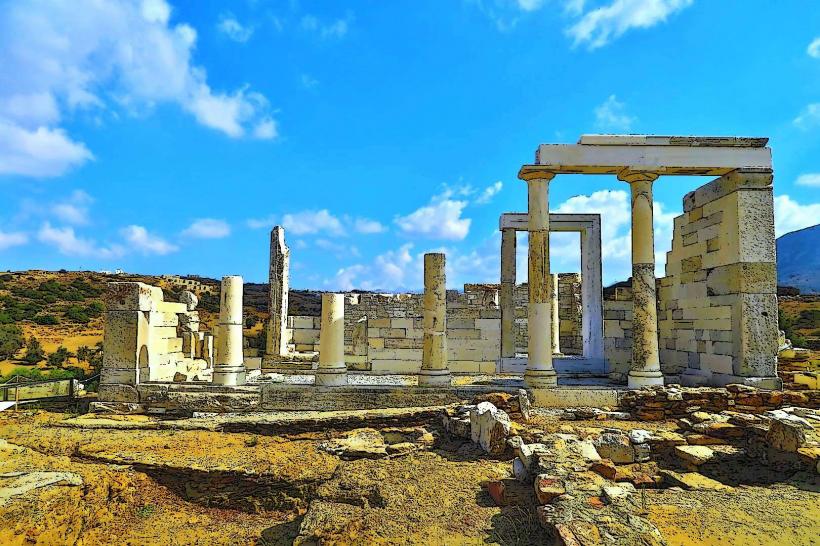
The structure is composed of four monolithic blocks of local Naxian marble, each weighing approximately 20 tons. It stands roughly 6 meters high and 3.5 meters wide. The gateway remains in situ on the foundations of the uncompleted temple, surrounded by scattered marble fragments and the rectangular footprint of the adyton (inner sanctuary).
Location & Access Logistics
Position: Situated on the islet of Palatia, connected to Naxos Town (Chora) by a narrow man-made stone causeway.
Access: Pedestrian only via the causeway.
Transit: A 5-minute walk from the main ferry terminal and the center of Chora.
Hours: Public site; accessible 24/7.
Entry: Free admission.
Historical & Ecological Origin
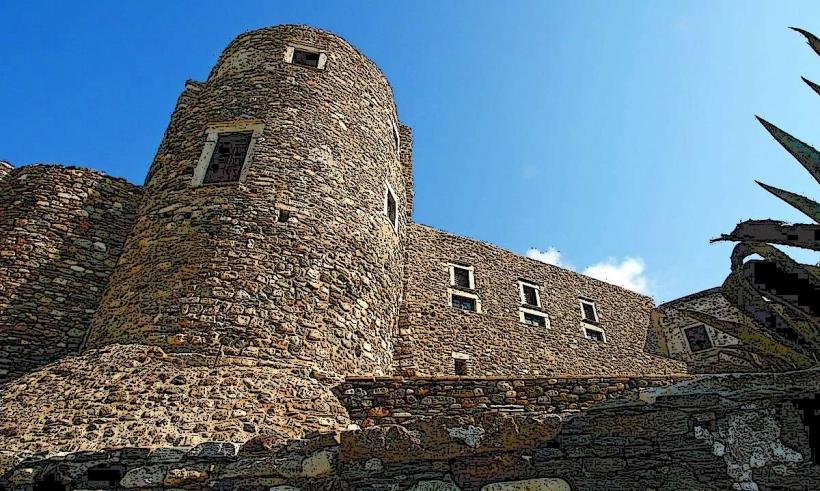
Construction began circa 530 BC during the reign of the tyrant Lygdamis, who intended to build the largest and most magnificent temple in Greece. Following the fall of his regime and the outbreak of war with Samos, the project was abandoned. During the Middle Ages, the temple was dismantled by the Venetians to provide building materials for the Kastro (Castle) of Naxos; however, the Portara was left intact because it was too heavy to move.
Key Highlights & Activities
Sunset Viewing: The site is the primary location for sunset observation on the island, as the sun aligns directly within the marble frame during specific periods.
Photography: The elevated position of Palatia offers panoramic views of Naxos Town, the Venetian Castle, and the neighboring island of Paros.
Archaeological Foundations: Observation of the massive marble floor slabs (stylobates) that indicate the intended scale of the original temple.
Infrastructure & Amenities
Terrain: The causeway and the islet feature uneven, wind-swept stone paths. Stable footwear is required, as the path can be slippery when wet from sea spray.
Facilities: No facilities (restrooms or shops) are located on the islet itself; all amenities are available at the base of the causeway in Naxos Town.
Connectivity: 5G signal is stable.
Exposure: The site is highly exposed to the Meltemi (strong northern winds).
Best Time to Visit
08:00–10:00: To experience the site without the large crowds that gather for the sunset.
Twilight: The structure is illuminated at night, making it visible from across the harbor.
Facts & Legends
A verified historical fact is that the temple was designed as an Ionic dipteral temple, which would have featured at least 100 columns had it been completed. Legend identifies the islet of Palatia as the place where Theseus abandoned Ariadne, the daughter of King Minos, after she helped him escape the Labyrinth of Crete. According to the myth, the god Dionysus found her there and made her his wife.
Nearby Landmarks
Naxos Town (Chora): 0.1 km South.
Venetian Castle (Kastro): 0.5 km Southeast.
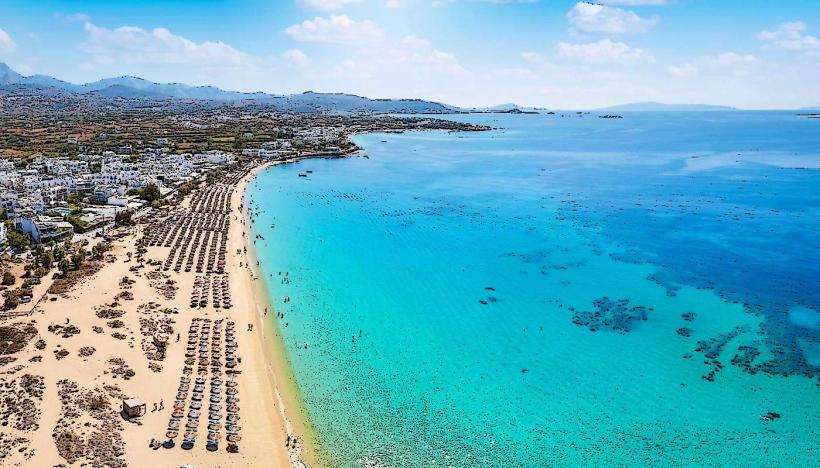
Agios Georgios Beach: 1.5 km South.