Information
Landmark: Adolphe BridgeCity: Luxembourg City
Country: Luxembourg
Continent: Europe
Adolphe Bridge, Luxembourg City, Luxembourg, Europe
The Adolphe Bridge (Pont Adolphe) is a massive double-decked stone arch bridge in Luxembourg City, serving as a primary transit link between the Ville Haute (Upper Town) and the Gare district (Bourbon plateau). It is a national symbol of Luxembourgish independence.
Visual Characteristics
The bridge is characterized by its large central double arch, which spans the Pétrusse Valley. It is constructed from hammered sandstone. A unique feature is the "suspended" bicycle and pedestrian gallery located beneath the upper road deck, consisting of a lightweight steel and glass structure that runs between the two main stone arches.
Location & Access Logistics
The bridge connects Boulevard Royal in the north to Avenue de la Liberté in the south.
Public Transport: It carries the T1 tram line. The "Hamilius" tram stop is 300m north, and "Place de Metz" is 200m south.
Pedestrian: The upper deck features wide sidewalks, while the lower suspended deck is dedicated solely to pedestrians and cyclists.
Parking: The "Monterey" and "Knuedler" parking garages are within 400m.
Historical & Ecological Origin
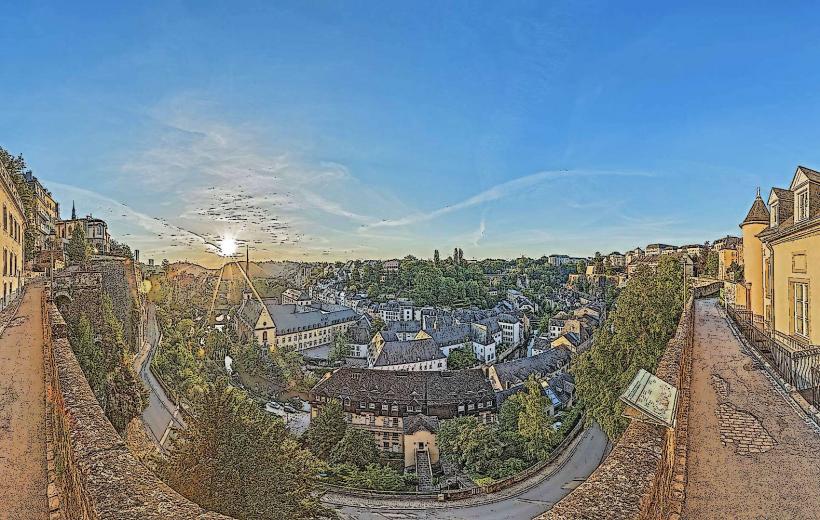
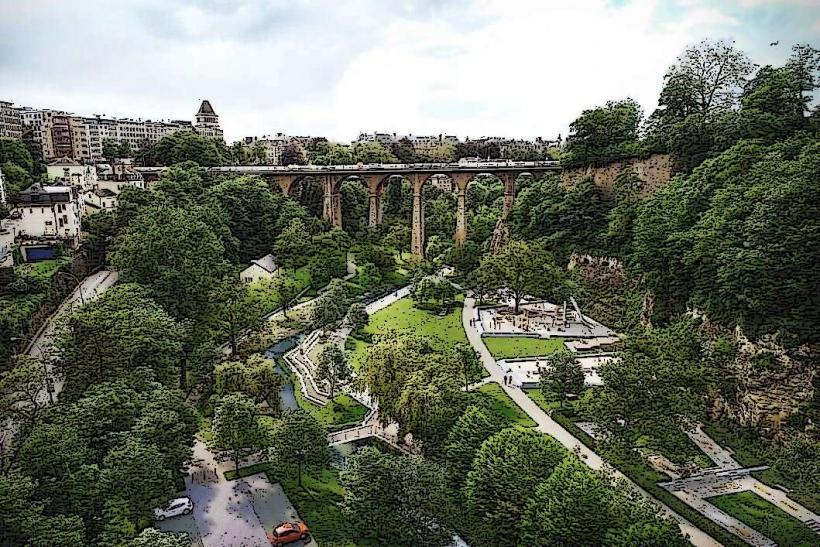
Built between 1900 and 1903 during the reign of Grand Duke Adolphe, the bridge was designed by French engineer Paul Séjourné. At the time of its completion, it featured the largest stone arch in the world (85 meters). The bridge spans the Pétrusse Valley, a deep ravine characterized by lush vegetation and steep sandstone cliffs.
Key Highlights & Activities
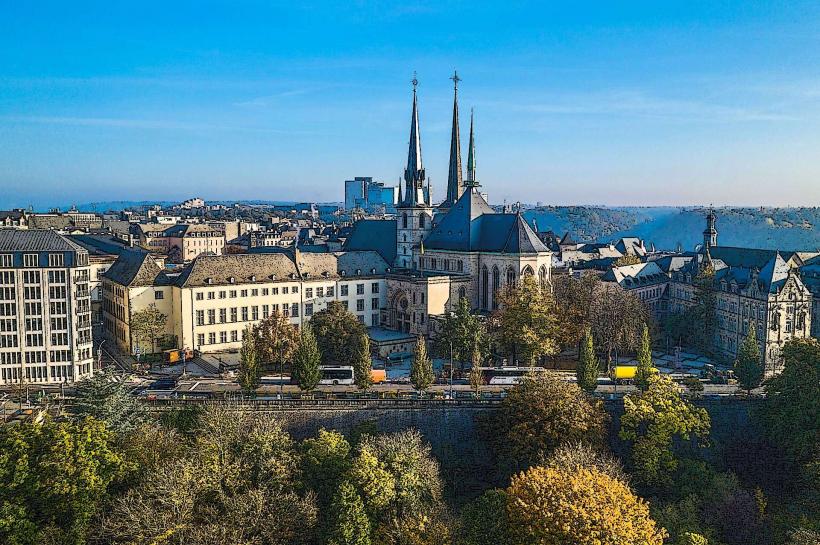
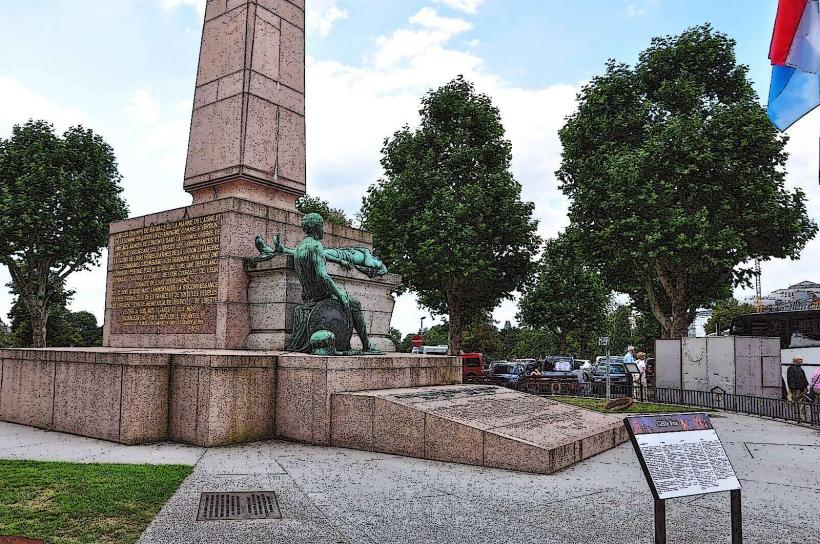
The bridge provides one of the city's most famous panoramic views, overlooking the Pétrusse parks, the Constitution Square, and the Gëlle Fra monument. Walking through the suspended lower deck offers a unique perspective of the bridge's internal engineering and the valley floor 42 meters below.
Infrastructure & Amenities
The bridge is a major multi-modal artery equipped with tram tracks, vehicle lanes, and dedicated paths for non-motorized transport. It has full 5G coverage. Public benches are located at both bridgeheads. The suspended walkway is fully accessible via ramps and elevators at both ends, making it suitable for strollers and wheelchairs.
Best Time to Visit
The bridge is best viewed during the "golden hour" before sunset, which illuminates the sandstone in a deep ochre hue. At night, the arches are floodlit, highlighting the architectural silhouette against the dark valley. It is a year-round attraction, offering distinct views of the changing foliage in the Pétrusse Valley.
Facts & Legends
The bridge was built to replace the "Passerelle" (Old Bridge) as the main entrance to the city. Despite its traditional appearance, it was a feat of modern engineering; Séjourné used two parallel arches instead of one wide one to reduce the weight and cost of the stone. It underwent a massive renovation (2014–2017) to widen the deck for the return of the city's tram system.
Nearby Landmarks
Gëlle Fra (Monument of Remembrance) – 0.1km East
Place de la Constitution – 0.1km East
Bank Museum – 0.2km South
Notre-Dame Cathedral – 0.4km East
Parc de la Ville – 0.3km West