Information
Landmark: Ansembourg CastleCity: Luxembourg City
Country: Luxembourg
Continent: Europe
Ansembourg Castle, Luxembourg City, Luxembourg, Europe
Ansembourg Castle refers to two distinct sites located in the Eisch Valley (Valley of the Seven Castles), approximately 20 kilometers northwest of Luxembourg City: the Old Castle (medieval) and the Grand Château (baroque).
Visual Characteristics
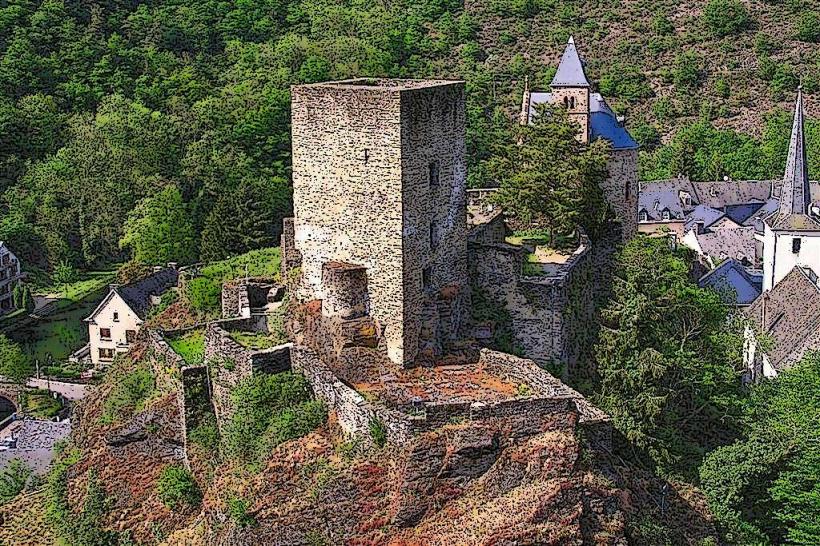
The Old Castle: A medieval hill castle featuring a dominant square keep and defensive curtain walls, characteristic of 12th-century military architecture.
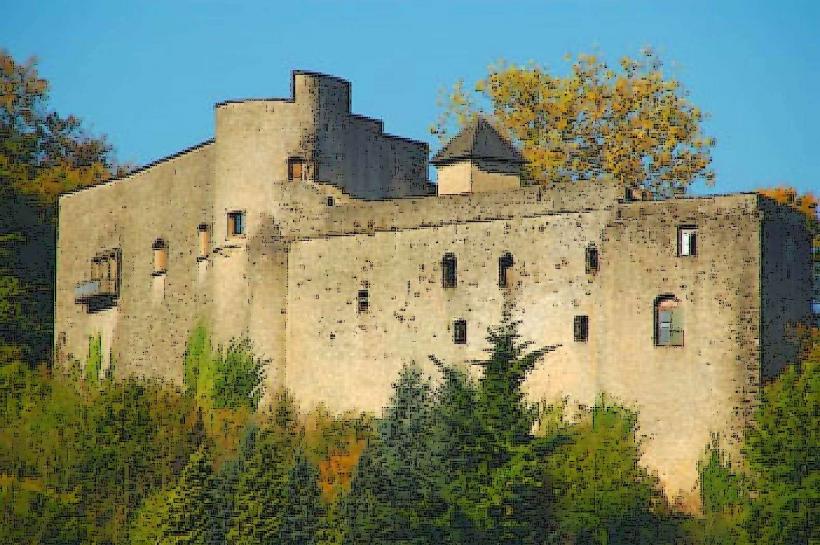
The Grand Château: A palatial 17th-century manor with symmetrical wings and an expansive formal garden. It features a French-style terraced park decorated with statues, fountains, and a "Green Gallery" of manicured hedges.
Location & Access Logistics
Both sites are located in the village of Ansembourg.
Vehicle: Accessible via the CR105. Free parking is available near the entrance to the Grand Château gardens.
Public Transport: Limited bus service from Mersch or Luxembourg City.
Access: The Grand Château gardens are open to the public daily. The Old Castle is a private residence and is not open to visitors.
Historical & Structural Origin
The Old Castle dates to the 1130s. The Grand Château was built between 1639 and 1647 by Thomas Bidart, a pioneer of the iron industry in Luxembourg. He amassed a fortune through ironworks in the Eisch Valley, transitioning from industrialist to nobleman. The gardens were significantly expanded in the mid-18th century, influenced by the gardens of Versailles.
Key Highlights & Activities
Mythological Alley: A section of the gardens featuring 10 statues representing figures from Greek and Roman mythology.
Formal Terraces: Well-preserved examples of Baroque landscape architecture.
Hiking: The "Valley of the Seven Castles" trail connects both Ansembourg sites to Hollenfels and Septfontaines.
Infrastructure & Amenities
The Grand Château gardens are maintained by the Soka Gakkai International (SGI) Buddhist organization, which owns the site. Public restrooms are available during peak hours. The gardens are largely accessible, though the upper terraces require navigating stone steps.
Best Time to Visit
Late spring (May–June) is optimal for seeing the gardens in full bloom. The site is a primary destination for photography due to the contrast between the Baroque architecture and the rugged valley slopes.
Facts & Legends
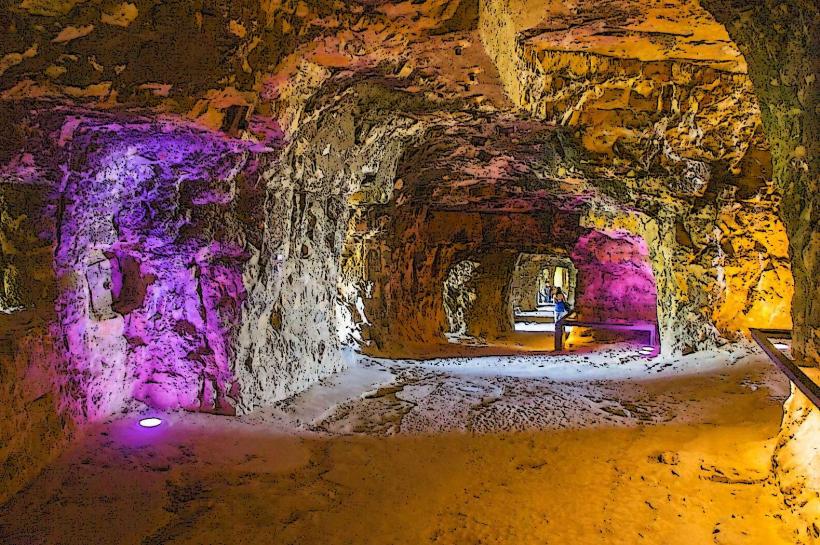
The Grand Château is often cited as a prime example of the "Steel Barons" era, where industrial wealth was used to create aristocratic estates. Legend holds that hidden tunnels connect the Grand Château to the Old Castle on the hill above to provide an escape route during sieges.
Nearby Landmarks
Hollenfels Castle – 2.0km North
Schoenfels Castle – 8.0km East
Marienthal Abbey – 3.0km East
Eisch River – Adjacent to the gardens