Information
Landmark: Antemoro VillageCity: Mananjary
Country: Madagascar
Continent: Africa
Antemoro Village, Mananjary, Madagascar, Africa
The Antemoro Village is a cultural site near Mananjary, Madagascar, recognized for its traditional papermaking craft. It serves as a living museum for the Antemoro people's heritage.
Visual Characteristics
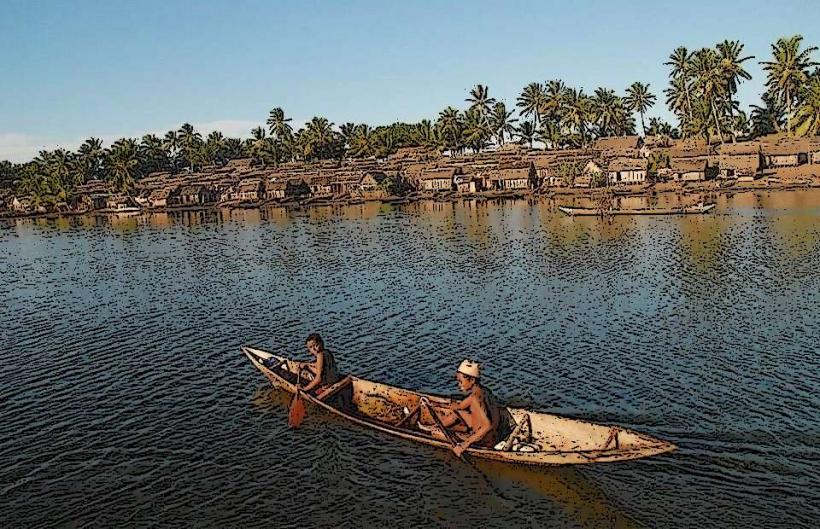
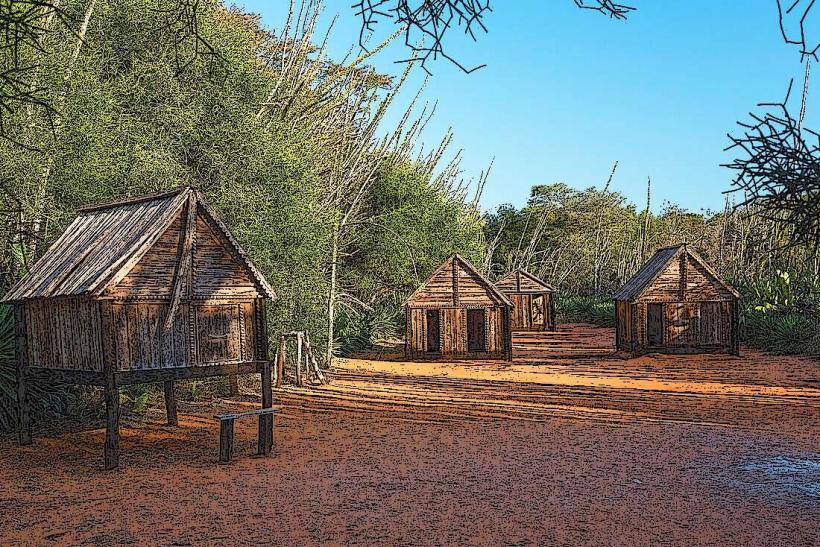
The village consists of traditional Malagasy dwellings constructed primarily from wood and raffia palm thatch. Structures are typically rectangular with elevated floors. The papermaking workshops feature open-air drying racks where sheets of paper, often embedded with dried flowers, are laid out. The overall aesthetic is rustic and functional, reflecting the local building techniques and the craft's requirements.
Location & Access Logistics
The Antemoro Village is situated approximately 5 kilometers north of Mananjary's town center. Access is primarily via a local unpaved road that branches off the main RN12 highway. Visitors can reach the village by local taxi (tuk-tuk) or by walking, which takes about 45-60 minutes from the town. Limited informal parking is available near the village entrance on unpaved ground. Public transport options are restricted to shared taxis (taxi-brousse) that may drop passengers at the RN12 junction, requiring a further walk or local transport.
Historical & Ecological Origin
The Antemoro people are descendants of Arab immigrants who arrived in Madagascar between the 14th and 16th centuries. They are historically known for their literacy and the creation of Sorabe manuscripts, which are ancient Malagasy texts written in Arabic script. The papermaking tradition, known as "Antemoro paper," originated with these people and was initially used for these sacred texts. The paper is made from the bark of the Avoha tree (Bosqueia madagascariensis), a plant native to Madagascar.
Key Highlights & Activities
Visitors can observe the entire traditional papermaking process, from bark stripping and boiling to pounding, pressing, and drying. Demonstrations of embedding dried flowers and leaves into the paper are common. Finished Antemoro paper products, including notebooks, lampshades, and decorative sheets, are available for purchase directly from the artisans. Interaction with the local community provides insight into their daily life and cultural practices.
Infrastructure & Amenities
Infrastructure within the village is basic. There are no formal public restrooms; facilities are typically rudimentary. Shade is provided by trees and the open-sided workshop structures. Cell phone signal (2G/3G, sometimes 4G depending on carrier) is generally available but can be intermittent. There are no dedicated food vendors within the village, but small local shops (épiceries) in nearby hamlets may offer basic refreshments. It is advisable to carry water.
Best Time to Visit
The best time to visit is during the dry season, from April to November, when rainfall is minimal and temperatures are moderate. Mornings, between 08:00 and 11:00, are ideal for observing the papermaking process as artisans are actively working and the light is suitable for photography. The village operates throughout the day, but activity levels may decrease during the midday heat.
Facts & Legends
The Antemoro paper is unique because it is made entirely by hand using traditional methods passed down through generations, without the use of modern machinery. The Antemoro people were historically the only Malagasy ethnic group to possess a written language before the arrival of European missionaries, using their distinctive Sorabe script. A local belief suggests that the specific properties of the Avoha tree bark contribute to the paper's durability and resistance to insects.
Nearby Landmarks
- Mananjary Town Center: 5km South
- Canal des Pangalanes: Runs parallel to the coast, accessible from Mananjary, 6km South-East
- Mananjary Lighthouse: 7km South-East
- Local Market (Mananjary): 5.5km South