Information
Landmark: Archaeological Museum of ChaniaCity: Crete
Country: Greece
Continent: Europe
Archaeological Museum of Chania, Crete, Greece, Europe
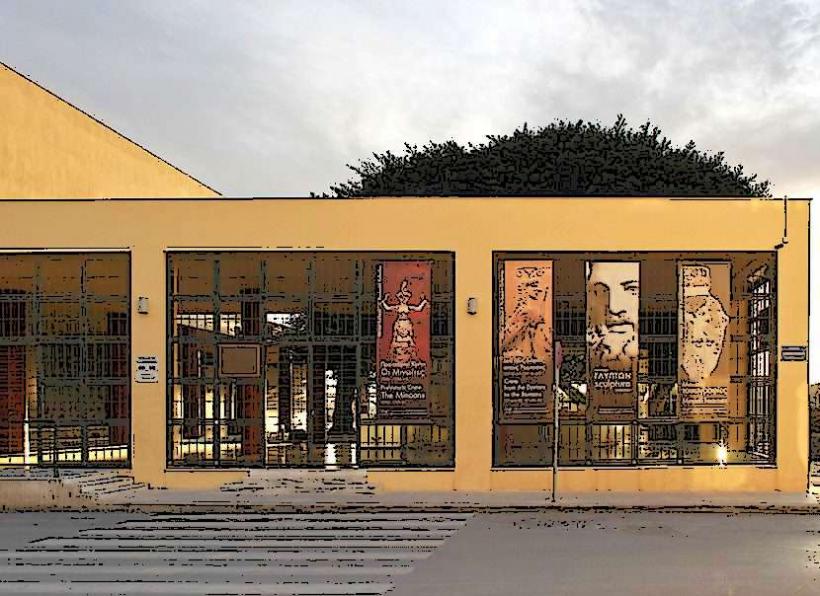
The Archaeological Museum of Chania is a state-of-the-art cultural institution located in the suburb of Halepa, Chania. Opened in 2022, it replaced the museum's former location in the Venetian Church of San Francesco to provide a modern facility for the regional archaeological collection.
Visual Characteristics
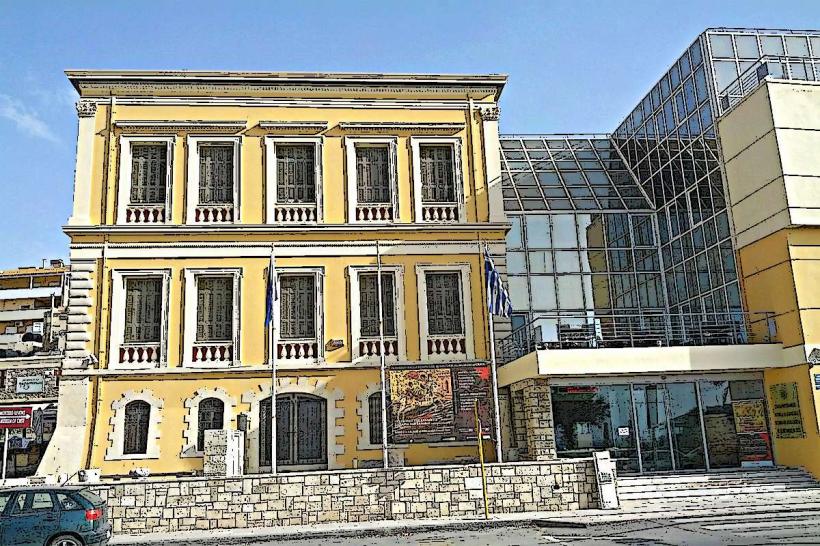
The building is a piece of contemporary architecture designed by Theofanis Bobotis. It consists of two distinct linear blocks that emerge from the earth, utilizing biological materials and large glass surfaces to integrate with the surrounding landscape. The interior features massive, open-plan galleries (6,000 square meters) with high ceilings and natural lighting designed to highlight the stone and clay textures of the artifacts.
Location & Access Logistics
Position: Located at 15 Skra Street, Halepa district, approximately 2km east of the Chania city center.
Transit: Accessible via City Bus Line 11 (Halepa line) from the central 1866 Square.
Vehicle Access: Easily reached by car via the coastal road of Chalepa.
Parking: Features a large, dedicated on-site parking lot for visitors and tour buses.
Hours: Generally open 08:30–15:30 (Winter) and 08:00–20:00 (Summer); closed on Tuesdays.
Historical & Ecological Origin
The museum houses artifacts from the Chania Prefecture, covering human activity from the Neolithic period to the Roman era. It emphasizes the importance of Kydonia (the ancient name for Chania), which was one of the most powerful city-states in Crete. The site in Halepa was chosen to revitalize the historic diplomatic district of the city.
Key Highlights & Activities
Minoan Kydonia: Extensive finds from the Kastelli hill excavations, including rare Linear A and Linear B clay tablets.
Roman Mosaics: Large-scale, well-preserved floor mosaics from luxury Roman villas discovered in Chania, depicting mythological scenes.
The Master Impression: A unique Minoan clay sealing depicting a multi-story building complex and a rocky landscape, considered a masterpiece of Minoan glyptic art.
Monuments of Lappa: Significant sculptural finds from the ancient city of Lappa (modern-day Argyroupoli).
Touch Screens & VR: The museum utilizes high-tech digital displays and virtual reality stations to reconstruct ancient urban environments.
Infrastructure & Amenities
Facilities: Includes a high-end museum shop, an amphitheater for cultural events, and a cafe with a view of the Gulf of Chania.
Accessibility: Fully wheelchair accessible with ramps, elevators, and wide corridors.
Connectivity: 5G signal is stable; free Wi-Fi is available throughout the galleries.
Climate: The facility is fully climate-controlled to protect the sensitive artifacts and provide a comfortable visitor experience.
Best Time to Visit
Late Morning: To take advantage of the natural light within the galleries.
Duration: A comprehensive tour requires at least 2 hours due to the scale of the new facility.
Facts & Legends
A verified historical fact is that the museum holds the largest collection of Minoan pottery in western Crete, proving that the western part of the island was just as culturally significant as the eastern palace centers like Knossos. While the building is ultra-modern, it sits in a district famous for the "Halepa Pact" of 1878, a pivotal diplomatic agreement in Cretan history.
Nearby Landmarks
House of Eleftherios Venizelos: 0.3km North (historic museum-home of the Greek statesman).
Tabakaria District: 0.5km North (historic leather tanneries on the waterfront).
Church of Mary Magdalene: 0.4km West (distinctive Russian-style architecture).
Old Venetian Harbor: 2km West.