Information
Landmark: Baker-Berry LibraryCity: Hanover
Country: USA New Hampshire
Continent: North America
Baker-Berry Library, Hanover, USA New Hampshire, North America
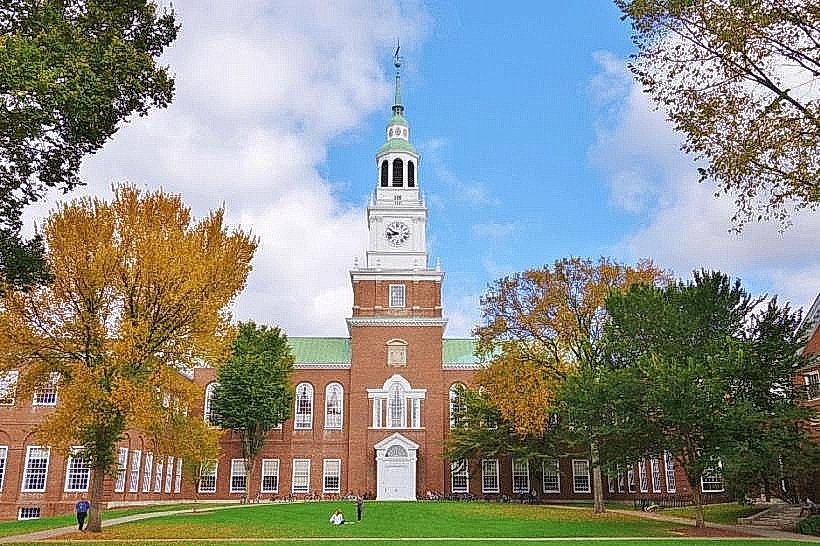
The Baker-Berry Library is the main library building for Dartmouth College, located in Hanover, New Hampshire, USA.
It is a central academic resource for the college community.
Visual Characteristics
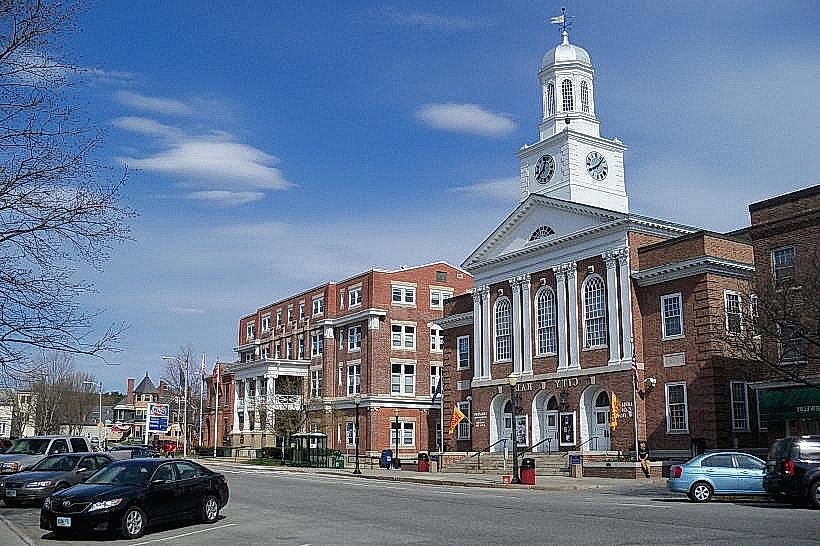
The Baker-Berry Library is a multi-story structure constructed primarily from granite and limestone. Its architectural style is Collegiate Gothic, characterized by pointed arches, ribbed vaults, and large windows. The building features a prominent central tower and is integrated with the surrounding campus landscape.
Location & Access Logistics
The library is situated on the Dartmouth College campus in Hanover, New Hampshire. It is centrally located, approximately 0.2km East of the Hanover town center. Parking is available in designated campus lots, with hourly and daily rates. The closest public transport stop is the Dartmouth Coach bus stop in the town center, a short walk from the library.
Historical & Ecological Origin
The Baker Library portion of the building was constructed between 1926 and 1928, designed by the architectural firm McKim, Mead & White. It was funded by a donation from George Fisher Baker Sr. The Berry Library addition was completed in 1990, designed by Shepley Bulfinch Richardson and Abbott. The original purpose was to serve as the primary repository for the college's book collection and provide study spaces.
Key Highlights & Activities
Access to the library's extensive book collection is available. Study carrels and group study rooms can be reserved. The building houses special collections and archives, with viewing by appointment. The main reading room offers a quiet environment for academic work.
Infrastructure & Amenities
Restrooms are located on each floor. Limited seating areas provide shade within the building's interior. Cell phone signal (4G/5G) is generally available within the library. No food vendors are located directly within the library; however, dining facilities are available on the Dartmouth College campus.
Best Time to Visit
For optimal lighting for photography of the exterior architecture, late afternoon provides favorable conditions. The library is accessible year-round during academic terms. No specific tide requirements are applicable.
Facts & Legends
A notable feature is the "Baker Bells," a carillon housed in the tower that plays hourly. Local lore suggests that the library's quiet atmosphere is so profound that one can hear the turning of pages from across the room.
Nearby Landmarks
- Dartmouth Hall (0.1km West)
- Hopkins Center for the Arts (0.3km Southwest)
- Collis Center (0.2km West)
- Shattuck Observatory (0.4km Northwest)