Information
Landmark: Hanover Inn Historic SiteCity: Hanover
Country: USA New Hampshire
Continent: North America
Hanover Inn Historic Site, Hanover, USA New Hampshire, North America
The Hanover Inn Historic Site is a hotel located in Hanover, New Hampshire, USA.
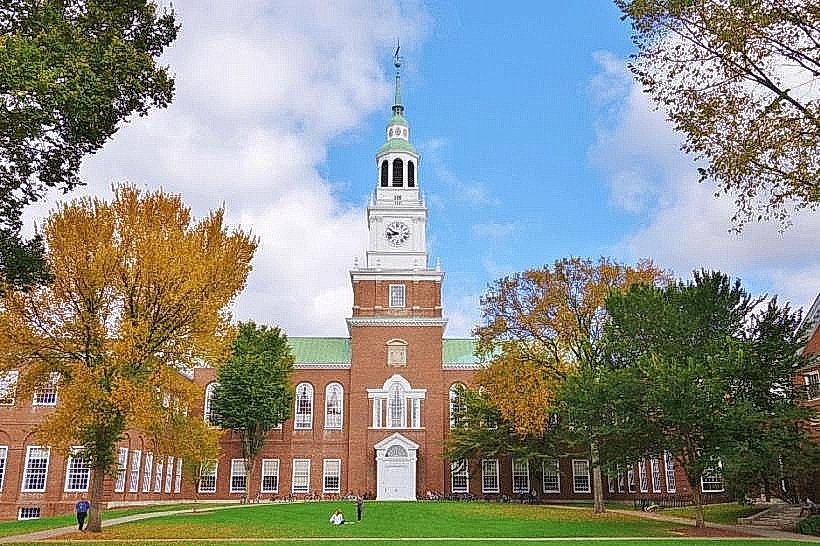
It is situated adjacent to the Dartmouth College campus.
Visual Characteristics
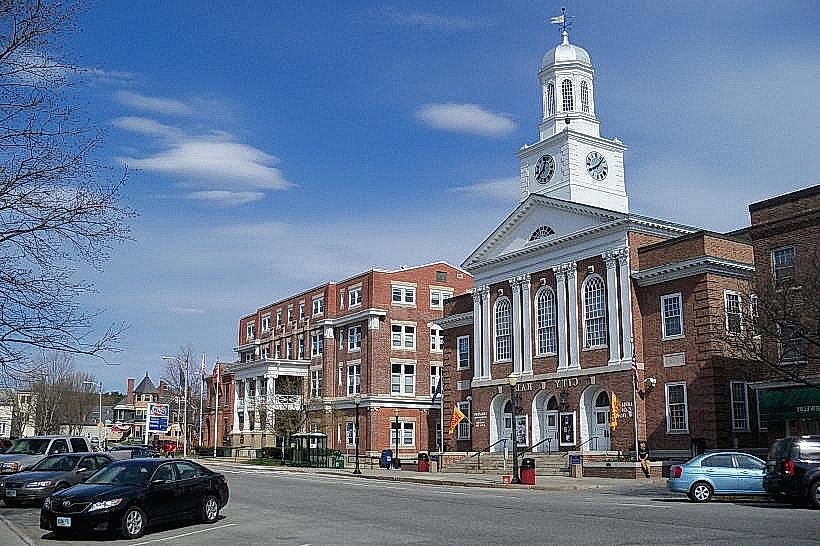
The Hanover Inn is a multi-story structure constructed primarily of brick and stone. Its architectural style reflects a blend of Colonial Revival and Georgian influences, characterized by symmetrical facades, prominent cornices, and large, multi-paned windows. The exterior color palette consists of muted red brick and light-colored stone accents.
Location & Access Logistics
The Inn is located at 2 East Wheelock Street, Hanover, NH 03755, directly on the Dartmouth College campus. It is approximately 0.2 km from the center of Hanover. On-site parking is available for guests, with additional public parking garages located within a 0.5 km radius. Public transport options include the Dartmouth Coach bus service, which stops directly in front of the Inn, and local bus routes serving the Hanover area.
Historical & Ecological Origin
The original Hanover Inn was constructed in 1780. The current structure has undergone several renovations and expansions over its history, with significant updates occurring in the early 20th century. Its original purpose was to provide lodging for visitors to Dartmouth College and the surrounding community.
Key Highlights & Activities
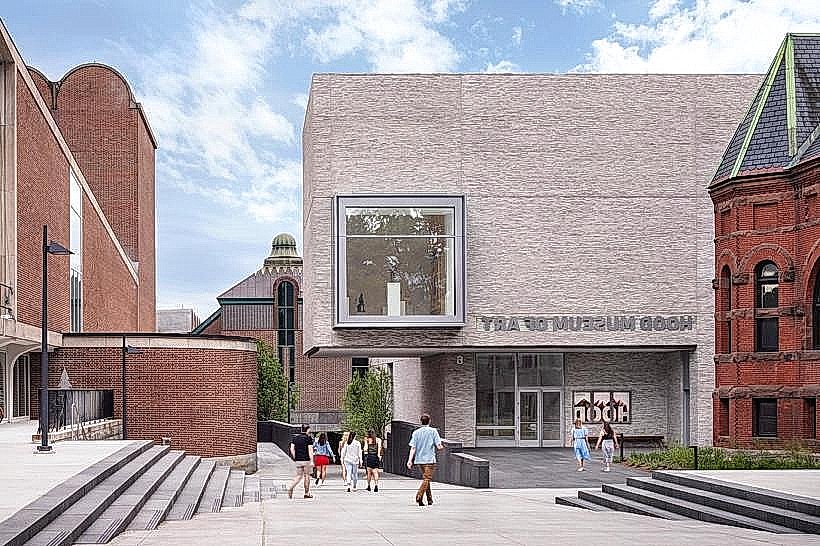
Guests can utilize the on-site dining facilities, including PINE Restaurant and S.P.A.C.E. Café. The Inn offers meeting and event spaces. Access to Dartmouth College facilities, such as the Hood Museum of Art and the Hopkins Center for the Arts, is readily available.
Infrastructure & Amenities
Restrooms are available within the Inn's public areas and guest rooms. Wi-Fi service is provided throughout the property, with 4G/5G cellular signal generally strong. Shaded areas are available in the immediate vicinity of the Inn, particularly on the college green. Food vendors and dining options are present within the Inn and in the surrounding downtown Hanover area.
Best Time to Visit
For photography of the exterior architecture, morning light (approximately 8:00 AM - 10:00 AM) provides optimal illumination. The months of September and October offer pleasant weather for exploring the campus and surrounding areas. There are no specific tide requirements for visiting this inland location.
Facts & Legends
A notable historical detail is that the Hanover Inn has continuously operated as a hotel since its inception, making it one of the longest-operating hotels in New Hampshire. It has hosted numerous notable figures associated with Dartmouth College and national politics.
Nearby Landmarks
- Dartmouth College Campus (0.1km North)
- Hood Museum of Art (0.3km West)
- Hopkins Center for the Arts (0.4km West)
- Quechee Gorge State Park (15km Southwest)
- Mount Sunapee State Park (30km Southeast)