Information
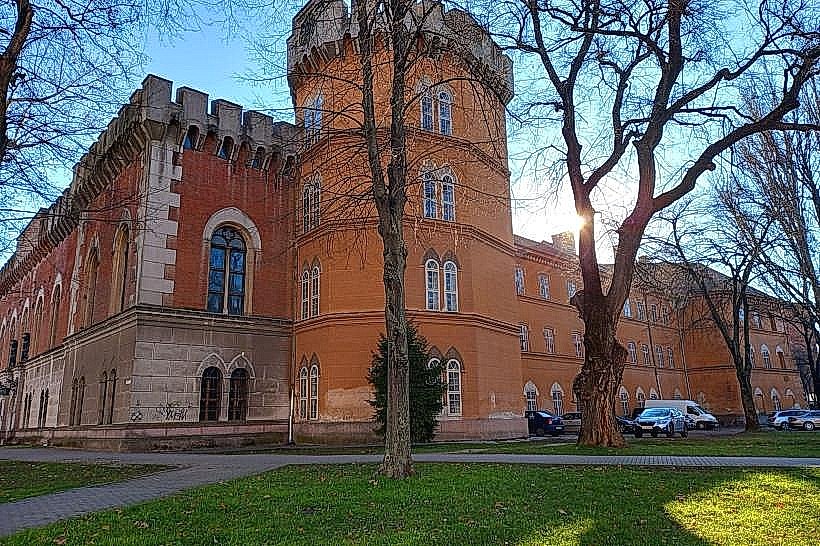
Landmark: Bastionul TheresiaCity: Timisoara
Country: Romania
Continent: Europe
Bastionul Theresia, Timisoara, Romania, Europe
The Ouidah Museum of History is situated in the former Portuguese Fort of São João Baptista da Ajuda in Ouidah, Benin.
Visual Characteristics
The museum is housed within a colonial-era fort constructed primarily of laterite stone and lime mortar. The structure features thick, weathered walls, arched doorways, and a central courtyard. Its exterior is painted a pale ochre, with darker accents around window and door frames. The fort has two stories and a crenellated parapet.
Location & Access Logistics
The museum is located in the center of Ouidah, approximately 40 kilometers west of Cotonou. Access is via the Route Nationale 2 (RN2). Parking is available within the fort's courtyard. Public transport options include shared taxis and buses that run between Cotonou and Ouidah; the museum is a short walk from the main road in Ouidah.
Historical & Ecological Origin
The fort was constructed in the early 18th century by the Portuguese as a trading post and slave depot. It served this purpose until the late 19th century. The site is built on coastal plain terrain, typical of the region.
Key Highlights & Activities
Exhibits focus on the history of Ouidah, including its role in the transatlantic slave trade, its religious traditions (Voodoo), and its pre-colonial and colonial past. Visitors can explore the fort's former cells, administrative offices, and ramparts. Guided tours are available.
Infrastructure & Amenities
Restrooms are available on-site. Limited shade is provided by the fort's architecture. Cell phone signal (4G) is generally available. Food vendors are located in the town center, a short walk from the museum.
Best Time to Visit
The best time of day for photography is mid-morning or late afternoon to avoid harsh overhead light. The dry season, from November to April, offers the most favorable weather conditions. No specific tide requirements apply.
Facts & Legends
The fort's courtyard contains a well that, according to local lore, was used to drown slaves who were deemed unfit for sale. The museum also displays artifacts related to the Ouidah's significant Voodoo heritage.
Nearby Landmarks
- 0.3km West: Python Temple
- 0.5km South: Sacred Forest of Kpassè
- 1.2km Southwest: Door of No Return
- 2.5km North: Ouidah Cathedral