Information
Landmark: Buffalo Bayou ParkCity: Houston
Country: USA Texas
Continent: North America
Buffalo Bayou Park, Houston, USA Texas, North America
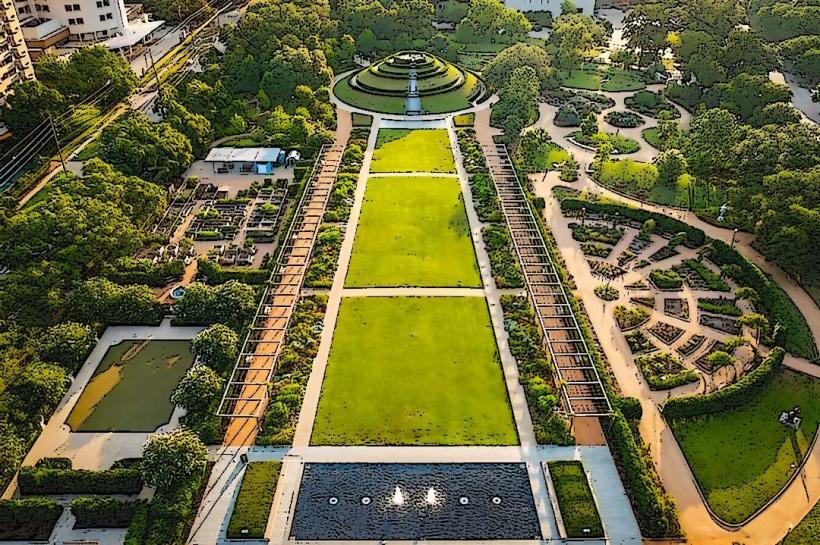
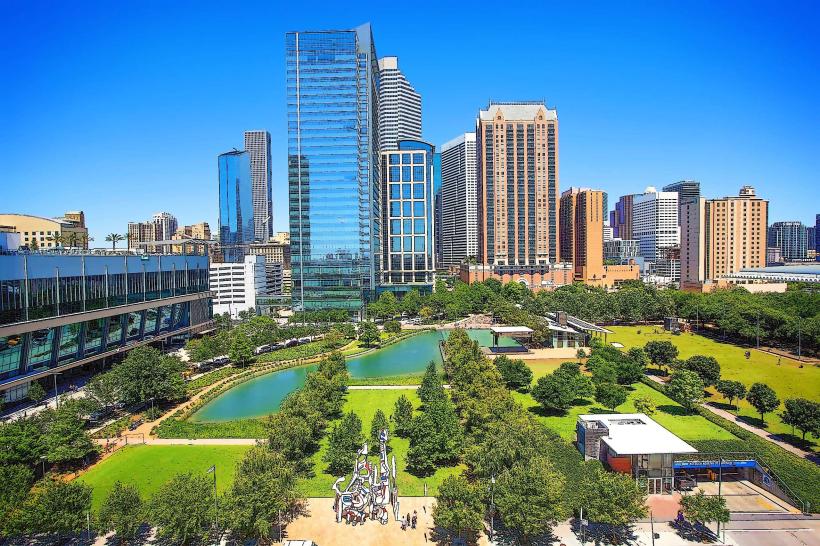
Buffalo Bayou Park is a 160-acre linear green space located just west of downtown Houston. It runs along the banks of Buffalo Bayou between Shepherd Drive and Sabine Street, forming part of a much larger system of parks and trails that trace the bayou's course through the city. The park is a central component of Houston’s efforts to blend urban living with ecological preservation, public art, and active recreation.
Development and Purpose
Buffalo Bayou Park was developed through a public-private partnership led by the Buffalo Bayou Partnership and officially reopened in 2015 after a major $58 million renovation. The goal was to transform underutilized and flood-prone land into a vibrant, accessible park space, while preserving the bayou’s natural ecosystem. Landscape architecture was led by the firm SWA Group, with an emphasis on native plants, sustainability, and flood resilience.
Trails and Connectivity
Over 15 miles of hike and bike trails wind through the park, including the Sandy Reed Memorial Trail (a wide concrete path for bikers and pedestrians) and the Kinder Footpath (a narrower, more scenic path).
Trails connect seamlessly with surrounding neighborhoods and downtown Houston, encouraging commuting and recreation by foot or bike.
Numerous pedestrian bridges span the bayou, offering convenient crossings and scenic views, including the Rosemont Bridge, a favorite spot for skyline photography.
Notable Attractions and Structures
1. The Cistern
Originally built in 1926 as an underground drinking water reservoir, the Cistern was rediscovered and restored as a public space in 2015. It spans 87,500 square feet with 221 concrete columns and holds around 1.5 million gallons of water. It now serves as a site for rotating art installations and immersive sound/light exhibitions. Tours are available with timed entry.
2. Lost Lake
This section features a restored bayou meander and a tranquil pond surrounded by wetlands. It includes:
A canoe and kayak launch
A visitor center
FLORA, a Mexican restaurant with bayou views
Landscaped paths and native plantings
3. Waugh Drive Bat Colony
Roughly 250,000 Mexican free-tailed bats live under the Waugh Drive Bridge year-round. At sunset, visitors can watch the dramatic sight of the colony emerging to feed. The park hosts educational “Bat Chats” monthly to explain the ecological value of bats and their behavior.
4. Johnny Steele Dog Park
This two-acre park offers separate fenced zones for large and small dogs, swimming ponds, dog wash stations, shade structures, and benches. The design accommodates occasional flooding by allowing rapid drainage and easy maintenance.
5. Barbara Fish Daniel Nature Play Area
A nature-inspired play zone for children, it features:
A 33-foot stainless steel slide
A tri-level tree house with rope nets
Waterfalls and a shallow stream
Log and boulder climbing elements
It encourages open-ended, imaginative play and connects kids with natural textures and topography.
6. Lee and Joe Jamail Skatepark
Located near Eleanor Tinsley Park, this 30,000-square-foot concrete skatepark is free and open to the public. Designed for skateboarders, inline skaters, and BMX riders, it includes bowls, rails, ramps, and ledges of varying difficulty.
7. Eleanor Tinsley Park
This event-ready green lawn hosts some of Houston’s biggest public festivals, including:
Freedom Over Texas (Fourth of July fireworks and concerts)
Outdoor film nights, food festivals, and races
It includes an amphitheater-style lawn, volleyball courts, open fields, and walking paths.
Recreation and Activities
Biking and walking: The wide trails are ideal for jogging, walking dogs, cycling, and skating.
Kayaking and canoeing: Rentals and guided tours are available through the Buffalo Bayou Partnership. The bayou provides a unique way to see the city from the water.
Picnicking and relaxation: Multiple shaded lawns, benches, and picnic areas are available. The atmosphere is quiet and calm on weekdays, and more active on weekends.
Fishing: Technically permitted along most of Buffalo Bayou, but prohibited within Buffalo Bayou Park. Additionally, due to pollution, consumption of fish from the bayou is not advised. The area is under a long-term fish consumption advisory due to dioxins and PCBs in the sediment.
Environmental Sustainability
Buffalo Bayou Park incorporates ecological restoration and sustainability into its design:
Native vegetation stabilizes soil and prevents erosion while supporting pollinators and birds.
Detention zones and wetlands absorb floodwaters during heavy rain.
Maintenance of riparian buffers helps purify runoff before it enters the bayou.
The entire design accommodates periodic flooding-a natural function of the bayou-minimizing long-term damage.
Accessibility and Amenities
Open daily, with lighted trails usable from 6 a.m. to 11 p.m.
Public restrooms are available at Lost Lake and The Water Works.
Parking lots are located at Sabine Street, Allen Parkway, and near Shepherd Drive.
Bike racks, water fountains, and emergency call stations are scattered throughout the park.
Wheelchair-accessible paths and ADA-compliant features ensure access for all.
Public Art and Programming
Buffalo Bayou Park includes a variety of site-specific public art installations, such as:
"Seven Wonders" by Mel Chin, featuring interactive sculptures
"Gondola House" and other flood-inspired works along the trails
The park regularly hosts yoga classes, tours, art events, and seasonal festivals. The programming is managed by the Buffalo Bayou Partnership in cooperation with the City of Houston.
Buffalo Bayou Park stands as a model for urban green space in a flood-prone, car-centric city. It invites residents and visitors alike to engage with nature, appreciate Houston’s landscape, and experience the city from a new perspective-whether by foot, bike, or boat.