Information
Landmark: Castel San PietroCity: Verona
Country: Italy
Continent: Europe
Castel San Pietro, Verona, Italy, Europe
Castel San Pietro is a 19th-century Austrian fortress located on a hill 450 meters above sea level, overlooking the Adige River and the historic center of Verona. The site has been a strategic fortified point since the Iron Age and offers the primary panoramic vantage point for the city.
Visual Characteristics
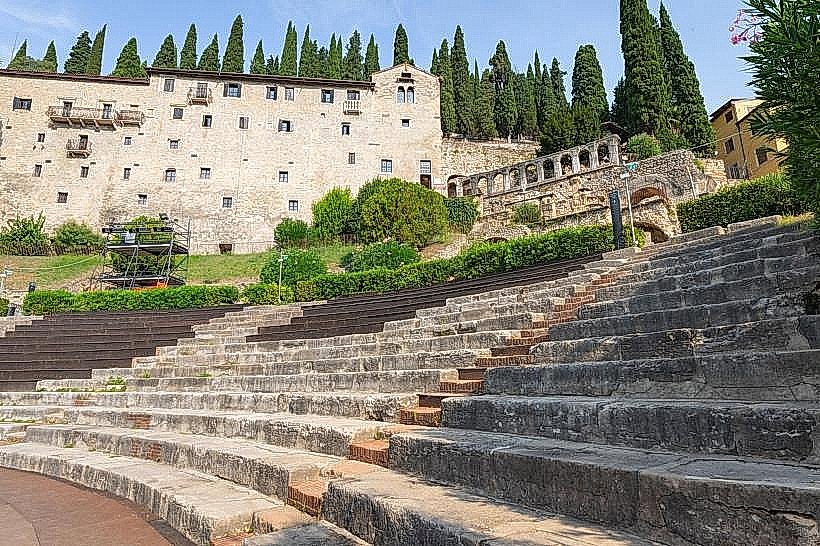
The fortress is a rectangular military barracks built of red brick and ochre-colored stone in the Neoclassical style. It features symmetrical window bays, thick defensive walls, and a flat roofline. The surrounding terrain consists of steep limestone slopes, cypress trees, and the remains of medieval stone fortifications that descend toward the Roman Theatre below.
Location & Access Logistics
The site is located at Piazzale Castel San Pietro. It is 3 kilometers Northeast of Verona Porta Nuova station. Access is via the Funicolare di Castel San Pietro (funicular) from Via Santo Stefano or by climbing the stone staircase starting near the Ponte Pietra. Vehicle access is possible via Via San Felice, though parking at the summit is extremely limited to a small public lot.
Historical & Ecological Origin
The current barracks were constructed between 1852 and 1858 by Austrian engineer Conrad Petrasch on the ruins of a 14th-century Visconti castle. The site was originally the location of a Roman temple dedicated to Jupiter and later a 9th-century church dedicated to Saint Peter. The hill itself is a geological outcrop of the Lessini Mountains, composed of sedimentary limestone.
Key Highlights & Activities
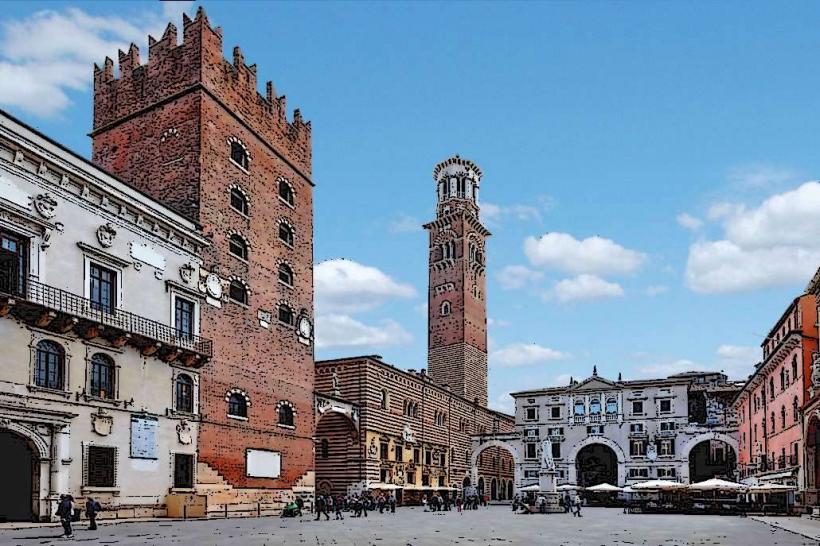
The main activity is observing the panoramic view of Verona's skyline, including the Adige River loops and the Torre dei Lamberti. Walking the perimeter of the fortress walls is possible. The Funicular station at the top provides a viewing terrace. The San Pietro hill also serves as a junction for hiking trails leading further into the Torricelle hills.
Infrastructure & Amenities
A restaurant and cafe with outdoor seating are located on the main terrace. Public restrooms are available at the funicular station. The area is largely open to the elements with limited shade provided by trees along the perimeter. 5G cellular signal is strong throughout the summit. Information boards detailing the history of the Austrian fortifications are installed near the entrance.
Best Time to Visit
The hour before sunset provides the optimal lighting for photography of the city. The site is accessible 24 hours a day, though the funicular typically operates from 10:00 to 21:00 in summer and until 17:00 in winter. Clear winter days offer the best visibility of the distant Apennine Mountains to the south.
Facts & Legends
Local tradition holds that the first settlement of Verona was founded on this hill by the Euganei and later the Cenomani Gauls before the Romans moved the city center to the plain below. A specific tip: avoid the crowds by following the path behind the fortress toward the Donati battery for a quieter view of the northern fortifications.
Nearby Landmarks
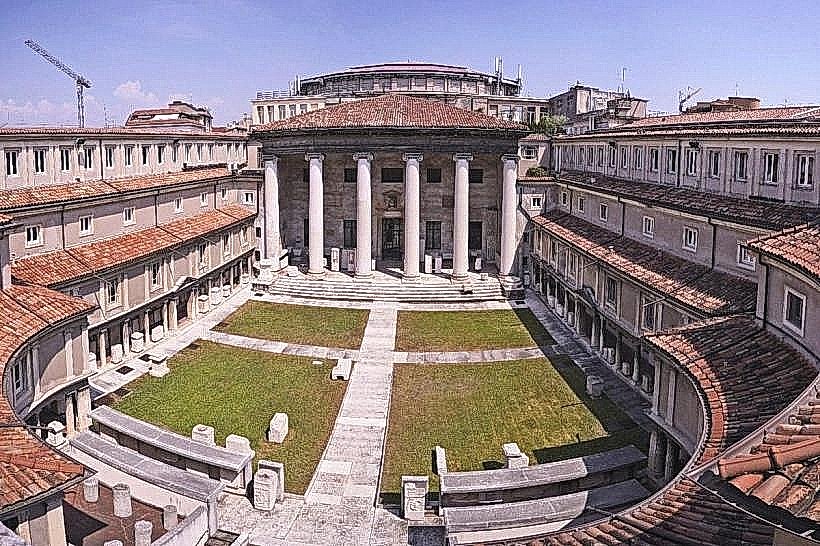
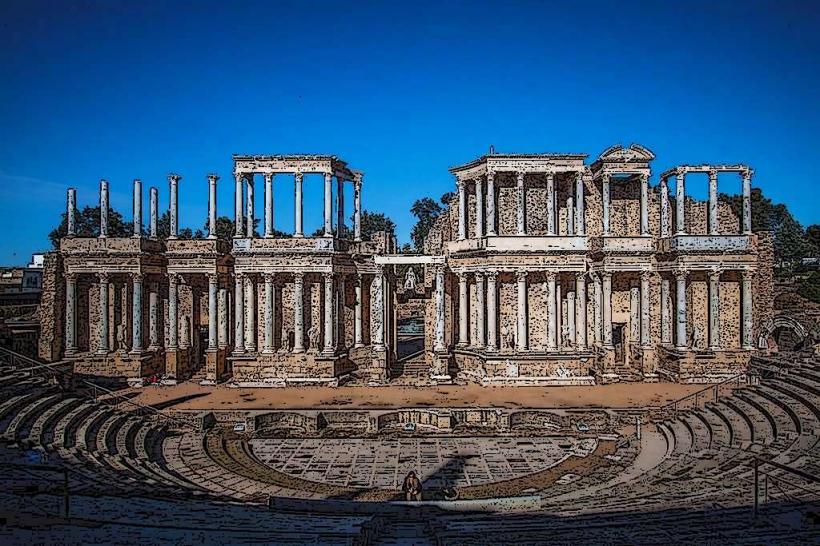
Roman Theatre (Teatro Romano): 0.2km South
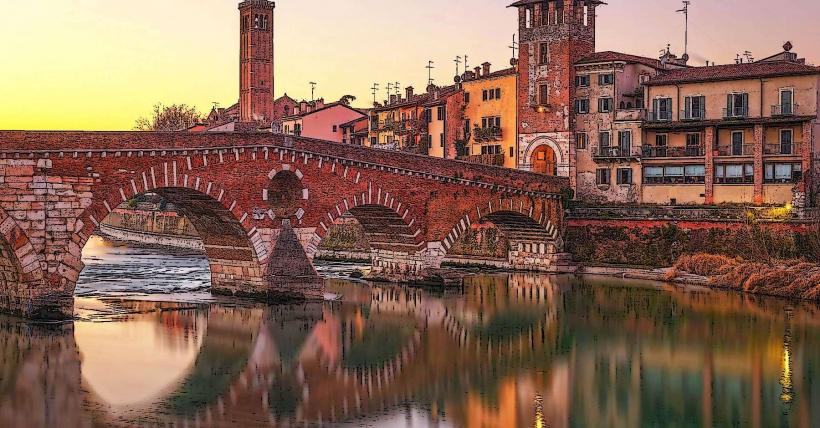
Ponte Pietra: 0.3km Southwest
Church of San Giorgio in Braida: 0.7km West
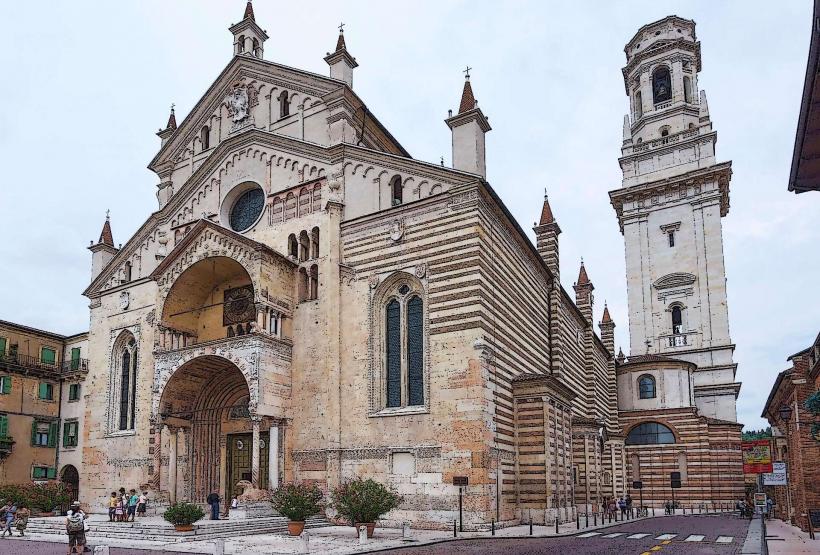
Verona Cathedral: 0.7km Southwest
Giusti Garden (Giardino Giusti): 0.8km Southeast