Information
Landmark: Castelvecchio Bridge (Ponte Scaligero)City: Verona
Country: Italy
Continent: Europe
Castelvecchio Bridge (Ponte Scaligero), Verona, Italy, Europe
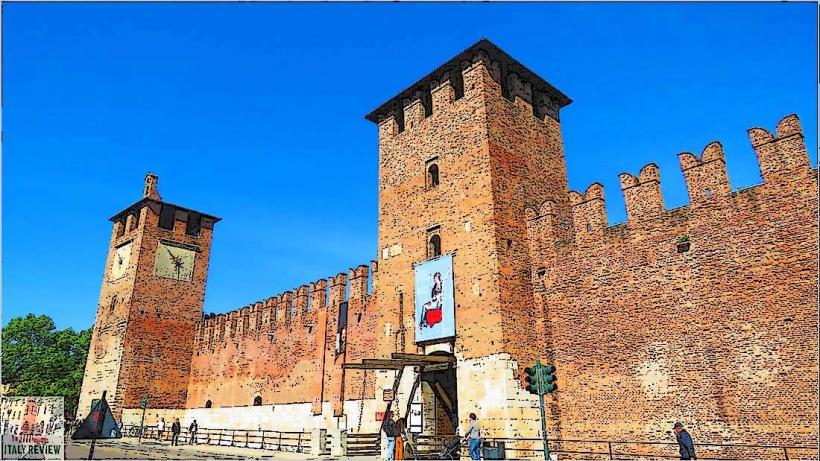
Castelvecchio and its companion, the Castelvecchio Bridge (Ponte Scaligero), stand as Verona’s most striking medieval landmarks-symbols of the city’s turbulent history and enduring architectural brilliance. Built along the banks of the Adige River, they embody the power and sophistication of the Scaliger dynasty that once ruled Verona.
The Fortress of Castelvecchio
Erected around 1354–1357 by Cangrande II della Scala, the fortress was designed as both a residence and a defensive stronghold. Its thick red-brick walls, crenellated towers, and angular battlements give it a severe yet majestic look. The fortress was deliberately placed on the river’s bend to secure one of the city’s main western approaches and to provide an escape route via the bridge in case of revolt or attack.
Inside, Castelvecchio feels both austere and refined. The Castelvecchio Museum, established in the 1920s and masterfully redesigned by architect Carlo Scarpa in the 1960s, now occupies its halls. Scarpa’s restoration blended modern design with medieval structure-a delicate interplay of raw stone, concrete, light, and shadow. The museum’s collection includes works by Venetian and Veronese masters such as Pisanello, Tintoretto, Paolo Veronese, and Bellini, alongside medieval sculptures, ancient weapons, and fresco fragments. The upper walkways reveal dramatic views of the Adige and Verona’s skyline.
The Ponte Scaligero
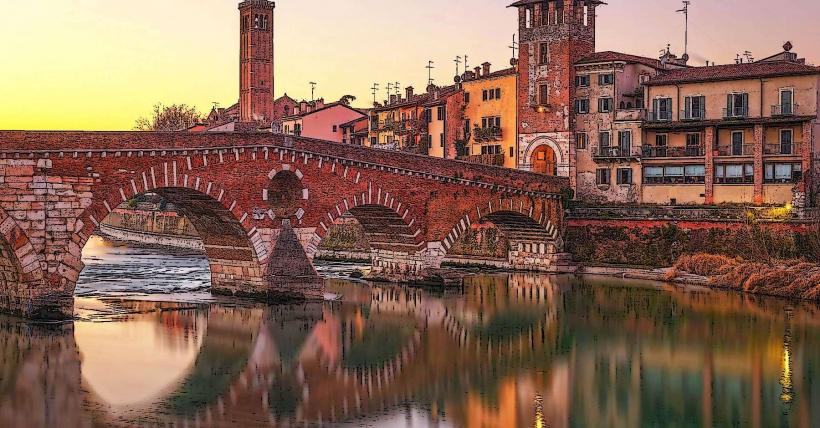
The adjoining Castelvecchio Bridge, or Ponte Scaligero, was built simultaneously with the fortress. Its unmistakable red bricks and three vast arches rise gracefully above the river, each arch progressively larger toward the center. At the time of construction, it was an engineering marvel-its 48-meter central span was among the widest of the Middle Ages. The bridge connected the city to the countryside north of Verona, serving as both an escape route for the ruling family and a symbol of their dominance.
Destroyed by retreating German troops in 1945, the bridge was meticulously reconstructed after World War II using original materials retrieved from the riverbed. Today, the Ponte Scaligero serves as a pedestrian crossing, and walking along its ramparts offers a vivid sense of medieval life-stone underfoot, the sound of the Adige below, and the red towers of Castelvecchio rising behind.
The Atmosphere and Surroundings
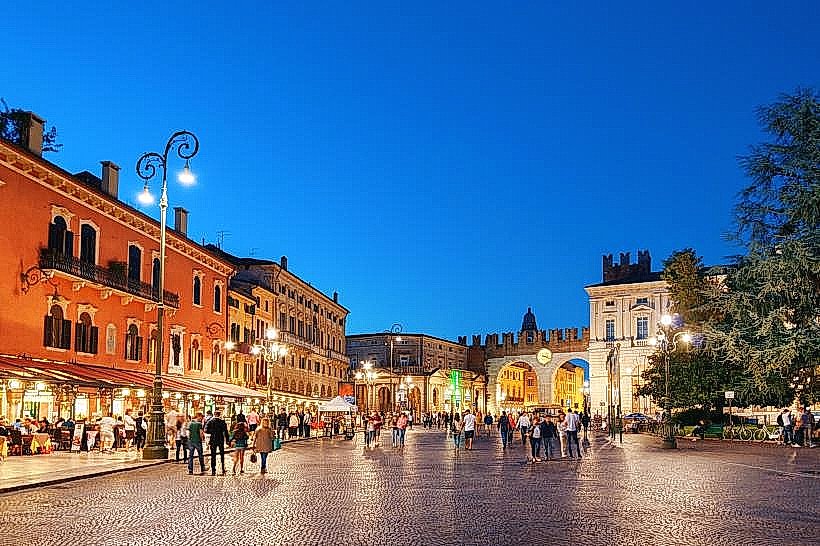
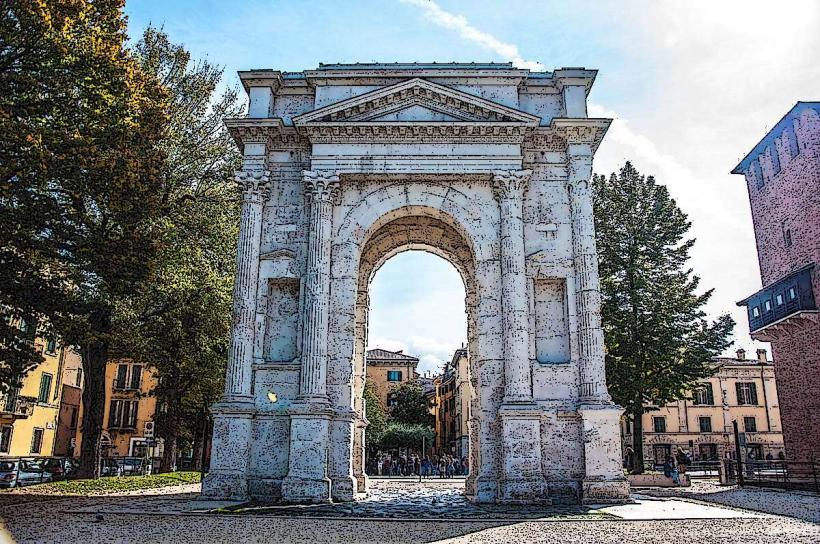
In the evening, Castelvecchio glows with amber light, its reflection trembling on the river. Locals stroll the bridge arm in arm, and the distant hum of Verona blends with the river’s quiet rush. The nearby Corso Cavour leads back toward Piazza Bra and the Arena, passing under Roman arches and Renaissance façades that trace the city’s layered history.
Together, Castelvecchio and its bridge are not just remnants of the past-they are a living dialogue between war and art, power and beauty, medieval might and modern reverence for heritage.