Information
Landmark: Church of Panagia ChalkeonCity: Thessaloniki
Country: Greece
Continent: Europe
Church of Panagia Chalkeon, Thessaloniki, Greece, Europe
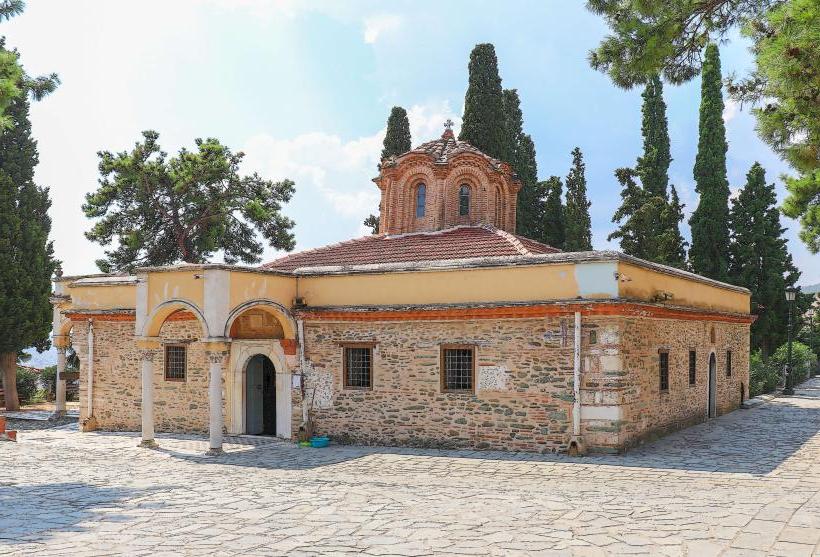
The Church of Panagia Chalkeon (Virgin of the Copper-smiths) is an 11th-century Byzantine church located in central Thessaloniki, situated in the Dikastirion Square north of Egnatia Street. It is a UNESCO World Heritage site and one of the most structurally intact examples of the "Constantinopolitan" cross-in-square architectural style in Greece.
Visual Characteristics
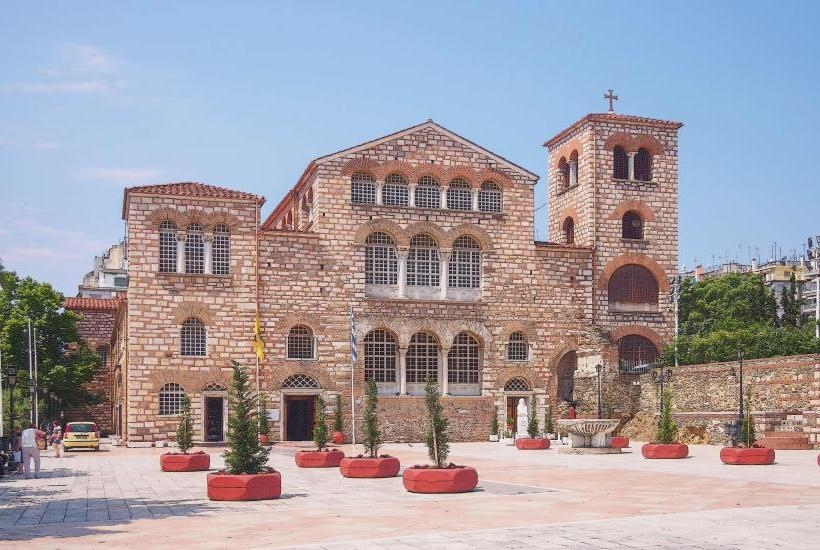
The church is constructed entirely of red brick, earning it the local nickname "The Red Church." It features a cross-in-square design with three domes: a large central dome supported by four columns and two smaller domes over the narthex. The exterior is decorated with recessed arches and dentil bands. The interior retains fragments of 11th-century frescoes, including a depiction of the Last Judgment in the narthex and the Ascension in the central dome.
Location & Access Logistics
The site is located at Halkeon 2, adjacent to the Aristotelous axis and the Roman Forum. It is served by all bus lines passing through Egnatia Street (stop: "Aristotelous" or "Alkazar"). It is approximately 0.4km from the upcoming Venizelou Metro Station. The church is situated in a sunken garden, several meters below the current street level, reflecting the original Byzantine ground level. Entry is free during standard liturgical hours (typically 07:00–12:00 and 17:00–19:00).
Historical & Ecological Origin
According to a marble founder’s inscription above the western entrance, the church was built in 1028 AD by Christopher, a high-ranking official (protopatharios), and his family. The name "Chalkeon" derives from its location in the traditional copper-smiths' quarter, a trade that still exists in the small shops nearby. Like many Byzantine churches, it was converted into a mosque (Kazancılar Camii) in 1430 and returned to Christian worship in 1912.
Key Highlights & Activities
Visitors observe the classic middle-Byzantine masonry and the transition of light through the narrow windows of the drums. The surrounding garden offers a rare quiet zone in the center of the city. Notable interior features include the marble iconostasis and the original 11th-century inscriptions detailing the church's dedication.
Infrastructure & Amenities
The church is reached by descending stone stairs into the courtyard; wheelchair access is limited due to the historical grade difference. 5G cellular signal is stable. No public restrooms are located within the church grounds, but the surrounding Dikastirion Square and Aristotelous Street contain numerous commercial facilities.
Best Time to Visit
The morning (08:00–10:00) is optimal for viewing the interior frescoes with natural light. The exterior is best photographed from the southern side on Egnatia Street in the afternoon, when the sun highlights the red brickwork against the green park.
Facts & Legends
A historical oddity is the "sunken" appearance of the church; it serves as a visual marker of how much the city's ground level has risen over a millennium of continuous habitation. Local tradition maintains that the copper-smiths of the area have remained under the protection of the Virgin Mary since the 11th century, surviving the transition between Byzantine, Ottoman, and Modern Greek rule.
Nearby Landmarks
Roman Forum of Thessaloniki: 0.1km North
Bey Hamam (Ottoman Baths): 0.1km East
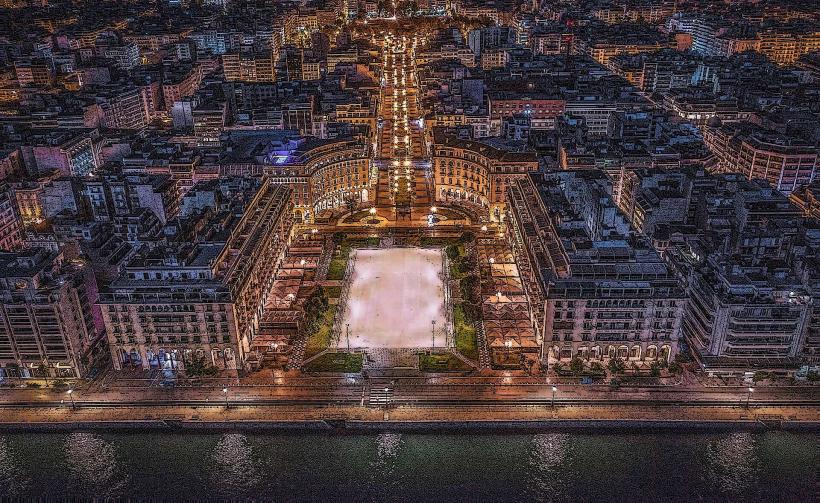
Aristotelous Square: 0.4km South
Church of Agios Dimitrios: 0.4km Northeast
Hamza Bey Mosque (Alkazar): 0.2km West