Information
Landmark: Thessaloniki Archaeological MuseumCity: Thessaloniki
Country: Greece
Continent: Europe
Thessaloniki Archaeological Museum, Thessaloniki, Greece, Europe
The Archaeological Museum of Thessaloniki is one of the most significant museums in Greece, located on Manoli Andronikou Street. It serves as the central repository for archaeological finds from the city of Thessaloniki and the broader region of Macedonia, spanning from prehistory to late antiquity.
Visual Characteristics
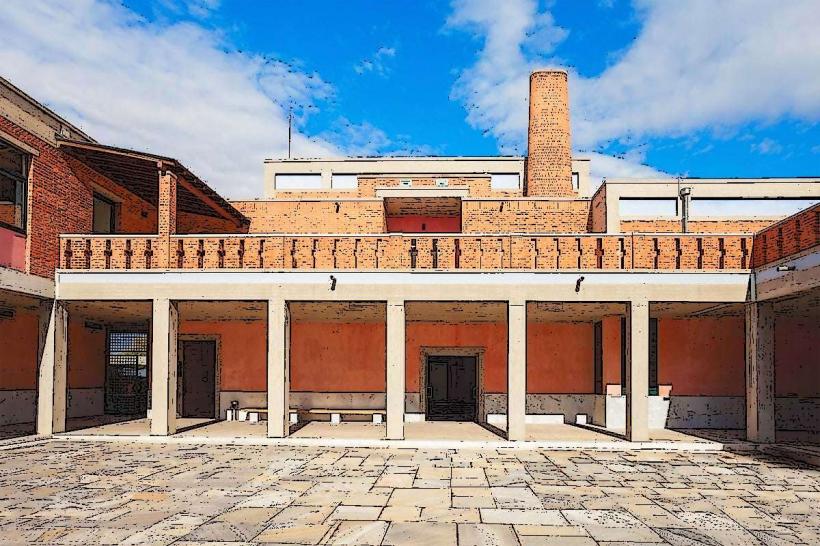
The museum is housed in a low-slung, rectilinear modernist building designed by architect Patroklos Karantinos. The structure features a prominent central courtyard and extensive use of glass and concrete, allowing natural light to illuminate the galleries. The interior is organized into large, open-plan halls with white walls and stone flooring, creating a neutral backdrop for the high-contrast gold and bronze artifacts.
Location & Access Logistics
The site is located at 6 Manoli Andronikou Street, adjacent to the Museum of Byzantine Culture and the International Exhibition Center. It is accessible via multiple bus lines stopping at the "Mouseia" station. The Sintrivani/Ekthesi Metro Station is approximately 0.6km to the north. No on-site parking is available for visitors; the nearest public parking is the YMCA (XANTH) underground garage, located 0.3km west.
Historical & Ecological Origin
The building was inaugurated in 1962 to celebrate the 50th anniversary of the liberation of Thessaloniki. It was significantly renovated in 2003 to modernize the displays and infrastructure. The surrounding grounds are landscaped with Mediterranean cypress and pine trees, featuring an outdoor exhibition of Roman-era sarcophagi and architectural remains.
Key Highlights & Activities
The museum is world-renowned for its collection of Macedonian gold. Key exhibits include:
The Derveni Krater: A massive 4th-century BC bronze vessel featuring intricate relief carvings of Dionysian scenes.
Gold of Macedon: An extensive collection of wreaths, jewelry, and armor found in the royal cemeteries of Derveni, Sindos, and Agia Paraskevi.
Prehistoric Macedonia: Displays covering the transition from the Neolithic period to the Bronze Age.
The Derveni Papyrus: Recognized by UNESCO as the oldest surviving "book" in Europe (5th century BC).
Infrastructure & Amenities
The facility is fully accessible to people with disabilities, featuring ramps and elevators. It includes a cafe with an outdoor seating area in the museum garden. 5G cellular signal is stable throughout the building. A museum shop provides academic publications and certified replicas.
Best Time to Visit
The museum is best visited during morning hours (08:30–11:00) to avoid large tourist groups. It follows seasonal operating hours, typically 08:00–20:00 in the summer. The outdoor lapidarium (stone collection) is best viewed in the late afternoon when the shadows emphasize the carvings on the Roman sarcophagi.
Facts & Legends
A verified historical fact is that the museum originally housed the finds from Vergina (the Royal Tombs of Philip II) before the dedicated museum at the actual site was constructed in the 1990s. The Derveni Papyrus, though charred and fragile, was successfully deciphered using multi-spectral imaging, revealing it to be a philosophical treatise on Orphic cosmogony.
Nearby Landmarks
Museum of Byzantine Culture: 0.05km East
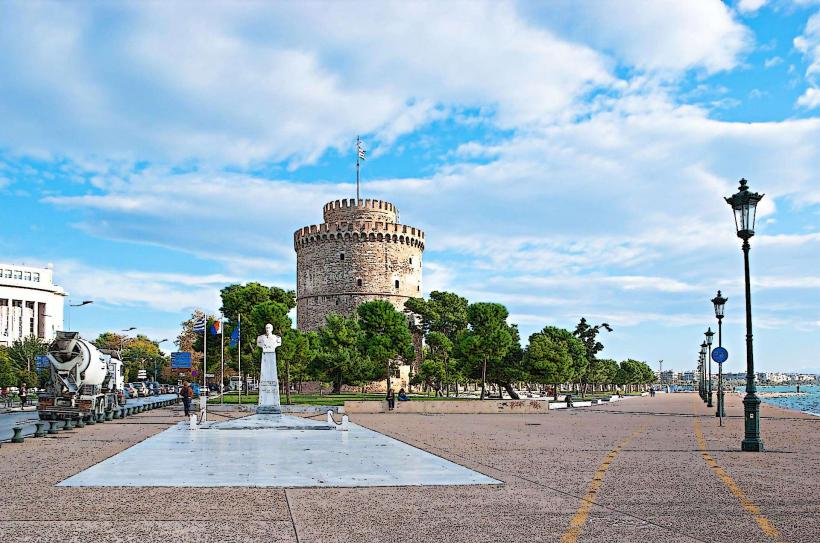
White Tower: 0.4km Southwest
OTE Tower: 0.2km North
National Theatre of Northern Greece: 0.3km West
Helexpo Exhibition Center: 0.1km North