Information
Landmark: Monastery of VlatadonCity: Thessaloniki
Country: Greece
Continent: Europe
Monastery of Vlatadon, Thessaloniki, Greece, Europe
The Monastery of Vlatadon (Moni Vlatadon) is a 14th-century Byzantine religious complex located in the Ano Poli (Upper Town) district of Thessaloniki, Central Macedonia. While historically associated with dependencies in the nearby Chalkidiki region, the landmark itself is situated on the acropolis of Thessaloniki, overlooking the Thermaic Gulf.
Visual Characteristics
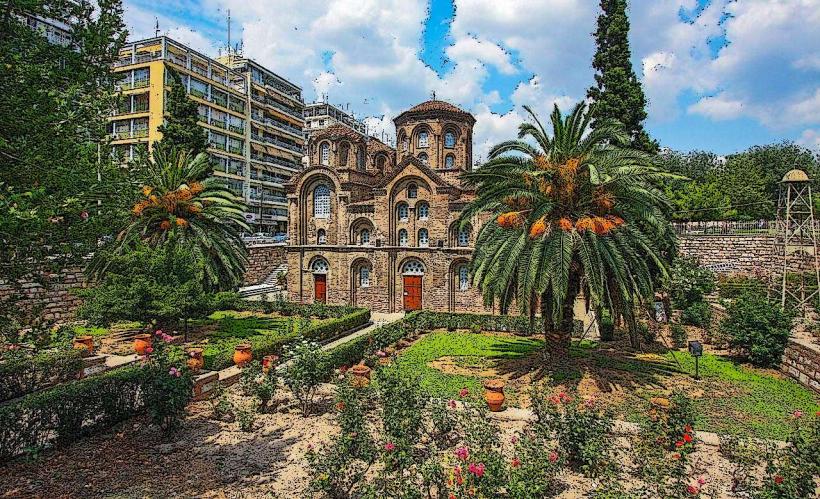
The central church (katholikon) is a rare variation of the cross-in-square architectural style, where the central dome is supported by two western pillars and the sanctuary walls rather than four columns. Its exterior is composed of alternating layers of stone and brick masonry, characteristic of the "School of Thessaloniki." The interior retains significant 14th-century frescoes, although many were damaged or plastered over during the Ottoman period.
Location & Access Logistics
The monastery is located at Eptapyrgiou 64, approximately 1.5 kilometers north of the city center. It is accessible via the Thessaloniki Sightseeing Bus (Stop 5: Byzantine Castles) or local bus line 22, which services the narrow streets of Ano Poli. Pedestrians can reach the site by ascending the stone alleyways from the Church of Agios Dimitrios toward the northern city walls.
Historical & Ecological Origin
Founded between 1351 and 1371 by the brothers Dorotheos and Markos Vlatis, disciples of Saint Gregory Palamas, the monastery was built upon the remains of an earlier 11th-century church. It received royal status through the patronage of Empress Anna Palaiologina. It remains the only operational Byzantine-era monastery within the city and currently houses the Patriarchal Institute for Patristic Studies.
Key Highlights & Activities
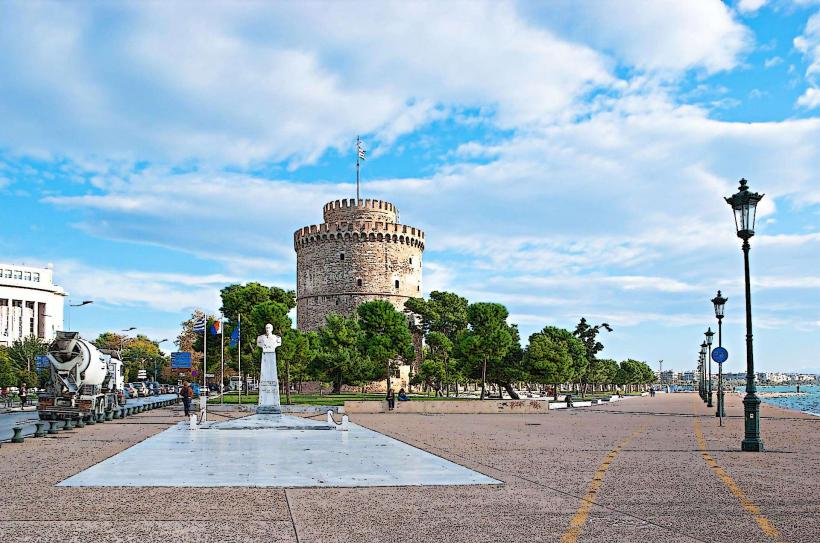
The main attraction is the katholikon, which contains the earliest known depiction of Saint Gregory Palamas. Visitors can explore the sacristy museum, which holds a collection of 12th-century icons and rare manuscripts. The monastery grounds feature a small enclosure with peacocks and offer a panoramic vantage point of the city, the White Tower, and Mount Olympus across the gulf.
Infrastructure & Amenities
The site includes a modern administrative wing for the Patriarchal Institute, a library, and a small guesthouse. Public restrooms are available for visitors, and 5G cellular coverage is consistent throughout the hilltop area. No food vendors are permitted on the immediate monastery grounds, but numerous traditional tavernas are located within a 200-meter radius in the Ano Poli district.
Best Time to Visit
Optimal visiting hours are between 08:00 and 11:00 or 18:00 and 20:00 to align with the monastery’s operational schedule and liturgical services. Photography of the city skyline is best in the late afternoon or at sunset. The site is particularly significant on August 6 for the feast of the Transfiguration of the Savior.
Facts & Legends
Local tradition identifies the monastery’s location as the site where the Apostle Paul preached to the Thessalonians during his second missionary journey in 51 AD. A historical oddity is its popular name "Cavus Monastir," derived from the Ottoman era when a Turkish garrison was stationed at the site to protect the monks, allegedly in exchange for their assistance during the 1430 siege of the city.
Nearby Landmarks
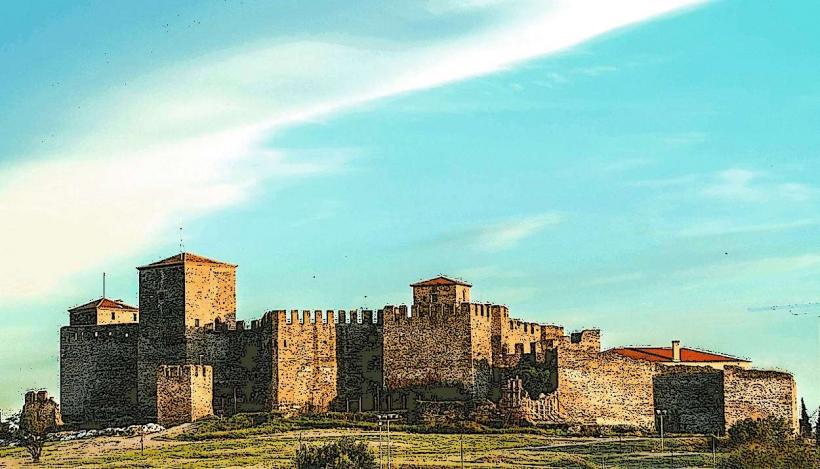
Eptapyrgio Fortress (Yedi Kule): 0.3km North
Trigoniou Tower: 0.4km East
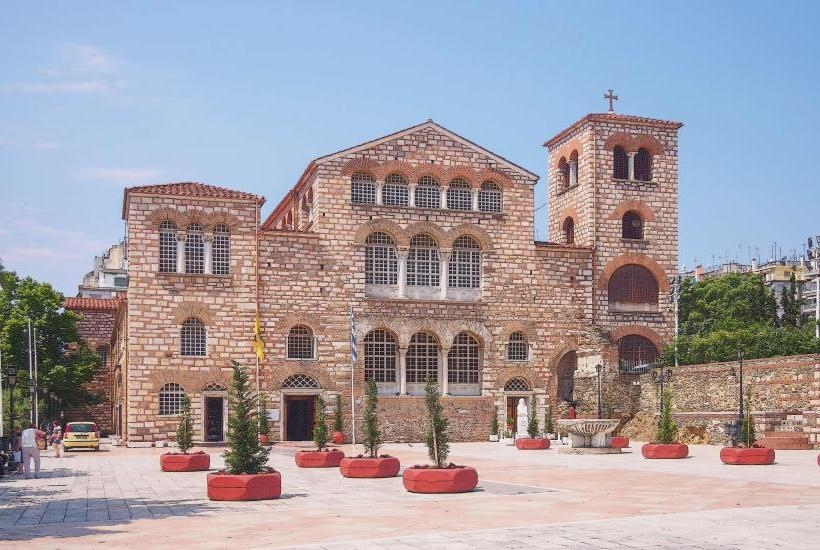
Church of Hosios David (Latomos Monastery): 0.2km West
Ataturk Museum: 0.5km Southeast
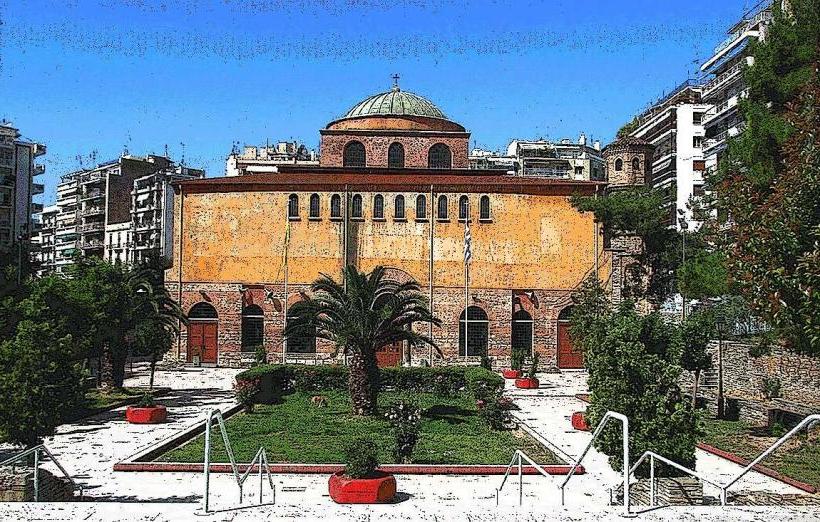
Church of Agios Dimitrios: 0.7km South