Information
Landmark: Church of San FrancescoCity: Bari
Country: Italy
Continent: Europe
Church of San Francesco, Bari, Italy, Europe
The Church of San Francesco (Chiesa di San Francesco d'Assisi) is a 13th-century religious complex located in the San Paolo district of Bari, near the historic city center. It represents one of the earliest Franciscan settlements in the Puglia region.
Visual Characteristics
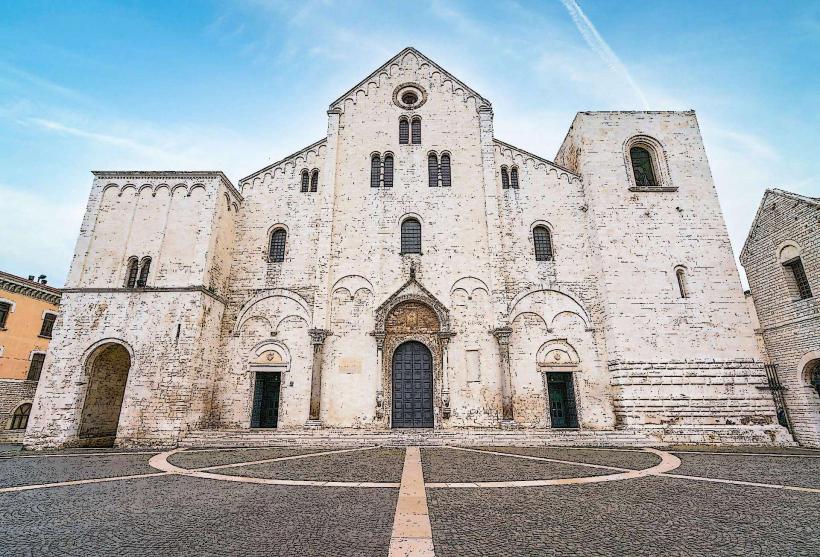
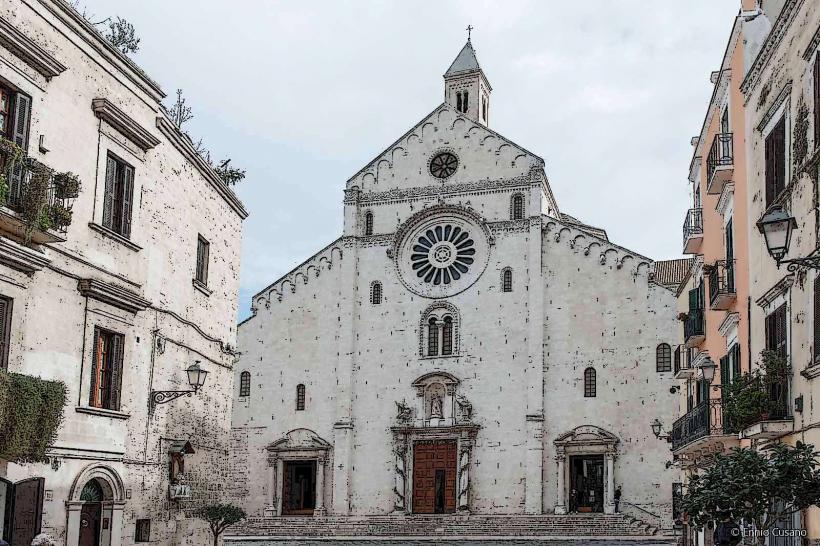
The church features an austere Gothic-Romanesque transition style. The facade is simple, constructed from local cream-colored limestone, with a central rose window and a gabled roofline. The interior consists of a single nave with side chapels, characterized by pointed arches and wooden ceiling beams. The decorative elements are restrained, reflecting the Franciscan vow of poverty, though several medieval frescoes remain partially visible on the interior walls.
Location & Access Logistics
The church is located on Via San Francesco d'Assisi, just west of the historic Bari Vecchia district. It is easily accessible on foot from the Swabian Castle (5 minutes) or the Bari Cathedral (10 minutes). For those using public transit, several AMTAB bus lines stop on the adjacent Corso Vittorio Emanuele II. Parking is limited in the immediate vicinity due to narrow streets; the nearest large parking lot is at the "Porto" (Harbor).
Historical & Ecological Origin
The church was founded in the early 13th century, traditionally attributed to the presence of Saint Francis of Assisi in Bari around 1220. The current structure primarily dates to the late 13th and early 14th centuries. It was built outside the original Byzantine city walls on a site that provided a stable limestone foundation. Over centuries, the complex underwent various modifications, including the addition of a cloister and monastic quarters, some of which were later repurposed for secular use.
Key Highlights & Activities
The main attraction is the 14th-century fresco cycle depicting scenes from the life of Saint Francis. The central altar houses a significant wooden crucifix from the late Middle Ages. The adjacent cloister, though partially modified, retains its original columns and provides a quiet space for reflection away from the city's urban noise. Religious services are still held regularly, following the Roman Catholic rite.
Infrastructure & Amenities
The church is a functional place of worship with modest facilities. There are no dedicated visitor centers or cafes on-site. Public restrooms are not available inside the church; visitors typically use facilities in nearby commercial establishments. 4G/5G cellular signals are generally strong in the open piazza in front of the church but may weaken inside the thick masonry walls.
Best Time to Visit
Optimal visiting hours are in the morning (09:00–12:00) when the interior is naturally illuminated. Photography is best in the late afternoon when sunlight hits the facade and rose window directly. To ensure entry, visitors should avoid the mid-afternoon closure period (typically 12:30–16:00) and be respectful of ongoing liturgical services.
Facts & Legends
According to local tradition, the land for the church was donated to Saint Francis by a local noble who was impressed by the saint's preaching in Bari. A verified historical fact is that the church served as a barracks and warehouse during the Napoleonic era, leading to the loss of several original artworks before it was restored to the Franciscan Order in the late 19th century.
Nearby Landmarks
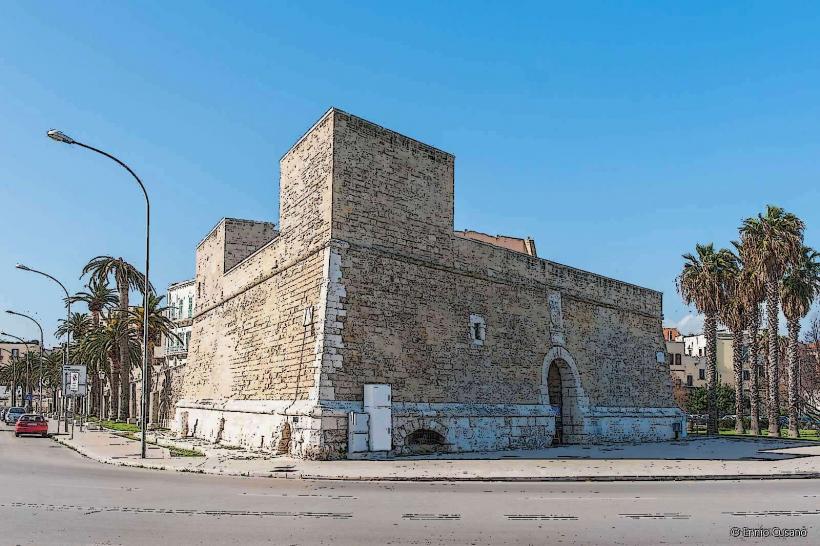
Castello Svevo (Swabian Castle): 0.3km East
Bari Cathedral (San Sabino): 0.5km East
Palazzo di Città (Town Hall): 0.4km Southeast
Bari Harbor: 0.4km North
Piazza Garibaldi: 0.2km South