Information
Landmark: Church of St ParaskevaCity: Sofia
Country: Bulgaria
Continent: Europe
Church of St Paraskeva, Sofia, Bulgaria, Europe
The Church of St. Paraskeva is a prominent Eastern Orthodox temple located on Georgi Rakovski Street in central Sofia. It is the third-largest church in the Bulgarian capital, distinguished by its unique architectural design and superior acoustics.
Visual Characteristics
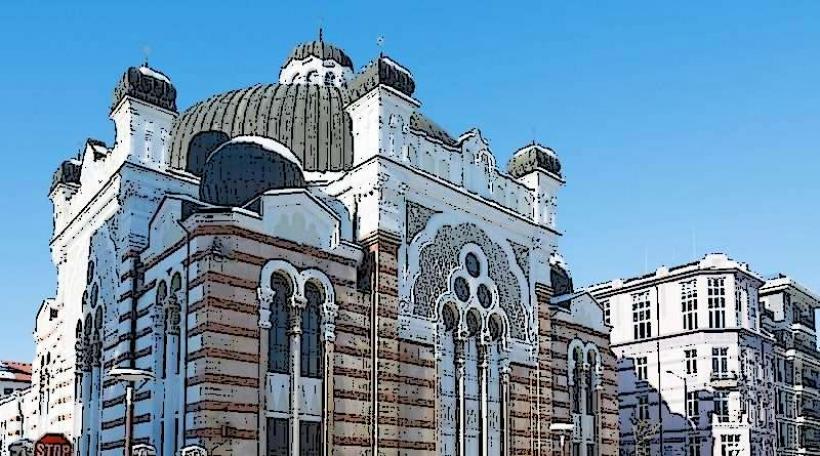
The church features a unique circular (rotunda-like) ground plan with a diameter of 25 meters, topped by a massive reinforced concrete dome. The exterior is clad in white stone and brick, characterized by a series of concentric tiers and arched windows. Unlike traditional cross-domed churches, the bell tower is integrated into the western facade, featuring a neo-Byzantine style with Bulgarian National Revival elements. The interior is noted for its lack of internal supporting columns, providing an unobstructed view of the altar and the extensive wood-carved iconostasis.
Location & Access Logistics
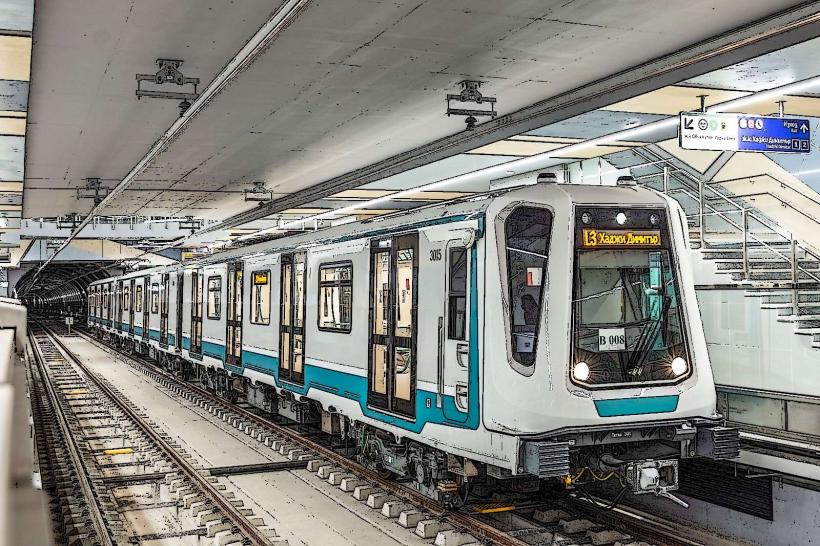
The church is situated at 58 Georgi Rakovski Street, near the intersection with Slivnitsa Boulevard. It is accessible via the "Lions' Bridge" (Lavov Most) Metro Station (Line M2), located 600 meters to the west. Trolleybus lines 6, 7, and 11, as well as bus lines 11, 78, 79, 305, and 413, stop at the nearby "Stolatna" or "ul. Dunav" stops. Paid municipal parking (Green Zone) is available on the side streets, though Georgi Rakovski Street itself has restricted stopping.
Historical & Ecological Origin
Construction began in 1926 and was completed in 1930, following the design of architect Anton Tornyov, who won a national competition for the project. The church was built to serve the growing population of the northern central districts and was dedicated to St. Paraskeva (Petka) of the Balkans. The site sits on the alluvial plain of the Sofia Basin, a high-altitude valley surrounded by the Vitosha, Lyulin, and Balkan mountain ranges.
Key Highlights & Activities
Visitors can observe the intricate wood carvings of the throne and iconostasis, executed by master carvers from the Debar school. The church frequently hosts choral concerts due to its exceptional hemispherical acoustics. Liturgical services are held daily, and the church remains a primary site for traditional Orthodox weddings and baptisms. The exterior courtyard contains several administrative buildings and a small garden.
Infrastructure & Amenities
The facility includes a candle desk and an ecclesiastical shop selling icons and religious literature. Public restrooms are not typically available for general tourists but can be found in nearby cafes and the "Sofia City" administrative zones. 5G cellular signal is excellent throughout the area. The interior provides a cool environment during summer, while the exterior has benches along the perimeter wall.
Best Time to Visit
The church is open daily from 07:30 to 18:30. The best time for photography is during the morning hours when the eastern sun illuminates the white facade. To experience the acoustics, visiting during Sunday morning liturgy (starting at 09:00) is recommended. The church is particularly active on October 14th, the feast day of St. Paraskeva.
Facts & Legends
Architect Anton Tornyov’s design was considered revolutionary for its time because it successfully utilized a large-scale reinforced concrete dome without the use of central pillars, a feat of engineering that maximizes interior space. Local accounts note that during the aerial bombings of Sofia in 1944, the church remained largely intact while many surrounding buildings were destroyed, leading to its reputation among congregants as a protected site.
Nearby Landmarks
Sofia Opera and Ballet – 0.4km South
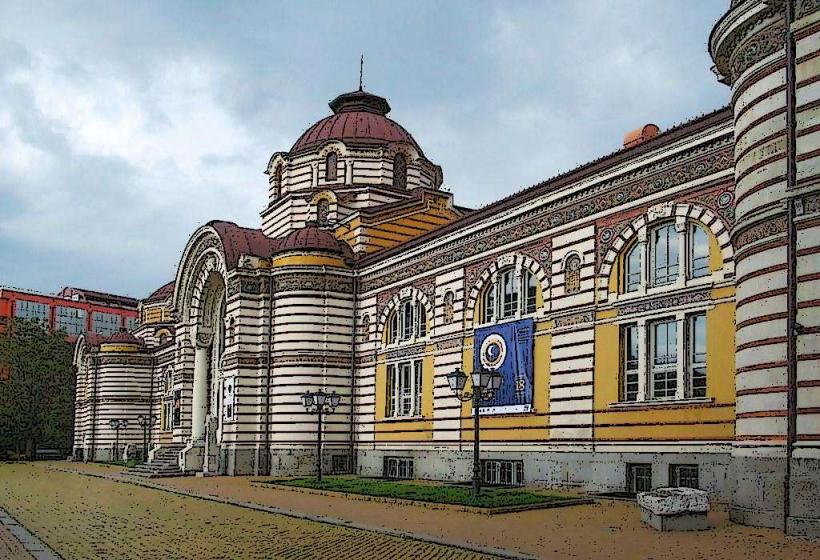
Regional History Museum (Sofia Central Baths) – 0.7km Southwest
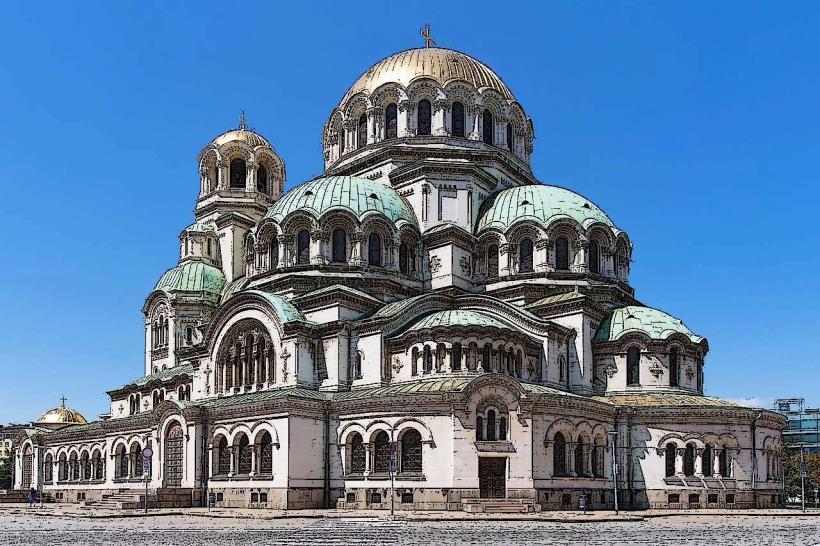
St. Alexander Nevsky Cathedral – 0.6km Southeast
National Mathematical High School – 0.2km North
Vasil Levski Monument – 0.5km Southeast