Information
Landmark: Coopers Rock State ForestCity: Morgantown
Country: USA West Virginia
Continent: North America
Coopers Rock State Forest, Morgantown, USA West Virginia, North America
Coopers Rock State Forest is a protected natural area located in Monongalia County, West Virginia, USA. It is situated approximately 13 miles east of Morgantown.
Visual Characteristics
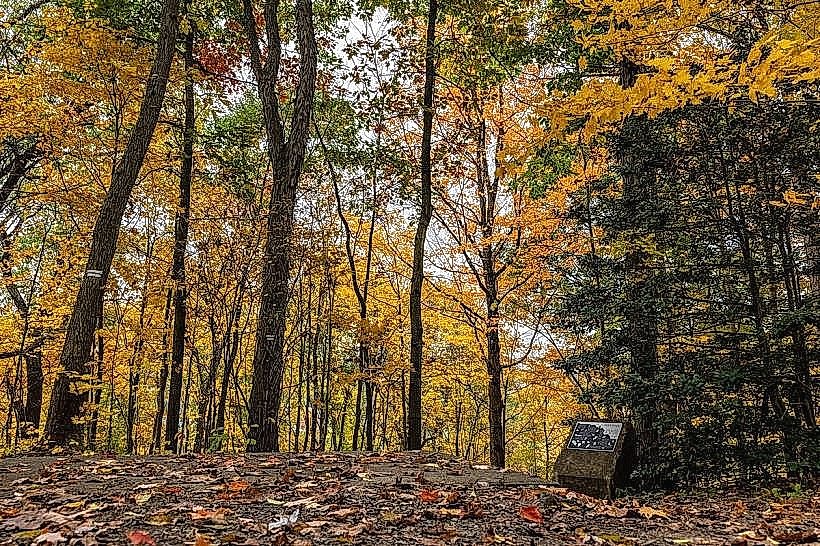
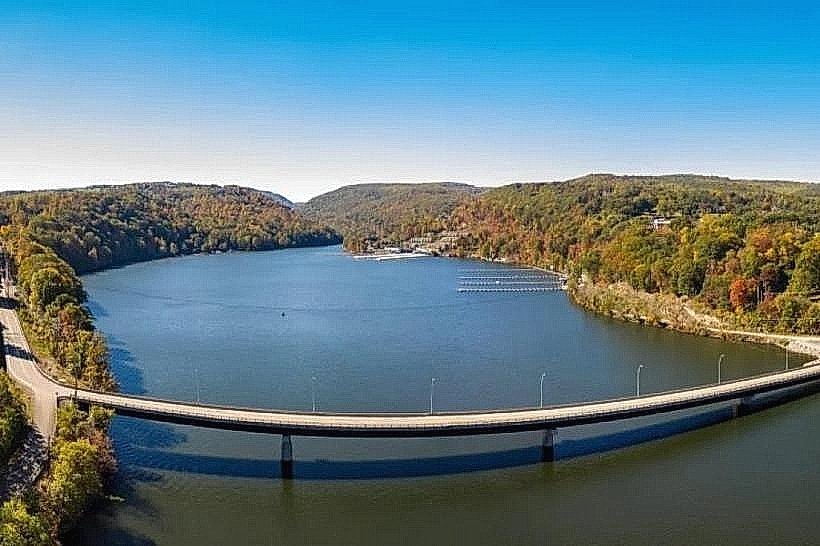
The forest features sandstone cliffs reaching up to 100 feet in height. The Cheat River Gorge runs through the park, with the river appearing dark green to brown depending on water clarity and depth. Vegetation consists of mixed deciduous and coniferous trees, with undergrowth varying in density by season. Rock formations include large boulders and exposed sandstone outcrops.
Location & Access Logistics
Access is via U.S. Route 19 North from Morgantown. The park entrance is approximately 13 miles from the city center. Ample parking is available at designated lots near the main overlook and trailheads. Public transport options are limited; the nearest bus service stops in Bruceton Mills, requiring a taxi or private vehicle for the final 5 miles to the park entrance.
Historical & Ecological Origin
The sandstone cliffs are part of the Conemaugh Group, dating back to the Pennsylvanian geological period, approximately 300 million years ago. The area was historically used for logging and iron production. The forest was established as a state park in 1936, with Civilian Conservation Corps (CCC) labor contributing to its initial development and infrastructure.
Key Highlights & Activities
Rock climbing and rappelling are permitted on designated cliffs. Hiking trails include the 1.5-mile loop to the main overlook and the more strenuous 2.5-mile trail to the Henry Clay Furnace. Fishing is available in the Cheat River, requiring a West Virginia fishing license. Picnicking is facilitated at several designated areas.
Infrastructure & Amenities
Restrooms are available at the main overlook and the park office. Shaded picnic areas are present. Cell phone signal (4G/5G) is intermittent within the park, with better reception near the park entrance and main overlook. No on-site food vendors are present; visitors should bring their own provisions or utilize facilities in Morgantown or Bruceton Mills.
Best Time to Visit
For photography, early morning and late afternoon offer optimal lighting on the cliffs. The best months for hiking and outdoor activities are April through October, avoiding winter ice conditions. No tide-dependent activities are relevant to this inland location.
Facts & Legends
The name "Coopers Rock" originates from a legend that a cooper (barrel maker) named Cooper used the prominent rock outcrop as a vantage point to survey his land. A verified historical oddity is the presence of the Henry Clay Furnace, a 19th-century iron furnace located within the park, a remnant of early industrial activity.
Nearby Landmarks
- Cheat Lake Park (10km Southwest)
- Morgantown Municipal Airport (15km Southwest)
- West Virginia University Arboretum (12km Southwest)
- Monongahela National Forest (Access points vary, nearest ~20km South)