Information
Landmark: Fiji MuseumCity: Suva
Country: Fiji
Continent: Australia
Fiji Museum, Suva, Fiji, Australia
The Fiji Museum is a national cultural institution situated within the Thurston Gardens in Suva, the capital city of Fiji. It serves as the primary repository for the country’s archaeological and anthropological collections, documenting the history of the Fijian archipelago over a span of 3,700 years.
Visual Characteristics
The museum is housed in a mid-20th-century colonial-style concrete building consisting of two main wings. The exterior features a prominent shaded veranda and is painted in neutral tones to blend with the surrounding botanical gardens. Interior galleries are organized chronologically and geographically, featuring specialized displays for large-scale maritime vessels, including the 13-meter-long Ratu Finau double-hulled canoe. The structure is fully air-conditioned and utilizes glass-fronted cabinetry and open-floor platforms for large artifacts.
Location & Access Logistics
The site is located on Cakobau Road, approximately 2 kilometers south of the Suva city center. It is accessible on foot from the central business district by walking south along Victoria Parade for 20 minutes. The Suva Municipal Bus Station serves as the nearest major transit hub; from there, local buses heading toward Nasese stop within a 5-minute walk of the museum entrance. Taxi services are readily available and typically cost FJD 2–3 from the city center. Dedicated parking is limited, with most visitors utilizing street parking along Cakobau Road or the nearby Ratu Sukuna Park area.
Historical & Ecological Origin
The museum was formally established in 1904 following a donation of artifacts by William Allardyce to the Suva Town Board. The collection was moved through various temporary locations, including the Town Hall and Carnegie Library, before the first wing of the current purpose-built facility was completed in 1954. A second wing was added in 1971 to accommodate the growing research and archaeological departments. The building is situated on the former site of the original fortified village of Suva, which was relocated across the bay in 1882.
Key Highlights & Activities
The museum offers self-guided tours through five main galleries: the Maritime Gallery, History Gallery, Masi (Barkcloth) Gallery, Girmit Gallery, and the Art Gallery. Notable exhibits include the rudder of HMS Bounty and a collection of traditional cannibal forks. Traditional pottery-making demonstrations are frequently held on the veranda during the week. Research-oriented visitors can access the reference library, which contains over 12,000 books and a collection of 10,000 historical photographs.
Infrastructure & Amenities
The facility includes a gift shop retailing local handicrafts, academic publications, and replica artifacts. A small café, the Mosamosa Cafe, is located on the veranda and provides outdoor seating with views of the gardens. Public restrooms are available and maintained within the building. Reliable 4G/5G cellular signals extend throughout the property. The building is equipped with ramps and offers rental mobility scooters and wheelchairs for accessible entry.
Best Time to Visit
Visiting is optimal during the dry season from May to October to avoid the high humidity and heavy rainfall of the tropical wet season. For interior photography, mid-morning (09:00–11:00) provides the most consistent ambient light through the windows without the harsh glare of the midday sun. The museum is generally less crowded on Tuesday and Wednesday mornings. It is closed on Sundays and most public holidays.
Facts & Legends
One of the most specific historical oddities on display is the remains of a leather boot belonging to Thomas Baker, a Christian missionary who was killed and eaten in 1867. Local accounts emphasize that the boot was allegedly boiled with the victim but remained inedible, leading to its eventual preservation. Another significant artifact is the waqa drua, the last double-hulled ocean-going canoe of its kind, built in 1913 and moved into the museum by military personnel in the 1950s.
Nearby Landmarks
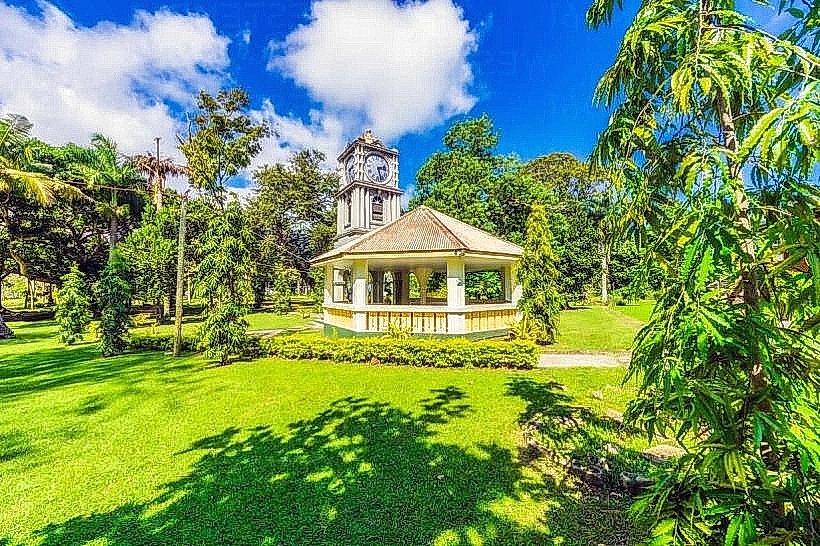
Thurston Gardens: 0.1km North
Albert Park: 0.3km Northwest
Grand Pacific Hotel: 0.4km West
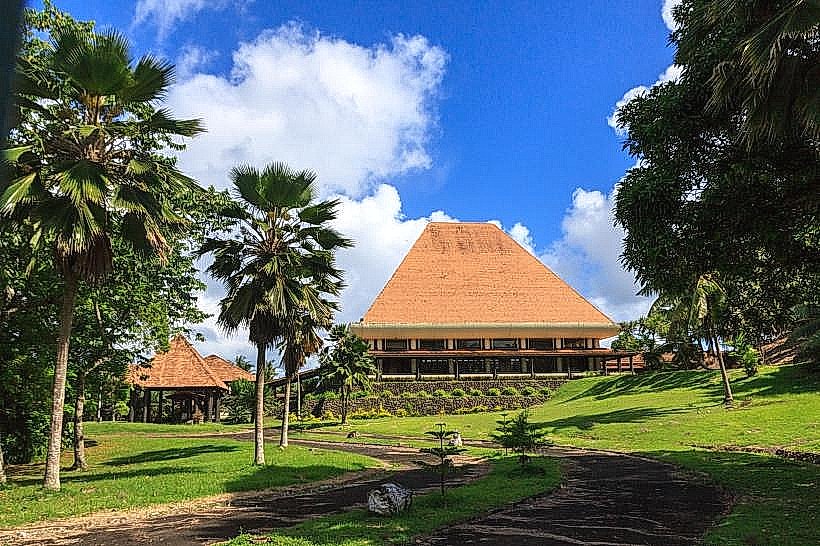
Government House (President's Residence): 0.2km South
Sacred Heart Cathedral: 1.1km North