Information
Landmark: Thurston GardensCity: Suva
Country: Fiji
Continent: Australia
Thurston Gardens, Suva, Fiji, Australia
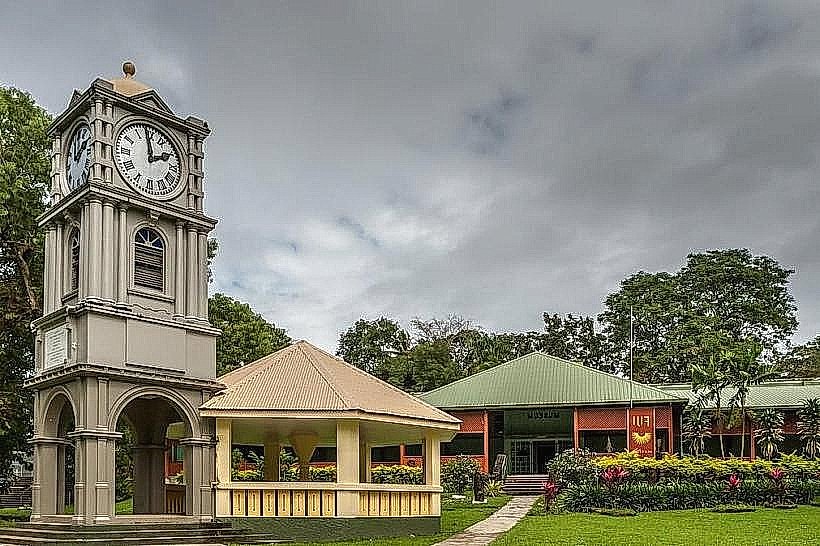
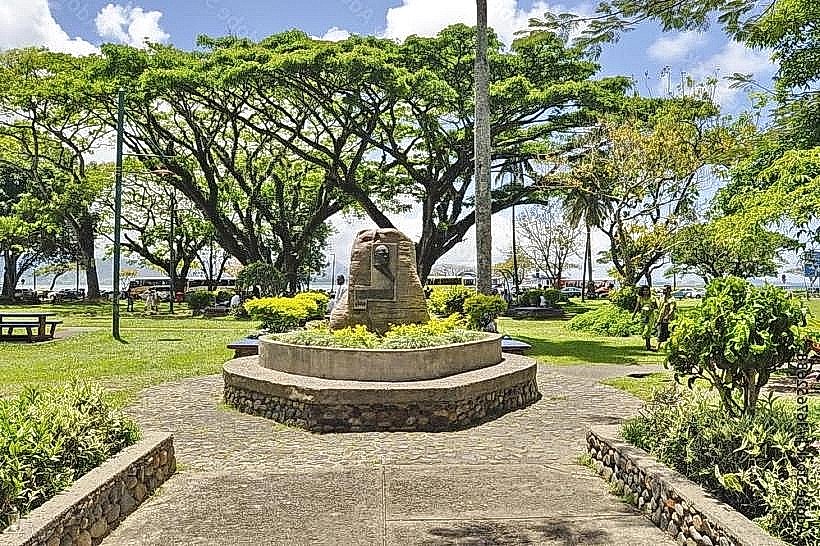
Thurston Gardens is a botanical park located in central Suva, situated between Albert Park and Government House on the site of the original Suva village. The gardens function as a public green space and botanical repository, also housing the national Fiji Museum within its southern perimeter.
Visual Characteristics
The gardens feature a formal layout with a density of tropical flora, including over 100 species of palms, tree ferns, and native ginger. Central to the park is a Victorian-style cast-iron bandstand and a square masonry clock tower, both painted white with decorative trim. The terrain is flat, interspersed with gravel and concrete walking paths, open manicured lawns, and several lily ponds. High concentrations of fruit bats (Pteropus vampyrus) are frequently visible hanging from the canopy of the larger tropical trees.
Location & Access Logistics
The gardens are positioned on Cakobau Road, approximately 2.2 kilometers from the Suva city center. Pedestrians can access the site via a 25-minute walk from the Suva Municipal Market by following Victoria Parade south. Bus transit is available through local routes stopping on Cakobau Road, with fares typically costing FJD 1–2. Taxi transport from the CBD takes approximately 5 minutes at a cost of FJD 3–5. Parking is available via street-side spaces along the northern and eastern boundaries. Entry to the gardens is free.
Historical & Ecological Origin
The site was the original location of the town of Suva until it was burned in 1843 during a conflict with the people of Rewa. In 1881, Sir John Bates Thurston, an amateur botanist and the fifth Governor of Fiji, initiated the establishment of the Suva Botanical Gardens. The grounds were reorganized in 1913 with the installation of underground drainage systems and the planting of an avenue of 101 Royal Palms. The park was officially renamed Thurston Gardens in 1976.
Key Highlights & Activities
Visitors utilize the network of flat walking tracks for self-guided botanical tours. Specific landmarks include the 1918 Clock Tower and the "Thurston Express," a decommissioned stationary sugar cane locomotive. The lawns are designated for passive recreation and are frequently used for organized photography sessions. Wildlife observation focuses on the resident fruit bat colony, particularly active during the dusk transition.
Infrastructure & Amenities
Public restrooms are located within the Fiji Museum building at the southern end of the park. The gardens provide several shaded benches and a central bandstand for shelter from rain. Cellular signal is consistent at 4G/5G speeds throughout the grounds. Food services are available at the museum’s veranda cafe; additional dining options are located 0.4km west at the Grand Pacific Hotel. Drainage issues can cause standing water on grass sections following heavy tropical rainfall.
Best Time to Visit
The gardens are open daily from sunrise to sunset. The dry season from May to October is the most suitable time for walking without rain-induced ground saturation. Afternoon visits (17:00–18:00) provide the best opportunity to observe the fruit bat colony's peak activity. Morning light before 10:00 is recommended for photography of the Clock Tower to avoid high-contrast shadows.
Facts & Legends
The site contains the historical foundations of the original Suva village, though no surface structures remain from the pre-1843 era. A local memorial tip: the Clock Tower and bandstand were specifically funded by the Henry Marks & Company as a memorial to G.J. Marks, Suva's first mayor, who died in the Empress of Ireland shipwreck in 1914.
Nearby Landmarks
Fiji Museum: 0.1km South
Albert Park: 0.2km North
Government House: 0.2km South
Grand Pacific Hotel: 0.4km West
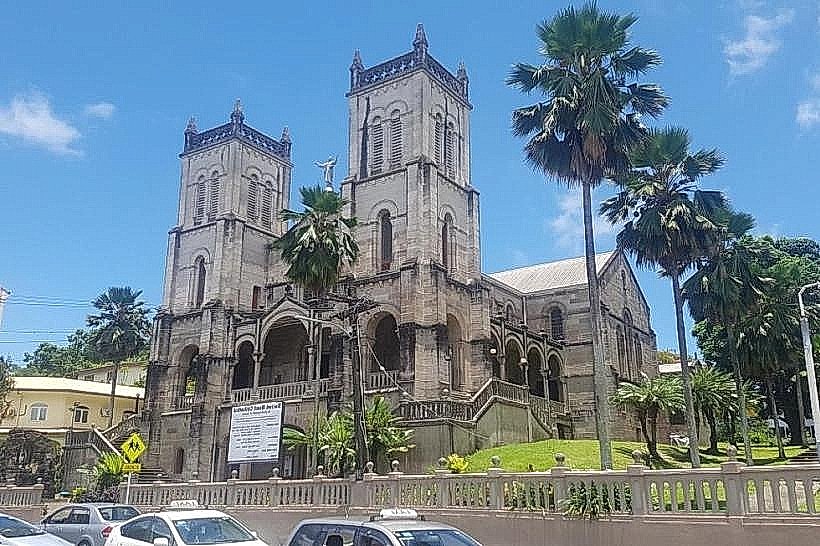
Holy Trinity Cathedral: 0.9km North