Information
Landmark: Sacred Heart CathedralCity: Suva
Country: Fiji
Continent: Australia
Sacred Heart Cathedral, Suva, Fiji, Australia
The Sacred Heart Cathedral is a prominent Roman Catholic landmark situated on Pratt Street in the central business district of Suva. Completed in 1902, it serves as the seat of the Archdiocese of Suva and remains one of the most significant religious structures in the South Pacific.
Visual Characteristics
The cathedral is constructed in a traditional Neo-Gothic architectural style, primarily utilizing sandstone blocks imported from Australia. The facade features two prominent square towers flanking a central entrance, though these towers lack the spires originally planned in the design. The interior is characterized by a high vaulted ceiling, pointed arch windows, and a series of stained-glass panels depicting biblical scenes and Catholic saints. The seating consists of heavy wooden pews arranged in a central nave with two side aisles.
Location & Access Logistics
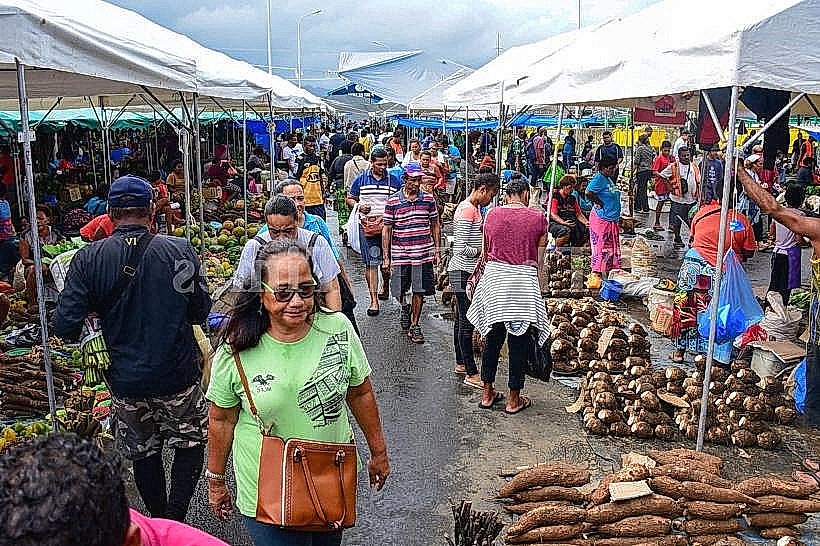
Located on Pratt Street, the cathedral is 400 meters east of the Suva Municipal Market and 600 meters north of Albert Park. It is easily accessible on foot from any point within the Suva CBD. For those using public transport, the Suva Municipal Bus Station is a 10-minute walk away. Limited street parking is available on Pratt Street and the adjacent Murray Street, though these spots are frequently occupied during weekday business hours and Sunday services.
Historical & Ecological Origin
Construction of the cathedral began in 1894 under the direction of Bishop Julian Vidal and the Marist Fathers. The design was inspired by the churches of Rome and built using labor and materials coordinated by the Catholic mission. It was consecrated in 1902, representing the shift of the Catholic headquarters from Levuka to Suva following the relocation of the capital. The sandstone material was specifically chosen for its durability against the tropical, salt-heavy air of the Suva peninsula.
Key Highlights & Activities
The primary activities include attending daily Mass and observing the ecclesiastical architecture. The cathedral houses a significant pipe organ and a collection of religious statues imported from Europe during the early 20th century. Visitors are permitted to enter for quiet reflection or architectural viewing outside of scheduled service times. The exterior courtyard features a grotto dedicated to Our Lady of Lourdes.
Infrastructure & Amenities
The cathedral precinct includes a parish office, a small bookstore selling religious items, and public restrooms available during service hours. The building is naturally ventilated through its high ceilings and arched windows, though it lacks central air conditioning. Cellular reception is consistent with 5G availability. Food and beverage options are located within 100 meters at various CBD cafes and the TappooCity food court.
Best Time to Visit
For interior viewing and photography, mid-morning on weekdays (09:00–11:00) offers the best lighting through the stained-glass windows without interfering with liturgical services. Sunday mornings are reserved for multiple Masses (typically 07:00, 09:00, and 17:00), which are well-attended and limit mobility for tourists. The cathedral remains open throughout the day for visitors.
Facts & Legends
The cathedral is a "minor basilica" in architectural spirit, though not official title, and was built to be earthquake-resistant-a feature tested successfully during the 1953 Suva earthquake. A local point of interest is the integration of Fijian motifs in some of the newer interior vestments and decor, reflecting the inculturation of the Catholic faith within Melanesian society.
Nearby Landmarks
Suva City Library: 0.2km West
TappooCity Suva: 0.3km West
Government Buildings: 0.5km South
Suva Municipal Market: 0.4km West
Sukuna Park: 0.3km Southwest