Information
Landmark: Fontana dell ElefanteCity: Catania
Country: Italy
Continent: Europe
Fontana dell Elefante, Catania, Italy, Europe
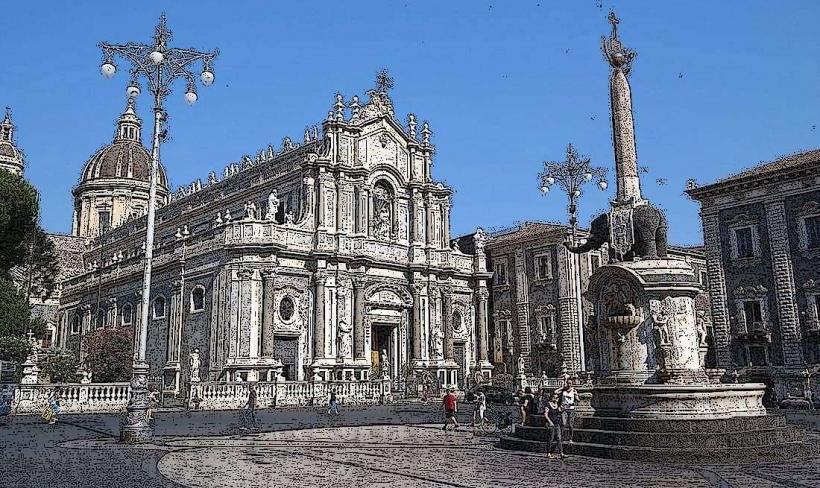
The Fontana dell'Elefante (Fountain of the Elephant) is the monumental centerpiece of Piazza del Duomo and the official symbol of Catania. Known locally as u Liotru, it was assembled in its current form in 1736 as part of the city's post-earthquake reconstruction.
Visual Characteristics
The monument is a complex assemblage of materials and symbols. At the base is a white marble fountain decorated with two statues representing the Simeto and Amenano rivers. On the pedestal stands an ancient elephant sculpted from black basaltic lava stone. The elephant supports an Egyptian granite obelisk, which is topped with a globe and a cross featuring the symbols of Saint Agatha (the crown, the palm branch, and the initials MSSHPE: Mensa libera, Stola iucunda, Hostem propulsat, Et patriae liberationem).
Location & Access Logistics
The fountain is located exactly at the center of Piazza del Duomo. It is situated in a pedestrian-only zone. The site is a 1.2km walk from Catania Centrale station and 500 meters from the nearest metro stop, Stesicoro. Visitors arriving from the airport can use the Alibus service, which stops at the adjacent Piazza Borsellino. There are no entry fees or barriers, as it is a public monument.
Historical & Ecological Origin
The elephant statue is of uncertain age; while some scholars suggest it is Roman, others argue it may be Byzantine. It was found in the ruins of the city after the 1693 earthquake. Architect Giovanni Battista Vaccarini incorporated the ancient statue into his fountain design in 1736, modeled after Bernini's Minerva Obelisk in Rome. The use of lava stone for the elephant reflects the geological reality of Catania’s proximity to Mount Etna.
Key Highlights & Activities
Symbolic Veneration: The elephant is considered a protective talisman against the eruptions of Mount Etna.
Photography: The fountain offers a clear sightline to the Cathedral of Saint Agatha and the Town Hall.
Meeting Point: It serves as the primary landmark for guided tours and local social gatherings.
Hieroglyphics: The obelisk features genuine ancient Egyptian carvings, although they are mostly decorative in this context.
Infrastructure & Amenities
The fountain is surrounded by the amenities of Piazza del Duomo, including historic cafes and the central tourist office. 4G/5G cellular signals are excellent. The area is flat and paved with smooth basalt blocks, making it fully accessible for individuals with mobility challenges.
Best Time to Visit
The monument is best viewed at night when it is illuminated by specialized architectural lighting, emphasizing the contrast between the black lava stone and white marble. For photography, the early morning provides the clearest light on the elephant’s profile against the backdrop of the Cathedral. During the Feast of Saint Agatha (February 3–5), the fountain is the focal point of massive public celebrations.
Facts & Legends
The name Liotru is a Sicilian corruption of the name Eliodoro, a legendary 8th-century magician and apostate. Legend claims Eliodoro sculpted the elephant from Etna's lava and used magic to bring it to life, riding it during his travels to Constantinople. A scientific fact: the obelisk was originally brought to Catania from Egypt during the Roman era and likely decorated an ancient circus before being moved to the piazza.
Nearby Landmarks
Cathedral of Saint Agatha: 0.03km East
Palazzo degli Elefanti (Town Hall): 0.04km North
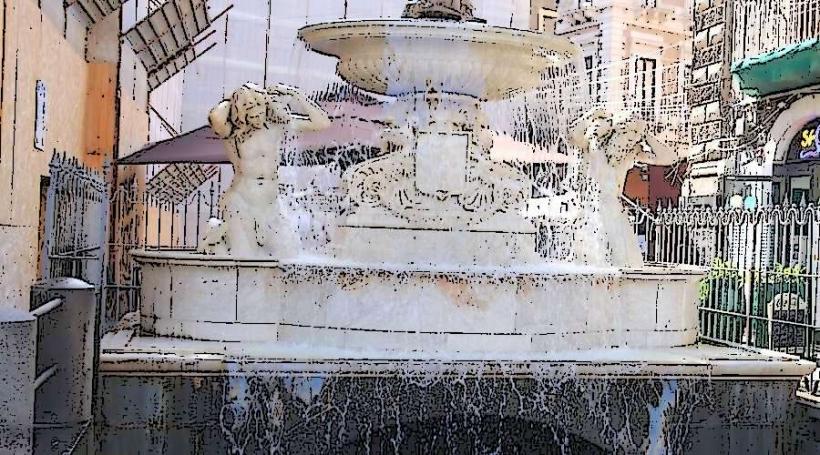
Fontana dell'Amenano: 0.05km South
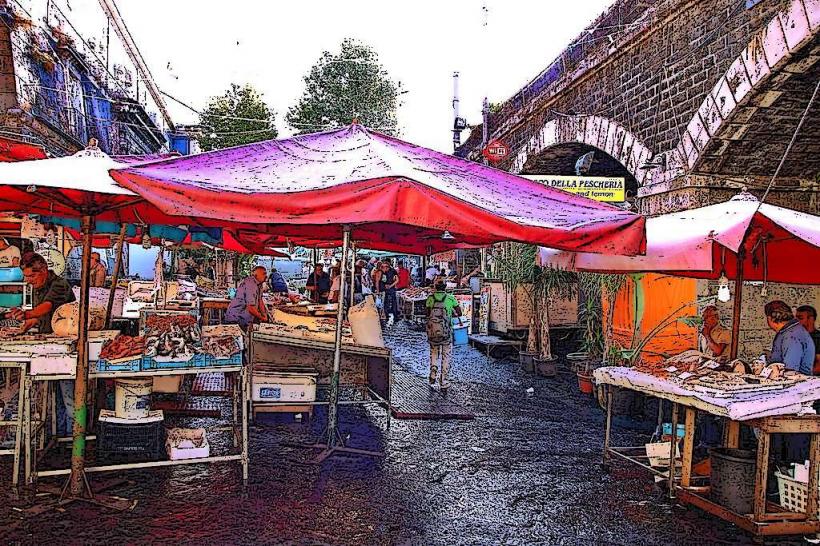
La Pescheria (Fish Market): 0.1km Southwest
Via Etnea: 0.02km North