Information
Landmark: Giardino BelliniCity: Catania
Country: Italy
Continent: Europe
Giardino Bellini, Catania, Italy, Europe
Giardino Bellini (also known as Villa Bellini) is the oldest and most prominent urban park in Catania. Situated on the slopes of a hill along Via Etnea, it covers approximately 71,000 square meters and serves as the city's primary "green lung."
Visual Characteristics
The park is characterized by a symmetrical layout featuring two small hills connected by a central promenade. The landscape design is typical of late 19th-century Italian gardens, incorporating geometric flower beds, rows of towering palm trees, and monumental fountains. A defining feature is the Botanical Clock, located at the entrance, where the date is manually updated daily using living plants. The summit of the hills is crowned by an ornate cast-iron Moorish-style bandstand.
Location & Access Logistics
The main entrance is located on Via Etnea, near the intersection with Via Umberto I. It is a 5-minute walk north from Piazza Stesicoro and 15 minutes from Piazza del Duomo. The park is pedestrian-only. Entry is free to the public. The nearest metro station is Stesicoro. Public buses stop frequently at the "Villa Bellini" or "Via Etnea" stops.
Historical & Ecological Origin
The park originated from the 18th-century private garden of Prince Ignazio Paternò Castello di Biscari. The city of Catania acquired the land in 1854 and inaugurated the public park in 1883. It was named in honor of the Catania-born composer Vincenzo Bellini. Geologically, the park occupies an elevated area that escaped the direct path of the 1669 lava flow, allowing for the growth of centuries-old vegetation, including Ficus macrophylla and diverse Mediterranean flora.
Key Highlights & Activities
Chiostro della Musica: The ornate gazebo at the top of the hill, once used for public concerts.
The Avenue of Illustrious Men: A pathway lined with busts of famous figures from Catania and Italy’s history.
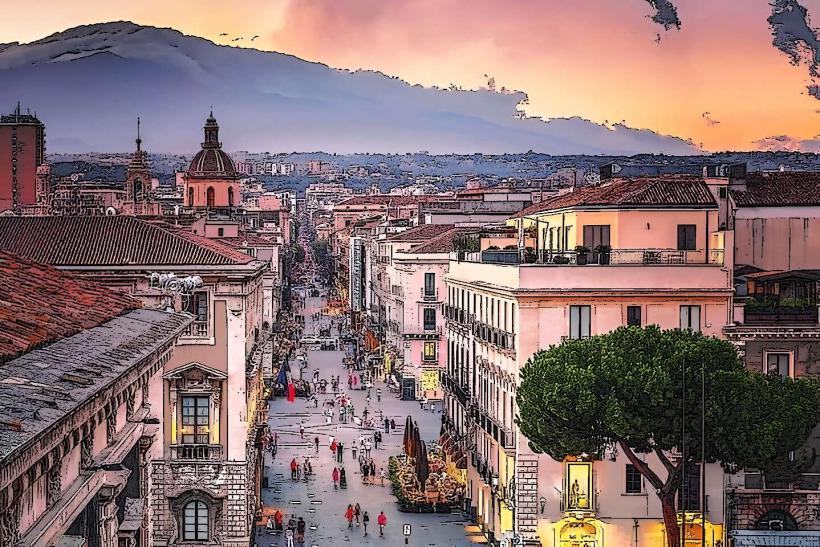
Panoramas: The upper terraces provide a clear view of Mount Etna to the north and the historic city center to the south.
Recreation: The park includes dedicated playgrounds for children and paved paths for jogging and walking.
Infrastructure & Amenities
The park is equipped with public benches, trash receptacles, and drinking fountains (fontanelle). There is a large central café/kiosk providing snacks and beverages. 4G/5G cellular signals are excellent throughout the open areas. Public restrooms are located near the internal service buildings. The main paths are wide and accessible, though reaching the hill summits requires navigating inclined walkways.
Best Time to Visit
The park is most active during the late afternoon "passeggiata." For photography, the morning light is optimal for views of the volcano. It serves as a refuge during summer heatwaves due to the significant shade provided by mature trees. During the Feast of Saint Agatha, it is a key gathering point for families.
Facts & Legends
The park's swan pond was historically one of its most famous features, though its population has varied over the years. A verified historical fact is that in the early 20th century, the park included a small zoo with animals such as elephants and monkeys, a practice that has since been discontinued.
Nearby Landmarks
Via Etnea: 0.01km East (Adjacent)
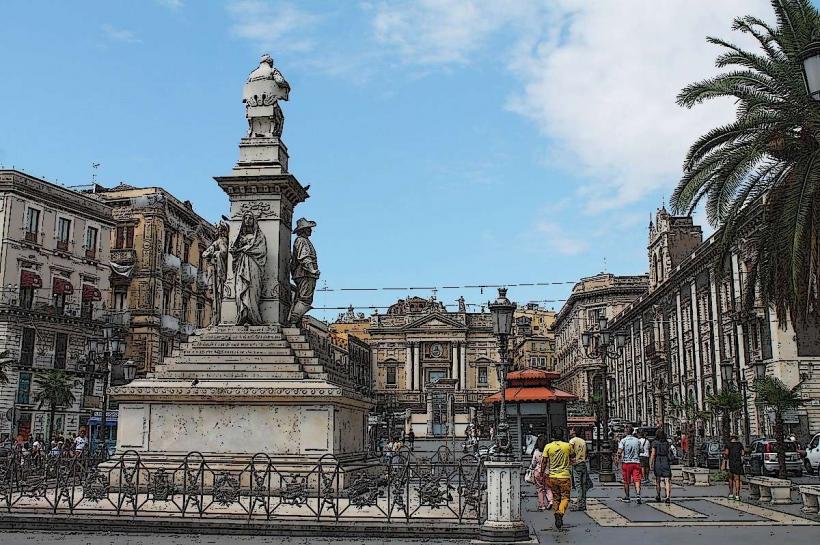
Piazza Stesicoro: 0.3km South
Orto Botanico (Botanical Garden): 0.7km North
Piazza Carlo Alberto (Fera 'o Luni Market): 0.4km Southeast
Teatro Massimo Bellini: 0.8km Southeast