Information
Landmark: Piazza del DuomoCity: Catania
Country: Italy
Continent: Europe
Piazza del Duomo, Catania, Italy, Europe
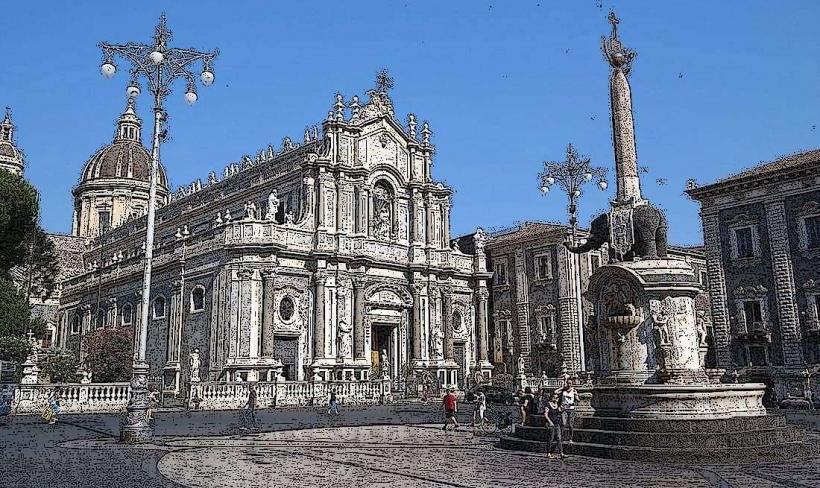
Piazza del Duomo is the historic and civic heart of Catania. Located at the intersection of the city's three main arteries-Via Etnea, Via Giuseppe Garibaldi, and Via Vittorio Emanuele II-the square is a masterpiece of Sicilian Baroque and a designated UNESCO World Heritage site.
Visual Characteristics
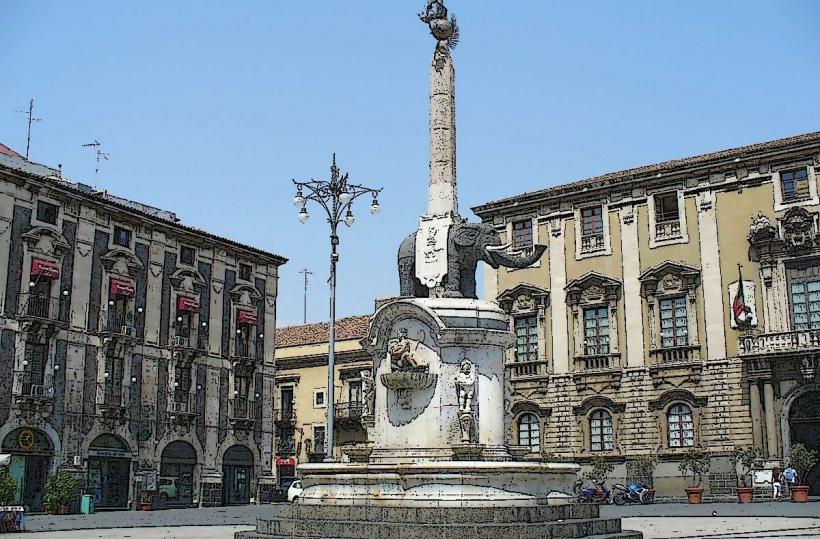
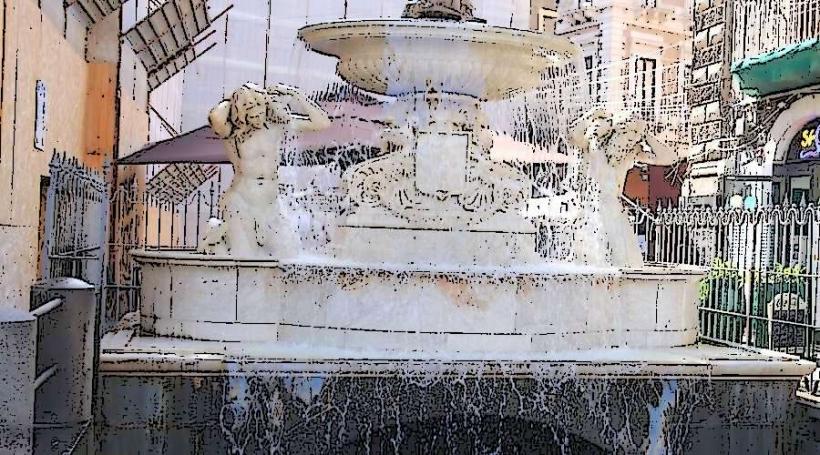
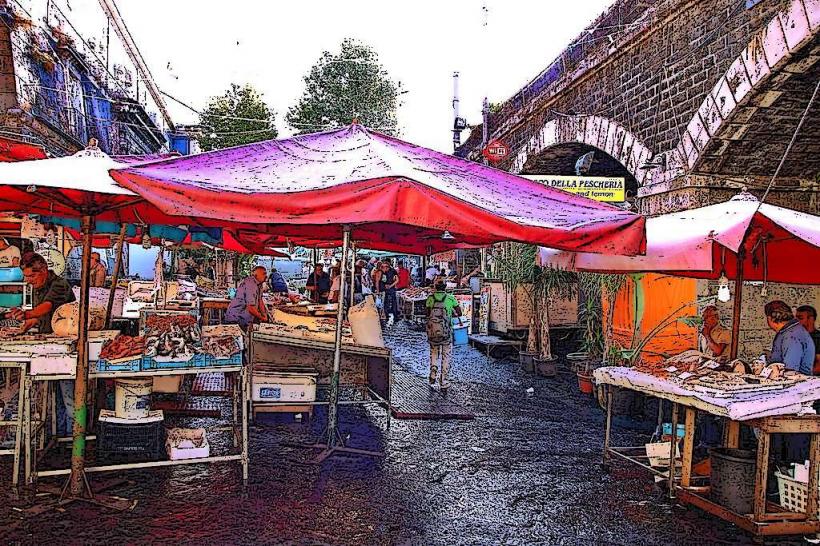
The square is defined by a striking chromatic contrast between white limestone and black volcanic (lava) stone. At its center stands the Fontana dell'Elefante (u Liotru), the city's symbol. The perimeter is enclosed by monumental structures, including the Cathedral of Saint Agatha, the Palazzo degli Elefanti (Town Hall), and the Palazzo dei Chierici. The southern corner features the Amenano Fountain, which serves as the entry point to the historic fish market.
Location & Access Logistics
The piazza is centrally located and entirely pedestrianized. It is a 15-minute walk from Catania Centrale railway station and 10 minutes from the "Stesicoro" metro station. Major bus lines stop at the nearby "Piazza Borsellino." Vehicle access is restricted; the nearest authorized parking is the AMTS Borsellino lot. From Catania-Fontanarossa Airport, the "Alibus" shuttle provides direct transport to the vicinity.
Historical & Ecological Origin
The current layout dates to the post-1693 earthquake reconstruction, designed by architect Giovanni Battista Vaccarini. The rationalist, wide-open design was intended to provide safety and aesthetic grandeur following the destruction of the medieval city. The square is built atop ancient Roman layers, specifically the Achillean Baths, which utilized the geothermal and hydraulic properties of the area.
Key Highlights & Activities
Cathedral of Saint Agatha: Houses the relics of the city’s patron saint and the tomb of composer Vincenzo Bellini.
The Elephant Fountain: A Roman-era basalt elephant supporting an Egyptian obelisk; it is believed to possess protective powers over the city.
Achillean Baths: A subterranean archaeological site located directly beneath the square.
La Pescheria: One of Italy’s most famous and vibrant seafood markets, located just steps from the fountain.
Infrastructure & Amenities
The square is a primary hub for tourism, featuring the central Tourist Information Office, numerous historic cafes, and ATMs. 4G/5G cellular coverage is excellent. While the square is fully accessible to those with limited mobility, the surrounding basalt-paved streets can be uneven. Public restrooms are available within the nearby "Museo Diocesano" or commercial cafes.
Best Time to Visit
The square is most culturally significant during the Feast of Saint Agatha (February 3–5). For photography, early morning provides the best light on the Cathedral’s facade. The late evening atmosphere is notable for the architectural lighting and the "vasca" (social stroll) performed by local residents along Via Etnea.
Facts & Legends
According to local lore, the stone elephant was originally a talisman used by the magician Eliodoro to travel between Catania and Constantinople. A geological fact: the Amenano River, visible at the fountain of the same name, was buried by the 1669 eruption of Mount Etna and now flows entirely underground beneath the piazza.
Nearby Landmarks
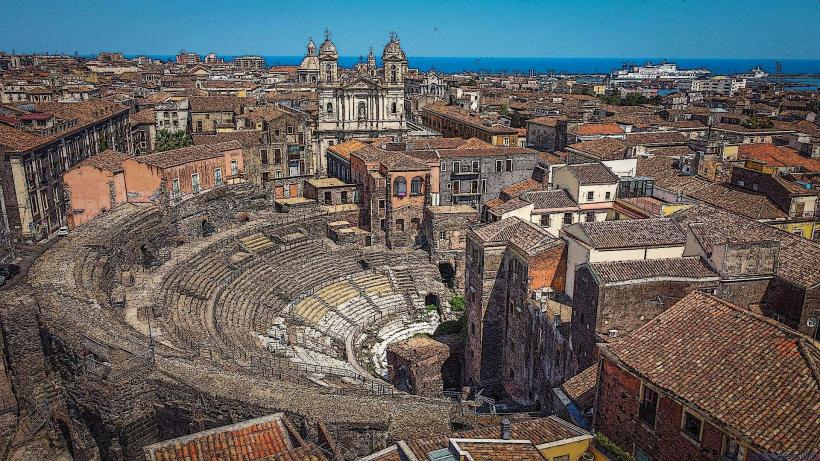
Roman Theatre & Odeon: 0.4km West
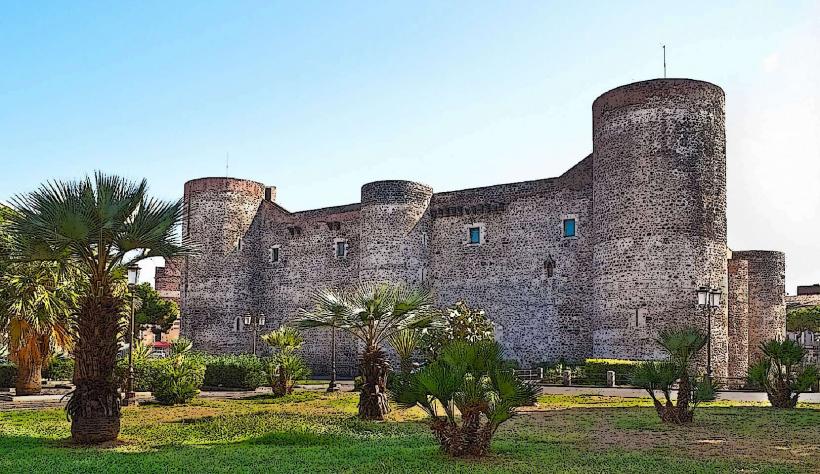
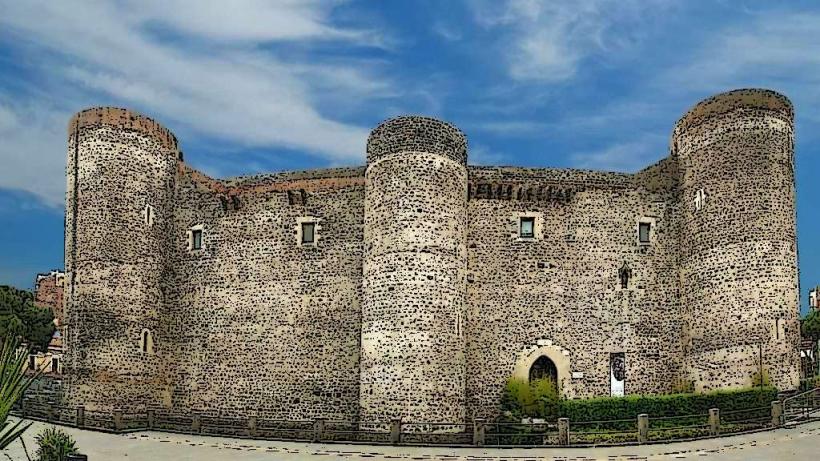
Castello Ursino: 0.5km Southwest
Teatro Massimo Bellini: 0.4km Northeast
Benedictine Monastery of San Nicolò l'Arena: 0.7km West
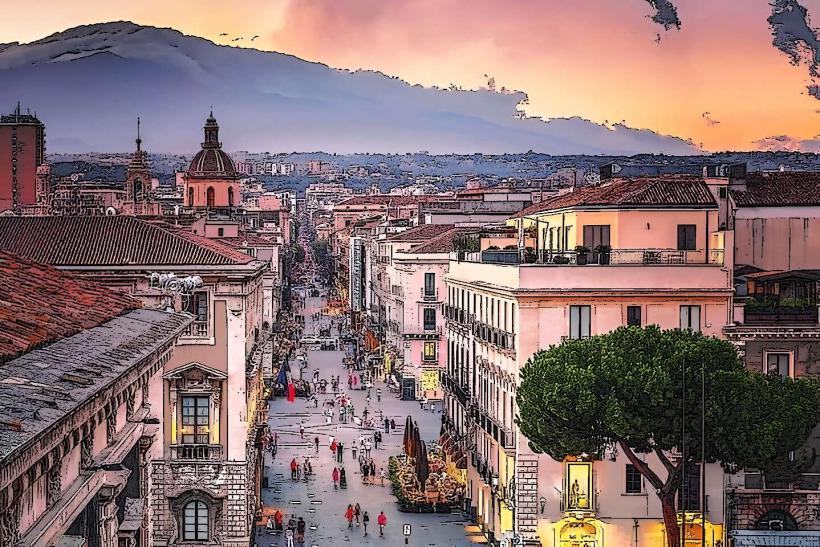
Via Etnea: 0.01km North (Commencement)