Information
Landmark: Fort of Santa CatarinaCity: Algarve
Country: Portugal
Continent: Europe
Fort of Santa Catarina, Algarve, Portugal, Europe
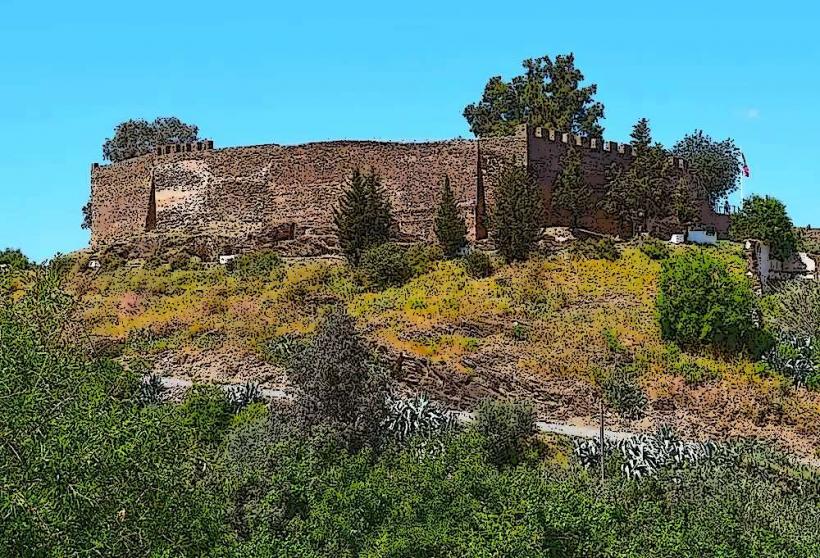
The Fort of Santa Catarina (officially Fortaleza de Santa Catarina de Ribamar) is a 17th-century military fortification situated on the eastern edge of Praia da Rocha in Portimão, Algarve. It historically protected the mouth of the Arade River and the local population from maritime threats.
Visual Characteristics
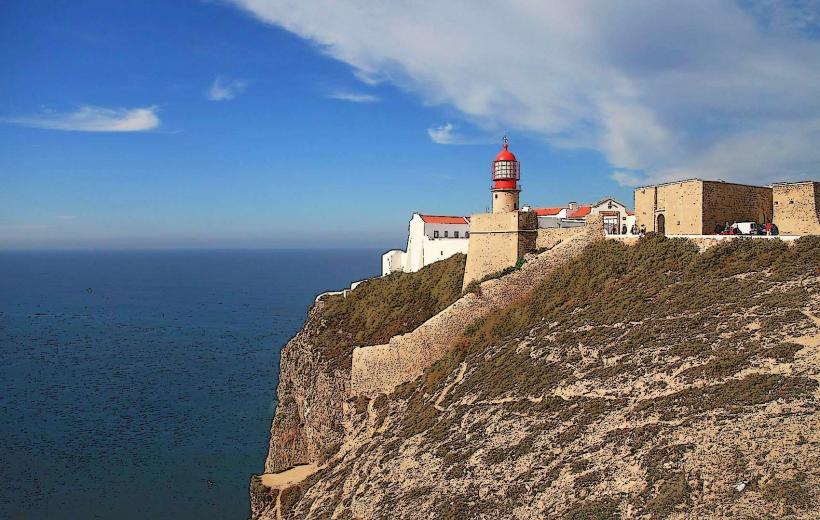
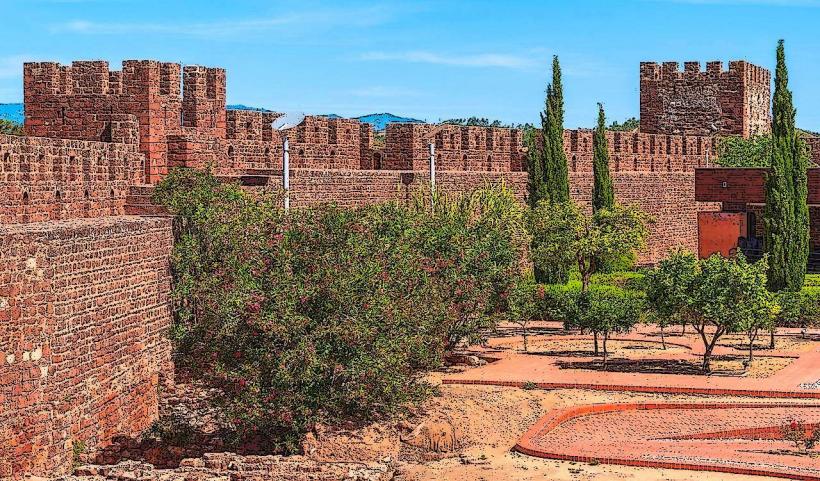
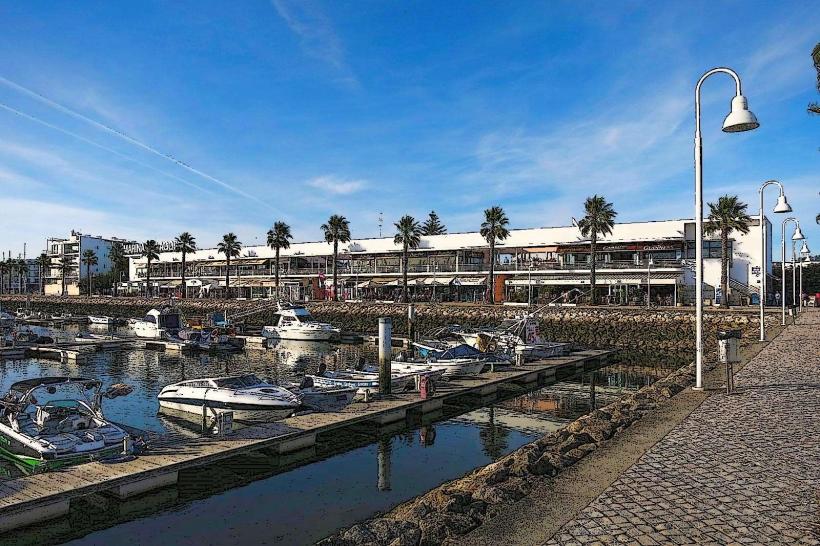
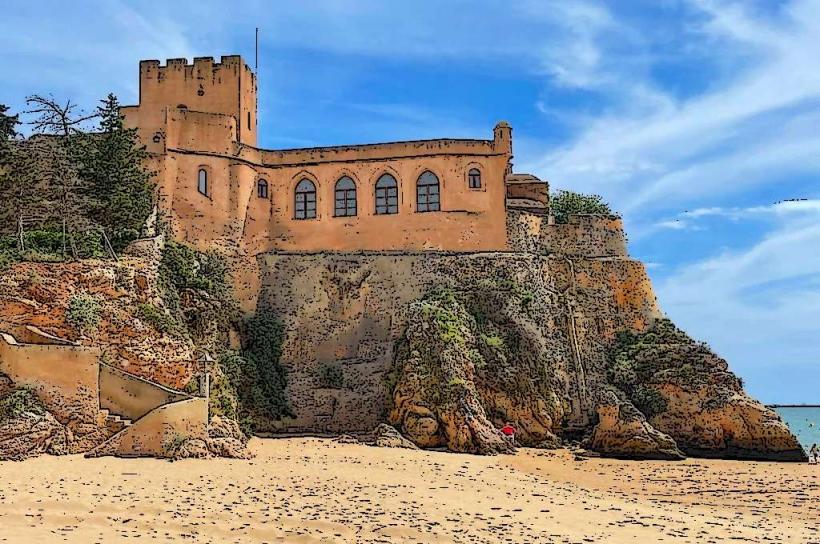
The fort is a bastioned structure following a trapezoidal plan, constructed primarily of local stone and limestone. Its most prominent feature is the main facade, which consists of three symmetrical bastions designed to provide overlapping fields of fire. The interior level is a paved, high-elevation terrace known as a miradouro (viewpoint), bounded by white-painted walls with arched openings. The structure is perched directly on the granite and sandstone cliffs, overlooking the Portimão Marina and the Atlantic Ocean.
Location & Access Logistics
The site is located at the southern end of Avenida Tomás Cabreira (8500-802 Portimão).
Public Transport: Served by Portimão’s "Vai e Vem" bus lines 12 and 13, with stops in Praia da Rocha.
By Foot: Accessible via a scenic staircase leading up from the eastern end of the Praia da Rocha beach or directly from the marina promenade.
Parking: Limited street parking is available along Avenida Tomás Cabreira; high-capacity parking is located at the Portimão Marina.
Access: Entrance is free of charge. While the main terrace is generally accessible, the historic staircases and uneven stone surfaces present mobility challenges.
Historical & Ecological Origin
Commissioned during the Iberian Union (1581–1640), the fort was designed by the military engineer Alexandre Massai. Construction began in 1629 and was completed in 1633. It was built on the site of a pre-existing 15th-century chapel dedicated to St. Catherine of Alexandria, which was incorporated into the fort’s interior. The structure suffered significant damage during the 1755 Great Lisbon Earthquake and tsunami, leading to extensive 18th-century reconstructions.
Key Highlights & Activities
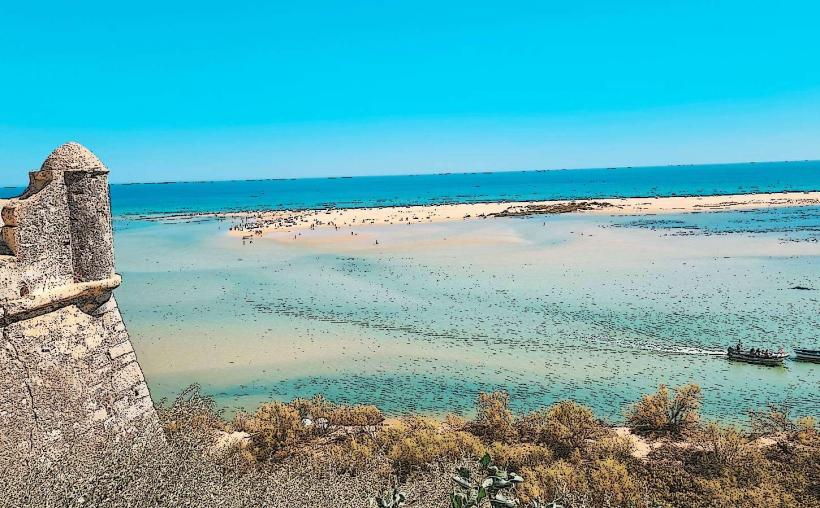
The Miradouro: Provides high-fidelity panoramic views of the Arade River estuary, the town of Ferragudo (specifically the São João do Arade Castle), and the Atlantic coastline.
St. Catherine’s Chapel: A small, austere chapel remains within the walls, featuring a simple Gothic portal.
Sunset Observation: The fort is a primary location for viewing the sunset over the western cliffs of Praia da Rocha.
Marina Views: Offers a high-vantage perspective over the luxury yachts and infrastructure of the Portimão Marina.
Infrastructure & Amenities
The fort currently functions as a public park and viewpoint. It contains a small cafeteria/bar with an outdoor seating area. Public restrooms are available within the marina complex at the base of the cliffs. 5G cellular coverage is exceptional across the open battlements.
Best Time to Visit
Open daily, 24 hours (though interior cafe hours vary). Late afternoon (17:00–20:00) provides the best lighting for architectural photography and the most comfortable temperatures. It is a high-density site during the peak summer months of July and August.
Facts & Legends
A verified historical fact is that the fort operated in tactical tandem with the Fort of São João do Arade on the opposite bank in Ferragudo, creating a lethal crossfire zone to prevent pirate incursions. While no supernatural legends are prominent, the fort is locally respected as the "Guardian of the Arade," having successfully repelled several privateer raids during the 17th century.
Nearby Landmarks
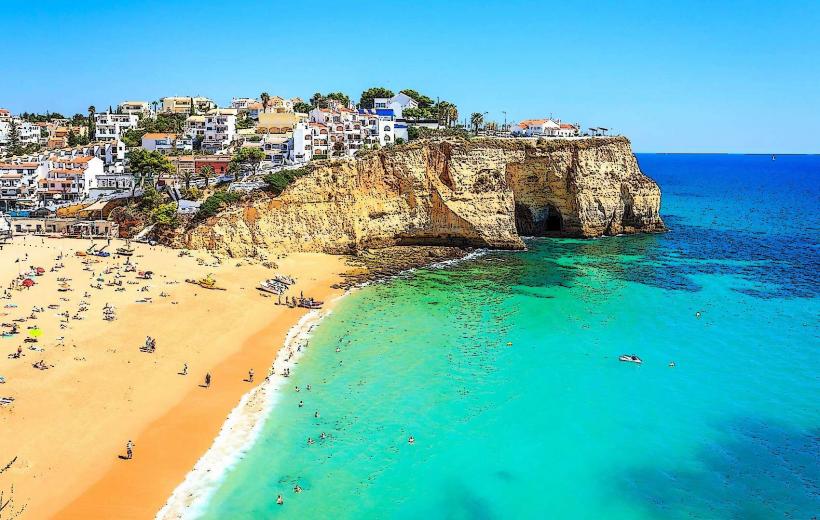
Praia da Rocha: Immediately West.
Portimão Marina: Immediately South/East at the cliff base.
Museum of Portimão: 1.5km North along the river.
Ferragudo: Directly across the river (visible from the walls).