Information
Landmark: Ghazanchetsots Cathedral (Holy Savior Cathedral)City: Shusha
Country: Azerbaijan
Continent: Asia
Ghazanchetsots Cathedral (Holy Savior Cathedral), Shusha, Azerbaijan, Asia
Ghazanchetsots Cathedral, also known as Holy Savior Cathedral, is an Armenian Apostolic cathedral located in Shusha, Azerbaijan.
This religious structure is a significant example of Armenian church architecture from the 19th century.
Visual Characteristics
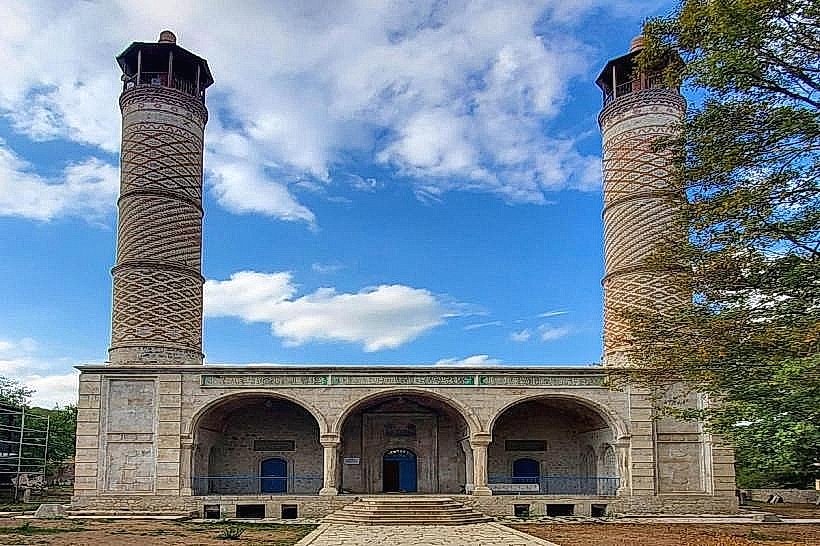
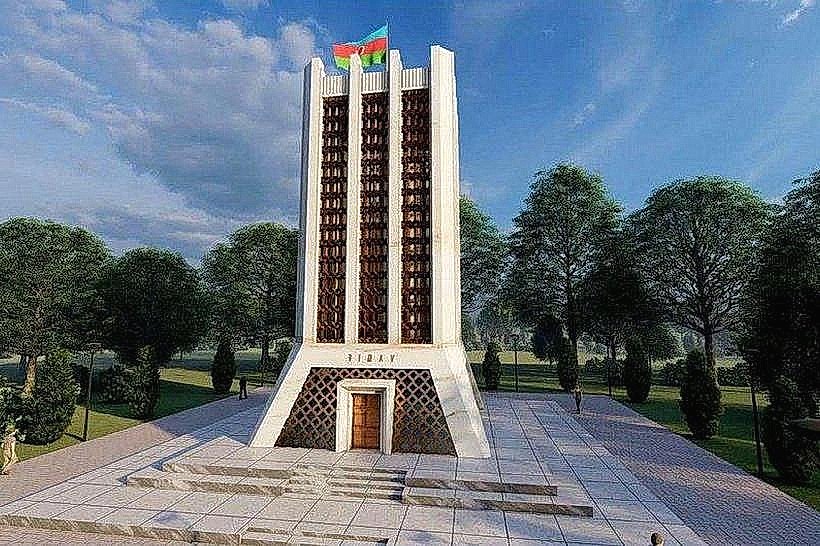
The cathedral is constructed primarily from white limestone. It features a prominent dome, supported by a drum with twelve windows. The facade is adorned with intricate carvings and decorative elements. The building has a cruciform plan with two bell towers flanking the main entrance. Its dimensions are approximately 35 meters in length and 25 meters in width, with a height of around 30 meters to the top of the dome.
Location & Access Logistics
Ghazanchetsots Cathedral is situated in the center of Shusha. Access to Shusha is typically via the M-6 highway from Barda. The city itself is walkable, and the cathedral is a central point of reference. Parking is available on surrounding streets, though it can be limited during peak times. Public transport within Shusha is minimal; local taxis are the primary option for internal movement.
Historical & Ecological Origin
Construction of Ghazanchetsots Cathedral began in 1868 and was completed in 1887. It was designed by architect Simon Koryun. The cathedral was built to serve the Armenian population of Shusha and was consecrated in 1902. Its original purpose was as a principal place of worship for the Armenian Apostolic Church in the region.
Key Highlights & Activities
Visitors can observe the architectural details of the facade and interior. The main altar and the baptismal font are points of interest. Photography is permitted inside the cathedral. The surrounding plaza offers views of the city.
Infrastructure & Amenities
Restrooms are generally available in the vicinity of the cathedral, often at nearby cafes or public facilities. Shade is provided by the cathedral's structure and nearby trees. Cell phone signal (4G/5G) is typically available in Shusha. Food vendors and cafes are located within a short walking distance of the cathedral.
Best Time to Visit
For optimal interior lighting for photography, late morning or early afternoon is recommended, when sunlight enters through the windows. The months of April through October generally offer the most pleasant weather for visiting Shusha. There are no specific tide requirements for visiting the cathedral.
Facts & Legends
During the Soviet era, the cathedral was used as a museum of local history and later as a warehouse. It was reconsecrated as a church in 1998 after the First Nagorno-Karabakh War. A unique detail is the presence of two bell towers, a less common feature in Armenian church architecture of this period.
Nearby Landmarks
- Shusha Fortress Walls (0.3km West)
- Khan's Palace (0.4km Southwest)
- Javanshir Monument (0.6km North)
- Shusha State Historical-Architectural Reserve (0.2km Northwest)
- Upper Mosque of Shusha (0.5km West)