Information
Landmark: Ginkaku-ji (Silver Pavilion)City: Kyoto
Country: Japan
Continent: Asia
Ginkaku-ji (Silver Pavilion), Kyoto, Japan, Asia
Overview
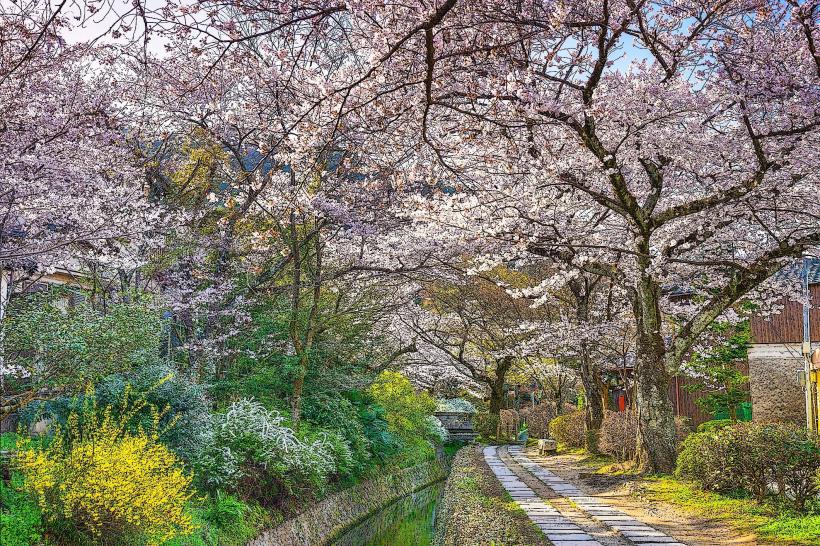
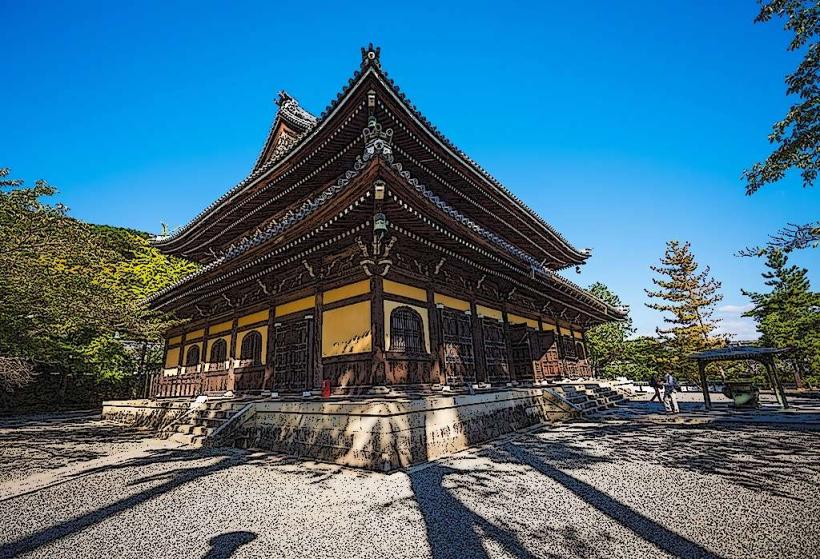
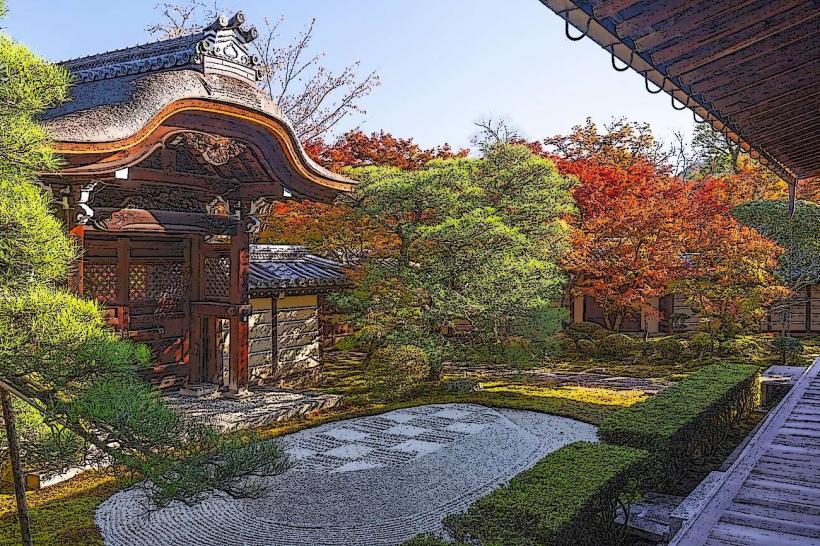
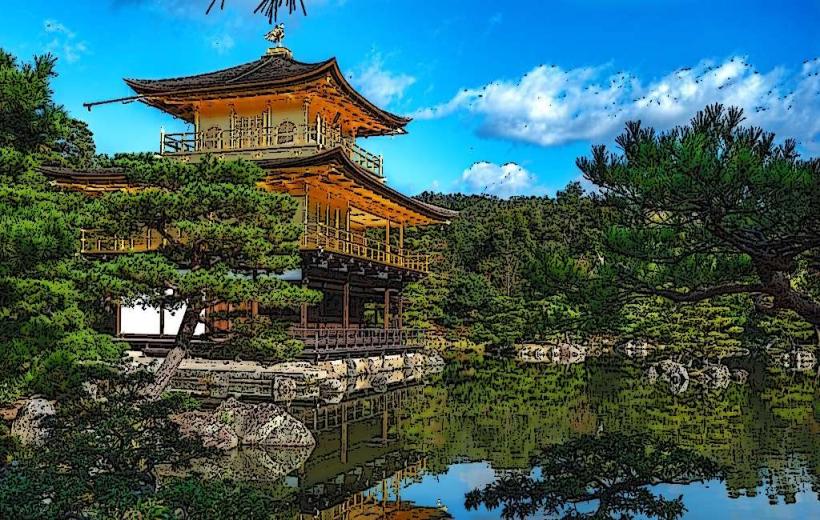
Ginkaku-ji (銀閣寺), or the Silver Pavilion, stands among Kyoto’s most treasured temples, its quiet gardens and weathered wooden halls steeped in history, to boot despite the name, the temple isn’t clad in silver at all-the original plan for gleaming metal walls never came to life.Instead, it’s known for its simple, graceful beauty, the hush of its serene gardens, and the way it captures the spirit of Zen Buddhist design, alternatively in Kyoto’s Higashiyama district, Ginkaku-ji stands as a treasured landmark, its silver pavilion framed by quiet pine trees.First, at the same time in 1482, during Japan’s Muromachi period (1336–1573), shogun Ashikaga Yoshimasa began building Ginkaku-ji, its wooden frame rising slowly in the quiet Kyoto air.Yoshimasa, the eighth shogun of the Ashikaga, set out to build a quiet retreat that mirrored his deep love for Zen Buddhism and the graceful simplicity of Japanese design, like the curve of a raked garden path, at the same time the temple’s official name is Jisho-ji (慈照寺), but most people discern it as Ginkaku-ji, the Silver Pavilion, since Yoshimasa once planned to cover its walls in gleaming silver foil-an echo of Kinkaku-ji, the Golden Pavilion his grandfather, Ashikaga Yoshimitsu, had built.The silver was never added, leaving the building bare, its plain stone catching the light in a way that makes its quiet elegance stand out, furthermore after Yoshimasa died, the temple shifted into a Zen Buddhist sanctuary, and its reach spread far beyond worship-shaping brushstroke styles, the rhythm of tea ceremonies, and the quiet curves of garden paths.The temple helped shape the wabi-sabi aesthetic, a way of seeing beauty in a weathered tea cup, a crooked beam, and the quiet passing of time, to boot number two.Just so you know, At the center of Ginkaku-ji rises the Silver Pavilion, a graceful two-story building with dim wooden beams that anchors the entire temple complex, in addition despite its name, the building is plain wood with no ornament, its quiet Zen simplicity standing in sharp contrast to the glittering gold of Kinkaku-ji.The upper floor, set beneath a weathered shingled roof, draws on Chinese and Zen design, while the lower level captures the clean, simple lines of Japanese style from that era, also inside the pavilion, you’ll find Buddhist statues and delicate works of art, yet it’s the quiet, unadorned grace-a bare wooden beam, smooth from years of touch-that embodies true wabi-sabi.At Ginkaku-ji, one guiding principle is shakkei (借景), or “borrowed scenery,” which draws the distant Higashiyama mountains into the temple’s design, so the peaks seem to frame the gardens like a living backdrop, also from the Silver Pavilion, you can spot mountains rising pale blue in the distance, their presence woven seamlessly into the temple’s design.Zen Garden (Karesansui): The temple also features a serene dry landscape garden, where smooth raked gravel ripples like water around quiet stones, as well as this garden invites quiet reflection, its rocks, sand, and neatly raked gravel shaping a miniature world where mountains rise, rivers wind, and water seems to flow in silence.If I’m being honest, This is a classic Zen garden, its bare stones and raked gravel drawing you into quiet meditation and deep reflection, at the same time in the garden, you’ll also find a compact sand dune shaped like a mountain, called the “Sea of Silver Sand” (Ginsyō), its pale surface catching the light like frost-a distinctive and symbolic highlight of the location.Number three sits there, plain and petite, like a single pebble on a quiet path, then the gardens at Ginkaku-ji rank among Japan’s finest, where mossy stones, raked gravel, and quiet ponds weave natural beauty with deep philosophical and spiritual meaning.Curiously, The Eastern Garden wraps around the Silver Pavilion, its heart a serene sand garden where the Sea of Silver Sand (Ginsyō) rises like a pale, sculpted mountain, after that carefully raked sand forms rippling patterns that echo the flow of water, turning the space into a calm, meditative scene.At Ginkaku-ji, one of the real showstoppers is the moss garden, where soft green carpets spread across the ground like a quiet, living quilt, and this garden is designed to stir a quiet sense of peace, the kind you feel listening to wind move through tall grass.The moss embodies the Zen idea of impermanence, shifting in color and texture as each season rolls in, in turn the Water Garden also includes modest ponds and winding streams, their quiet trickle blending water and earth in perfect balance.Clear water fills the ponds, reflecting the trees and hills around them, then the still surface gives the whole locale a quiet, unshakable calm.Interestingly, The Philosopher’s Path, though outside Ginkaku-ji’s official grounds, is a quiet stone walkway that starts just beyond the temple gates, equally important in spring, this path beside the canal draws crowds, when the cherry trees burst into soft pink sakura blossoms that drift like paper confetti on the water.Number four, as a result ginkaku-ji captures the heart of wabi-sabi, where weathered wood, fading paint, and quiet spaces reveal the beauty in imperfection, transience, and simplicity.The temple’s clean lines, warm wood, and seamless blend with the hills around it bring this philosophy to life, meanwhile beauty lives in the quiet rhythm of decay and renewal, and in life’s compact, unassuming details-a fallen leaf curling at the edge of a sidewalk.Oddly enough, This philosophy shaped the quiet patterns of Zen gardens and found its way into Japanese art, even in the steam and stillness of a tea ceremony, likewise five.Ginkaku-ji, first built as a quiet Zen retreat, still welcomes those who come to meditate and practice beneath its weathered wooden eaves, not only that this Zen temple reflects core Buddhist values-simplicity, mindfulness, and meditation-you can glimpse it in the uncluttered wooden hall and the quiet air that settles over the courtyard.The quiet gardens, with their soft rustle of leaves, draw visitors in, urging them to pause, reflect, and sharpen their sense of discipline and awareness, while wabi-Sabi and Japanese Aesthetics: The temple’s weathered wood and quiet gardens lie at the heart of how the wabi-sabi aesthetic is shaped and cherished.Truthfully, Rooted in Japan’s cultural identity, this philosophy values simplicity, embraces imperfection, and honors the quiet beauty that comes with age, like the worn grain of an historic cedar table, and ginkaku-ji’s beauty comes from its quiet simplicity and the way it blends with moss, stone, and the whisper of wind through the pines.Ashikaga Yoshimasa, the shogun behind Ginkaku-ji, drew deeply from Chinese art, the calm discipline of Zen, and a love for beauty and spirit honed to a fine edge, like ink brushed perfectly across rice paper, along with driven by his dream of building a sanctuary for the soul, he created Ginkaku-ji, a locale where quiet gardens, graceful art, and Zen philosophy still reflect his deep love of nature.Number six, furthermore ginkaku-ji sits in Kyoto’s quiet northeast, just steps from the stone-lined Philosopher’s Path where cherry petals often drift across the water.You can reach the temple by bus from the city center in just a few stops, simultaneously keage Station on the Tozai Line is the closest subway stop, and you can also reach it with a quick stroll from the Ginkaku-ji-mae bus stop, where the scent of roasted chestnuts sometimes drifts from a nearby stand, roughly Ginkaku-ji usually welcomes visitors from 8:30 a.m, as a result to 5:00 p.m, but it’s best to check the temple’s official website in case seasonal changes or special events shift the schedule.It costs about ¥500 for adults to enter Ginkaku-ji, and you’ll get a discount if you qualify-think students or seniors.
Author: Tourist Landmarks
Date: 2025-09-16