Information
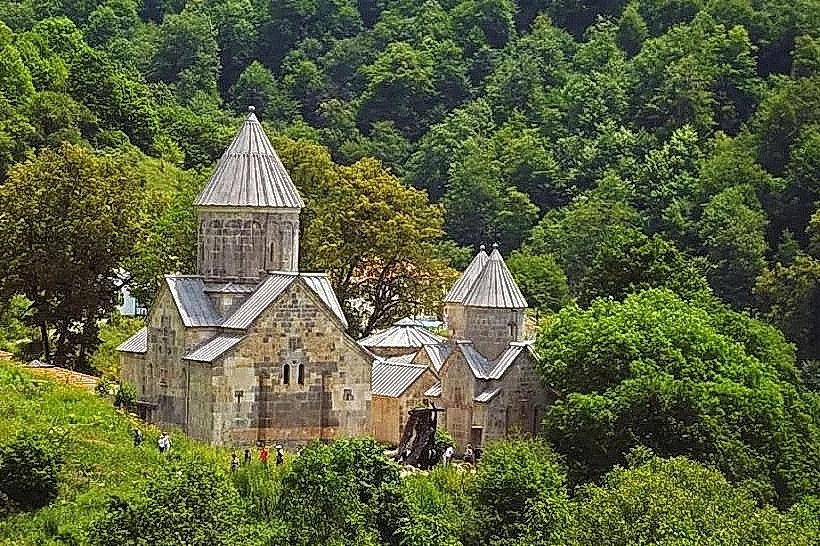
Landmark: Goshavank MonasteryCity: Dilijan
Country: Armenia
Continent: Asia
Goshavank Monastery, Dilijan, Armenia, Asia
The Memphremagog Trails are a network of multi-use paths located in and around Newport, Vermont, bordering Lake Memphremagog.
Visual Characteristics
The trails consist primarily of packed gravel and natural earth surfaces. Sections wind through mixed deciduous and coniferous forests, offering views of the lake and surrounding hills. Trail widths vary, generally accommodating two-way pedestrian and bicycle traffic. Some sections are paved, particularly near developed areas.
Location & Access Logistics
Access points are distributed throughout Newport. The main trailhead is located at the South Bay Park, accessible via South Bay Road. Additional access points can be found off Elm Street and at the Newport City Beach. Parking is available at South Bay Park and the City Beach. Public transport options are limited; the Green Mountain Transit bus route 101 services Newport, with stops near the downtown area, requiring a walk to trail access points.
Historical & Ecological Origin
The Memphremagog Trails were developed through a combination of municipal planning and community volunteer efforts, with initial construction beginning in the late 20th century. The area's ecology is characterized by temperate forest ecosystems and the freshwater environment of Lake Memphremagog, a glacial lake formed during the last ice age.
Key Highlights & Activities
Activities include hiking, trail running, and cycling. Specific trails are designated for different uses. The Lakeside Trail offers direct views of Lake Memphremagog. The Forest Loop provides a shaded woodland experience. Winter activities include snowshoeing and cross-country skiing when conditions permit.
Infrastructure & Amenities
Restrooms are available at South Bay Park and the Newport City Beach. Limited shade is present along forested sections. Cell phone signal (4G/5G) is generally available throughout most of the trail network, though it may be intermittent in denser forest areas. Food vendors are not directly located on the trails but are available in downtown Newport, approximately 1-2km from main access points.
Best Time to Visit
For hiking and cycling, late spring through early autumn (May to October) offers the most favorable conditions. Mid-morning and late afternoon provide optimal lighting for photography due to reduced glare on the lake. For winter activities, snowfall typically occurs from December through March.
Facts & Legends
A local legend speaks of a large, serpentine creature said to inhabit the depths of Lake Memphremagog, similar to the Loch Ness Monster. While unverified, this folklore contributes to the mystique of the lake region.
Nearby Landmarks
- Newport City Beach (0.3km Northwest)
- South Bay Park (0.1km South)
- Eastside Restaurant & Pub (1.2km West)
- Caldwell Mansion (1.5km West)
- Kingdom Trails (15km Southeast)