Information
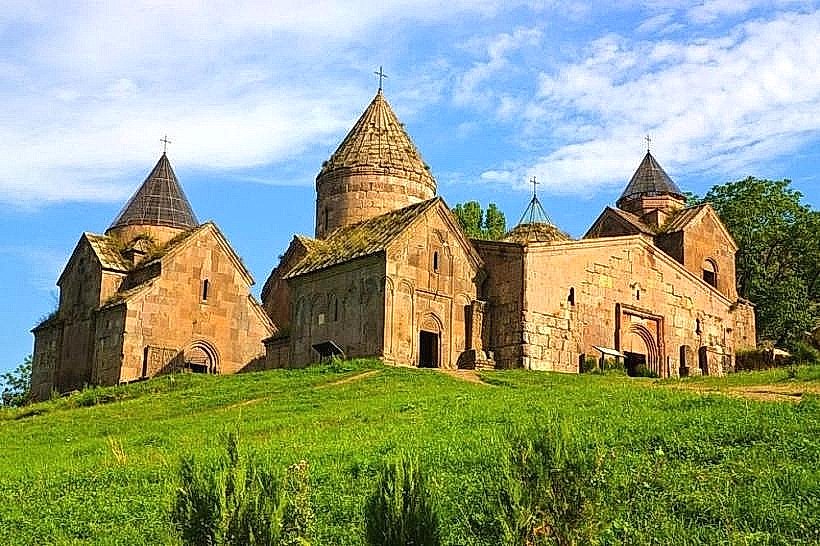
Landmark: Haghartsin MonasteryCity: Dilijan
Country: Armenia
Continent: Asia
Haghartsin Monastery, Dilijan, Armenia, Asia
Prouty Beach is a public access point to Lake Memphremagog located in Newport, Vermont, USA.
Visual Characteristics
The beach consists of a gravel and sand shoreline extending approximately 500 meters. The water of Lake Memphremagog is typically clear with a blue-green hue. Adjacent to the beach is a mowed lawn area with scattered deciduous trees providing partial shade.
Location & Access Logistics
Prouty Beach is situated 2.4 kilometers (1.5 miles) east of Newport's city center. Access is via Prouty Beach Road, which is a paved public road. A dedicated parking lot with capacity for approximately 50 vehicles is available on-site. Public transport options to Prouty Beach are limited; the nearest bus stop is located in downtown Newport, requiring a walk or taxi to the beach.
Historical & Ecological Origin
Prouty Beach is a natural shoreline along Lake Memphremagog, a glacial lake formed by the retreat of the last ice sheet. The area has been managed as a public recreational space by the City of Newport for several decades.
Key Highlights & Activities
Swimming is permitted in designated areas. Kayak and paddleboard launch points are available. Fishing is possible from the shoreline. A playground area is present for children.
Infrastructure & Amenities
Restrooms are available on-site. Picnic tables and charcoal grills are provided. Shade is available from trees and a small pavilion. Cell phone signal (4G) is generally reliable. No food vendors are located directly at the beach; nearest options are in downtown Newport.
Best Time to Visit
For swimming and water activities, the months of June through August offer the warmest water temperatures. Mid-morning provides good lighting for photography of the lake. No specific tide requirements apply.
Facts & Legends
Local folklore suggests that the lake is home to a creature similar to the Loch Ness Monster, though no verifiable evidence exists. The beach is named after the Prouty family, who were early settlers in the Newport area.
Nearby Landmarks
- Eastside Restaurant (0.8km West)
- Newport City Hall (2.4km West)
- The Eastside Restaurant (0.8km West)
- Willard Street Park (2.1km West)
- The Gateway Performing Arts Center (2.5km West)