Information
Landmark: Government HouseCity: Porto Novo
Country: Benin
Continent: Africa
Government House, Porto Novo, Benin, Africa
Government House is an administrative building located in Porto Novo, Benin.
It serves as a primary seat of government operations within the city.
Visual Characteristics
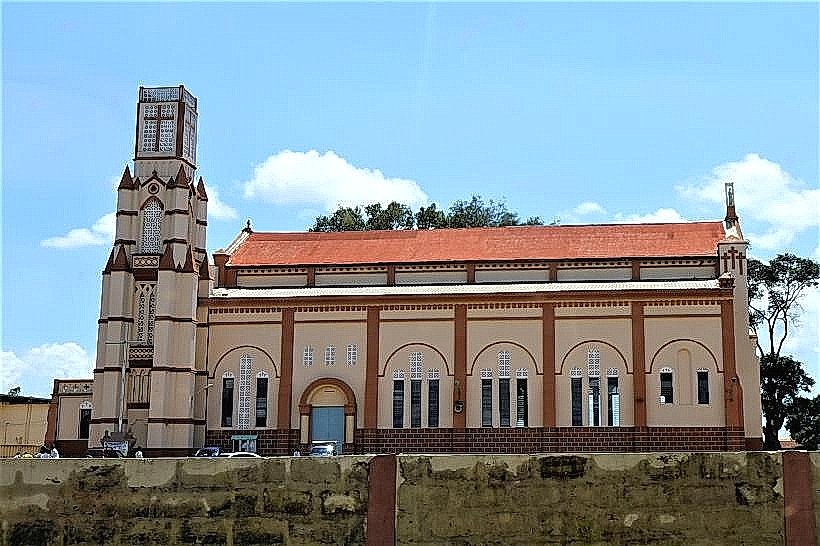
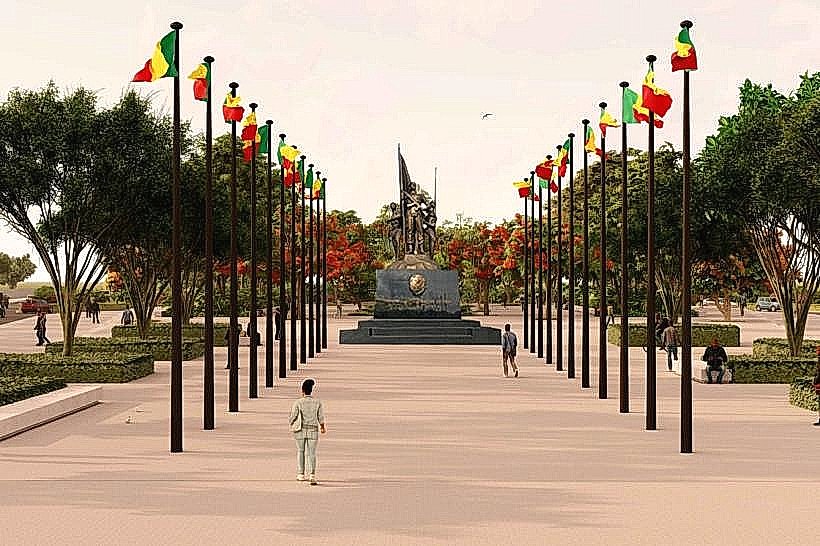
The structure is a two-story colonial-era building constructed primarily from red brick. It features a white-painted facade with arched windows and a prominent central entrance. The roof is made of corrugated metal, painted a dark grey. A small, manicured lawn surrounds the building.
Location & Access Logistics
Government House is situated at Place de l'Étoile Rouge in Porto Novo. It is approximately 1 kilometer west of the city center. Limited street parking is available in the immediate vicinity. Public transport options include local taxis and motorcycle taxis that frequent the main roads leading to the square.
Historical & Ecological Origin
The building was constructed in the early 20th century during the French colonial period. Its original purpose was to house the administrative offices of the colonial government. The architectural style reflects French colonial design principles of the era.
Key Highlights & Activities
Access to the interior of Government House is restricted to official business. Visitors can observe the exterior architecture and the surrounding public square. The square itself is a point of local gathering.
Infrastructure & Amenities
Restrooms are not publicly accessible. Shade is provided by mature trees within the square. Cell phone signal (4G/5G) is generally available in the area. No food vendors are located directly at Government House; options are available in the nearby city center.
Best Time to Visit
For exterior viewing and photography, the late afternoon (approximately 4:00 PM to 5:30 PM) offers favorable lighting conditions with softer shadows. The weather in Porto Novo is generally warm and humid year-round, with a drier period from November to March.
Facts & Legends
A local anecdote suggests that the building's foundation stones were laid using a mixture of local clay and imported cement, a common practice to balance cost and structural integrity during the colonial administration.
Nearby Landmarks
- Presidential Palace (0.2km East)
- Porto Novo Cathedral (0.7km Southeast)
- Grand Marché Dantokpa (1.5km West)
- Musée d'Art Africain Contemporain (1.1km Northeast)