Information
Landmark: Harriet Beecher Stowe CenterCity: Hartford
Country: USA Connecticut
Continent: North America
Harriet Beecher Stowe Center, Hartford, USA Connecticut, North America
The Harriet Beecher Stowe Center is a historic house museum and cultural institution located in Hartford, Connecticut, dedicated to preserving the legacy of Harriet Beecher Stowe, the author of the landmark anti-slavery novel Uncle Tom’s Cabin. The center also celebrates the broader contributions of the Beecher family and their influence on social reform, literature, and education in 19th-century America.
Historical Background
Harriet Beecher Stowe moved to Hartford in 1873, after achieving fame with Uncle Tom’s Cabin (1852), which had a profound impact on anti-slavery sentiment in the United States and abroad. In Hartford, she lived at “The Stowe House” at 77 Forest Street, adjacent to the Mark Twain House neighborhood. She remained active in writing, lecturing, and social reform until her death in 1896.
The Stowe Center preserves her home and offers interpretation of both her domestic life and her enduring contributions to literature, abolition, and women’s rights. The property reflects her prominence in Hartford’s social and literary circles, and its location near other literary landmarks underscores the city’s significance in 19th-century American culture.
Architecture and Layout
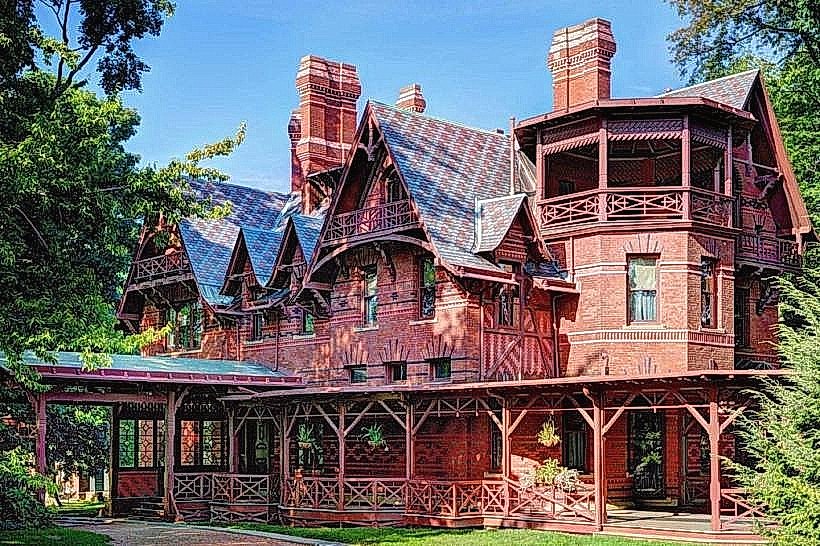
The Stowe House is a 19th-century Victorian residence, modest compared to the grand Mark Twain House but reflecting the aesthetic and domestic design of the period. Features include:
Period furnishings and decorative elements consistent with Stowe’s era
Intimate living and workspaces, including Stowe’s study where she continued to write and correspond
Well-preserved architectural details, such as woodwork, fireplaces, and parlor spaces
The property also includes gardens and outdoor spaces that were integral to the home’s residential character and social functions.
Museum and Exhibits
The Harriet Beecher Stowe Center offers a combination of:
Guided tours of the historic home, highlighting Stowe’s personal life, family, and writing environment
Exhibits on social reform, including anti-slavery activism, women’s rights, and Stowe’s influence on American society
Educational programs for students, scholars, and the public, focusing on literature, history, and civic engagement
Special events and lectures exploring Stowe’s legacy, the Beecher family, and the cultural context of 19th-century America
Cultural and Historical Significance
The Center preserves the tangible and intangible heritage of one of America’s most influential authors. Harriet Beecher Stowe’s work contributed significantly to the abolitionist movement, shaped public opinion on slavery, and positioned literature as a powerful instrument of social change.
The Stowe Center also emphasizes the role of Hartford as a hub of literary and intellectual activity during the 19th century, highlighting the proximity of other cultural landmarks, including the Mark Twain House.
Legacy and Contemporary Role
Today, the Harriet Beecher Stowe Center functions as both a historic house museum and educational institution, attracting visitors from around the world. Its programs engage audiences with issues of social justice, civic responsibility, and literary history. By preserving Stowe’s home, artifacts, and story, the Center maintains her legacy as a writer, reformer, and prominent figure in American cultural and political life.
The Harriet Beecher Stowe Center is a vital component of Hartford’s literary and historical landscape, illustrating the enduring power of literature and activism in shaping social consciousness.