Information
Landmark: Mark Twain House & MuseumCity: Hartford
Country: USA Connecticut
Continent: North America
Mark Twain House & Museum, Hartford, USA Connecticut, North America
The Mark Twain House & Museum is a historic house and cultural institution located in the Ned Lamont neighborhood of Hartford, Connecticut. It was the residence of Samuel Langhorne Clemens, better known as Mark Twain, from 1874 to 1891, and serves as a museum dedicated to his life, works, and legacy.
Historical Background
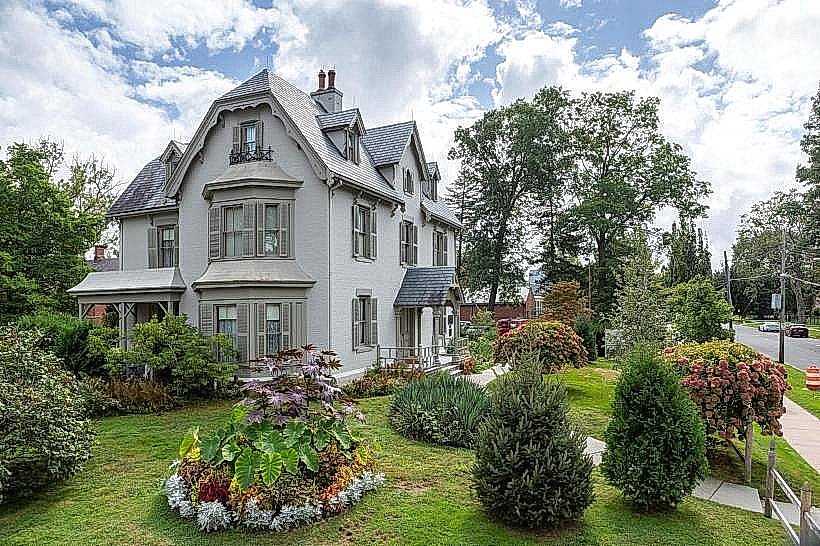
Mark Twain moved to Hartford with his family at the height of his literary career, after achieving fame with The Adventures of Tom Sawyer. The house was built in 1873–1874 in the American High Victorian Gothic style and was designed by architect Edward Tuckerman Potter, reflecting Twain’s desire for a residence that was both grand and functional for family life. The house also accommodated his writing needs, providing a study and space for intellectual and social gatherings.
During his residence, Twain produced some of his most significant works, including The Adventures of Huckleberry Finn and The Prince and the Pauper. The Hartford years were marked by both literary productivity and personal challenges, including financial difficulties and family tragedies, all of which are interpreted through the museum’s exhibits.
Architecture and Design
The Mark Twain House is notable for its Victorian Gothic architecture, characterized by:
Intricate woodwork and decorative trim both inside and outside the house
Colorful stained-glass windows and ornate fireplaces
Asymmetrical layout with multiple gables, turrets, and steeply pitched roofs
Expansive gardens and carriage house, which were integral to the property’s design
The house was constructed with modern innovations for its time, including central heating and running water, reflecting Twain’s interest in contemporary technology.
Museum and Exhibits
The Mark Twain House & Museum preserves the home and interprets Twain’s life and literary career. Key features include:
Restored rooms such as the parlor, Twain’s study, dining room, and children’s bedrooms, showcasing period furnishings and personal artifacts
Permanent exhibits exploring Twain’s writing, social commentary, humor, and involvement in social issues
Special exhibitions and programs highlighting aspects of Twain’s life, literary context, and broader American culture
Educational programs for students and visitors, including guided tours, workshops, and family activities
The museum also emphasizes Twain’s influence on American literature, his engagement with social and political issues, and his experiences as a resident of Hartford.
Cultural and Historical Significance
The Mark Twain House is a National Historic Landmark, recognized for its architectural and literary significance. It stands as a testament to Twain’s contributions to American literature and the broader cultural landscape of the late 19th century. The house preserves the domestic, professional, and social environment in which Twain wrote, offering insights into his creative process, family life, and historical context.
Legacy and Contemporary Role
Today, the Mark Twain House & Museum functions as both a historic site and educational center, attracting thousands of visitors annually. It combines historic preservation, literary scholarship, and interactive programs to engage audiences with Twain’s life, work, and continuing relevance. The site remains a key cultural and tourist destination in Hartford, reflecting the city’s rich literary and historical heritage.