Information
Landmark: Historic Route 66 / Central AvenueCity: Albuquerque
Country: USA New Mexico
Continent: North America
Historic Route 66 / Central Avenue, Albuquerque, USA New Mexico, North America
Historic Route 66, also known as Central Avenue, is a significant segment of the original U.S. Highway 66 that traverses Albuquerque, New Mexico.
This section of the highway serves as a corridor of historic architecture, roadside attractions, and local businesses.
Visual Characteristics
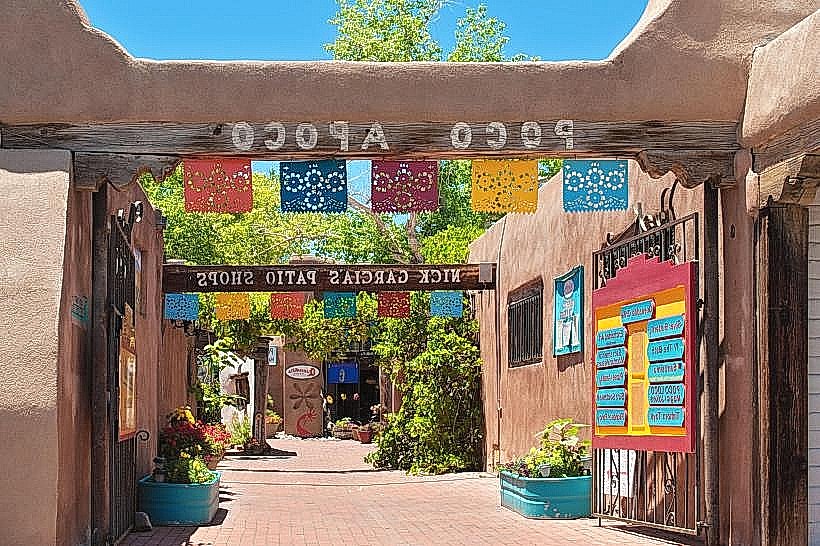
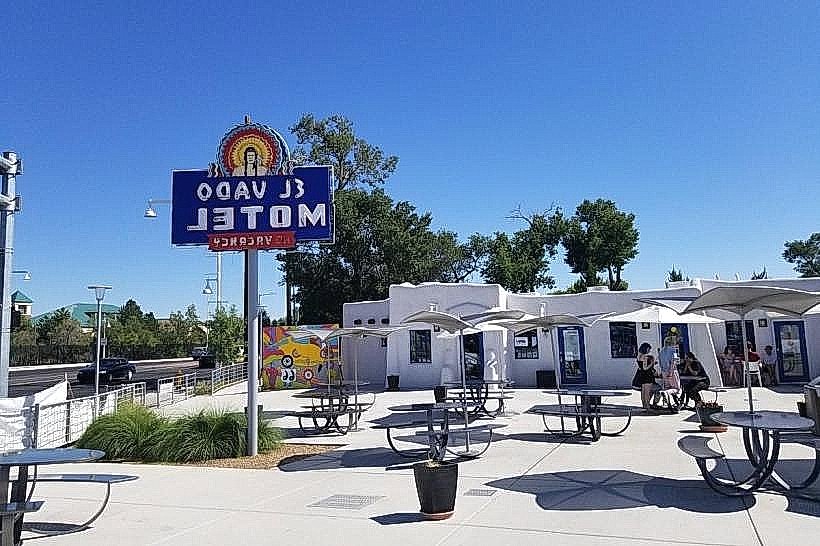
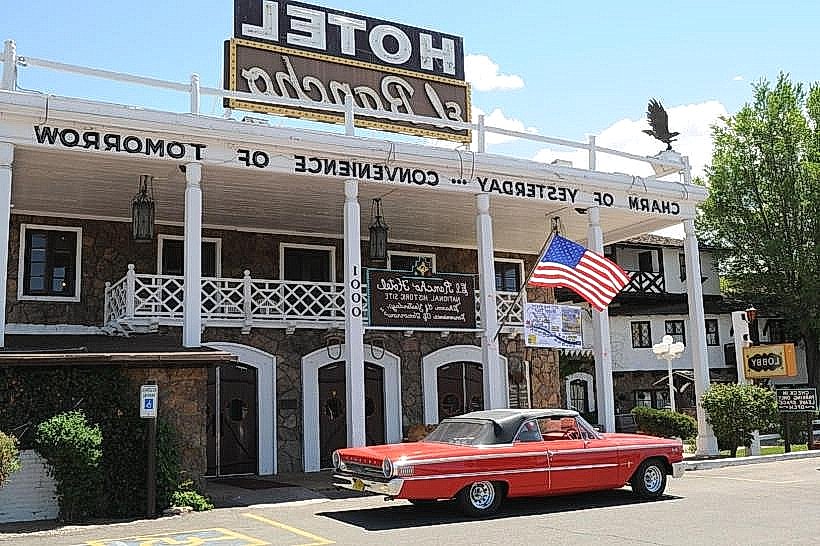
Central Avenue exhibits a range of architectural styles, predominantly from the mid-20th century. Structures include Spanish Pueblo Revival, Art Deco, and Mid-Century Modern designs. Building materials commonly observed are adobe brick, stucco, and concrete. Color palettes vary, with many buildings featuring earth tones, pastels, and neon signage. The avenue is characterized by its linear layout, with commercial establishments lining both sides.
Location & Access Logistics
Central Avenue runs east-west through Albuquerque. The historic segment is generally considered to be between the I-40 interchange on the west side and the downtown area on the east side. Access is direct from Interstate 40 via multiple exits (e.g., Exit 155, Exit 156). Parking is available in designated lots behind businesses and on some side streets; street parking is metered in certain commercial zones. Public transport is provided by the ABQ Ride bus system, with numerous routes operating along Central Avenue, including the 36, 50, and 66 lines.
Historical & Ecological Origin
Route 66 was established in 1926, and the segment through Albuquerque was designated as part of the original route. Central Avenue served as the primary east-west thoroughfare for the city and a crucial stop for travelers on the "Mother Road." Its development reflects the growth of automobile tourism and the expansion of Albuquerque in the early to mid-20th century. The surrounding environment is high desert, characterized by arid conditions and sparse vegetation.
Key Highlights & Activities
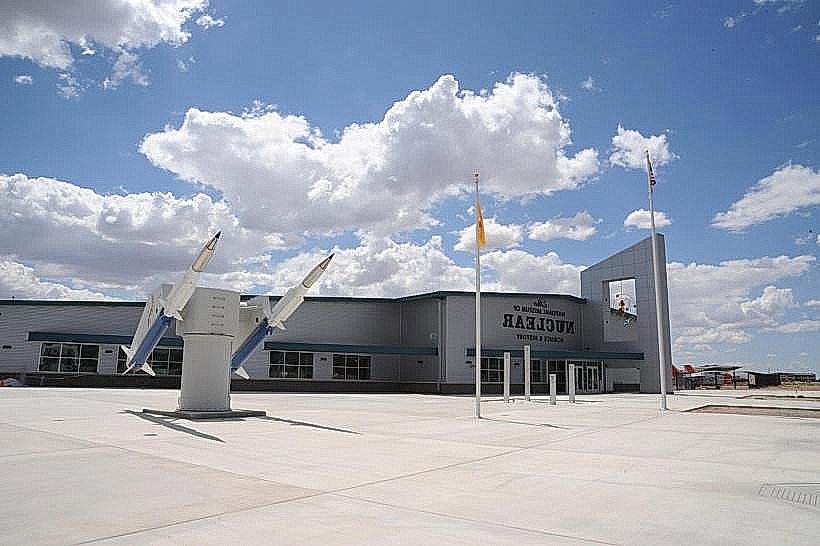
Visitors can explore the historic architecture of buildings such as the KiMo Theatre and the El Vado Motel. Numerous diners, cafes, and shops offer local cuisine and souvenirs. The National Museum of Nuclear Science & History is located near the western end of the historic segment. Photography of the vintage signage and architectural details is a common activity. Driving the route provides a sense of historical travel.
Infrastructure & Amenities
Restrooms are available within most businesses and at public facilities like the KiMo Theatre. Shade is provided by awnings and trees along some sections of the sidewalk. Cell phone signal (4G/5G) is generally strong throughout the area. Food vendors and restaurants are abundant along Central Avenue.
Best Time to Visit
For photography, early morning or late afternoon light offers optimal conditions for capturing the neon signs and building facades. The best months for visiting are typically April through October, when temperatures are milder. No specific tide requirements apply.
Facts & Legends
The KiMo Theatre, a prominent landmark on Central Avenue, is rumored to be haunted by the ghost of a young boy named Bobby. Legend states that Bobby died during construction and his spirit occasionally causes mischief within the theater.
Nearby Landmarks
- 0.8km East: Downtown Albuquerque (Business District)
- 1.5km Southwest: Old Town Albuquerque
- 3.2km North: Indian Pueblo Cultural Center
- 4.5km Southeast: Tingley Coliseum